
Progressives look to Colorado as next test of a rising movement
Progressive Activists Set Sights on Colorado’s 1st Congressional District
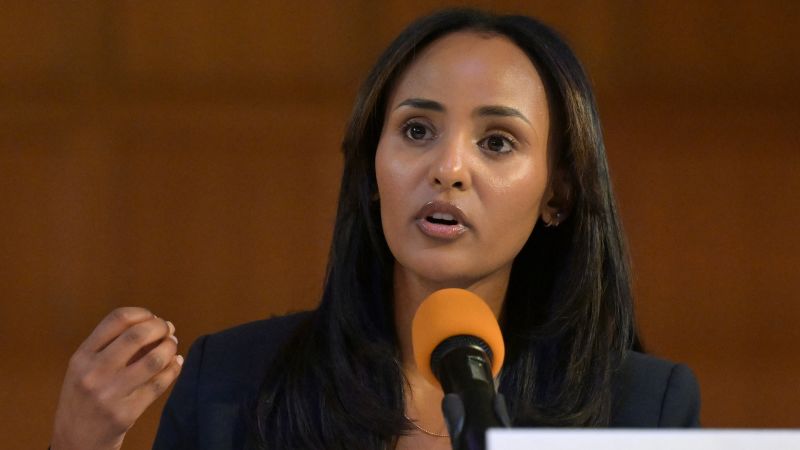
Progressives look to Colorado as next – Following a string of unexpected wins in New York City last week, the growing progressive movement has shifted its attention to a new battleground: Colorado’s 1st Congressional District. At the center of this contest is Melat Kiros, a 29-year-old democratic socialist and attorney, who is challenging 15-term Representative Diana DeGette for the traditionally safe Democratic seat in Denver. Kiros and her allies believe voters in the district are primed for change, positioning this race as a critical test for the movement’s influence beyond urban centers.
The Rise of a New Democratic Voice
Kiros’ campaign has gained traction amid broader calls for a more radical shift in Democratic priorities. In a recent interview with CNN, she emphasized the urgency of replacing leaders who, she argues, have failed to address the needs of working-class communities. “Voters have come to understand that the party’s current direction isn’t aligning with their values,” Kiros said. “It’s time for representatives who will actively fight for their interests, not just follow the same old playbook.”
The movement’s momentum stems from a series of victories in New York, where US House endorsements from Mayor Zohran Mamdani played a pivotal role in reshaping the political landscape. However, some analysts caution that Denver’s electorate may not mirror the energy seen in New York City. Ted Trimpa, a seasoned Democratic strategist, highlighted the need for caution. “Mamdani isn’t a savior for Democrats,” Trimpa told CNN. “If they think he is, they’re looking in the wrong direction.”
Colorado’s Unique Political Terrain
Colorado’s political ecosystem is distinct, with roughly half of its voters unaffiliated and a history of electing candidates who balance progressive ideals with pragmatic appeal. Despite Democrats holding both Senate seats and the governorship, the party has often settled for moderates who can bridge ideological divides. This trend has sparked debate, as some within the party question whether the current leadership is responsive to the growing demand for left-leaning policies.
Recent tensions have intensified. Governor Jared Polis faced censure from the state Democratic Party last month after granting clemency to Tina Peters, an election denier. Meanwhile, the state’s two senators—both of whom are running for reelection and governor, respectively—have drawn criticism for their support of former President Donald Trump’s Cabinet members. These controversies have created an opportunity for progressive challengers like Kiros to gain ground.
The Ballot Battle: Process and Strategy
The primary race in Colorado’s 1st District has already taken on a competitive edge. To qualify for the ballot, candidates must secure the backing of 30% of party activists. This process, while designed to ensure legitimacy, has become a focal point of the campaign. DeGette narrowly met the threshold, while Kiros outperformed her in securing support. The incumbent has since doubled down on her outreach, with one anonymous Democratic strategist noting, “This is the toughest challenge she’s faced in years, but she’s treating it with the seriousness it requires.”
Supporters of the Justice Democrats, the group backing progressive candidates, have mobilized swiftly. Within hours of projected wins for Assemblymembers Claire Valdez and Darializa Avila Chevalier, fellow candidates gathered in a group chat to strategize how they could help Kiros. “Each race this cycle has built momentum for the next,” said Usamah Andrabi, a Justice Democrats spokesperson. “What’s remarkable is how candidates who win often prioritize lifting others up.”
Issues at the Heart of the Race
While the race is framed as a battle against the Trump administration, it also reflects deeper ideological divides. Kiros’ campaign has focused on her vocal opposition to US-Israel relations, a stance that has drawn both support and scrutiny. In 2023, she was dismissed from a law firm after refusing to remove an open letter that defended student protesters against accusations of antisemitism. The letter argued that calls for Israel’s elimination should not automatically be labeled as antisemitic, a position that resonates with many young activists.
Kiros has also faced criticism for her response to a recent attack on Israeli hostage supporters. The incident, which left one person dead and several injured, was described by investigators as a firebombing targeting protesters. When asked about the event, Kiros declined to call it antisemitism, a statement that has fueled discussions about her alignment with broader progressive causes. “Her comments on US-Israel policy are being closely examined,” noted a political analyst. “This race isn’t just about governance—it’s about values.”
A Longstanding Fight for Change
DeGette, a long-serving congresswoman, has encountered primary challenges before. Yet, her opponents argue this is the most formidable test of her political resilience. A third candidate, University of Colorado Regent Wanda James, secured ballot access through voter signatures, adding another layer to the race. The competition has forced DeGette to ramp up her efforts, with her campaign emphasizing local issues over national headlines.
“I’m running hard every day, speaking to families about the concerns that matter most to them,” DeGette stated in a press release. “While national narratives dominate the news, Denver voters want to see real solutions for their communities.” This approach contrasts with Kiros’ focus on systemic change, which she frames as essential for addressing income inequality, climate change, and corporate influence in politics.
As the primary approaches, the race has become a microcosm of the broader Democratic realignment. From New York to Seattle, and even Washington, D.C., more cities are embracing democratic socialist leaders, signaling a shift in the party’s direction. For Kiros, success in Colorado could validate this trend, while a loss might temper the movement’s ambitions. “This isn’t just a local race—it’s a stepping stone for the future of progressive politics,” said Andrabi. “The outcome here will have ripple effects across the nation.”
The Path Forward
With the primary days away, the stakes are clear: the winner could redefine the Democratic Party’s identity in a state that has long balanced left and right. Kiros’ campaign is riding on the hope that voters will reward her bold stance, while DeGette is banking on her experience and ability to connect with Denver’s electorate. The results will not only determine the fate of the 1st District but also offer insight into the viability of the democratic socialist movement as it seeks to challenge the status quo.
For now, the race remains a tight contest. “Either outcome is possible,” the anonymous strategist admitted. “What’s certain is that this race has the potential to reshape the political landscape for years to come.” As the nation watches, Colorado’s 1st Congressional District is becoming a symbolic ground for a movement that is redefining the meaning of progressivism in the 21st century.
