
The Trump administration fought to change a national park slavery exhibit. Here’s why Philadelphia vows to keep fighting back
The Trump administration fought to change a national park slavery exhibit. Here’s why Philadelphia vows to keep fighting back
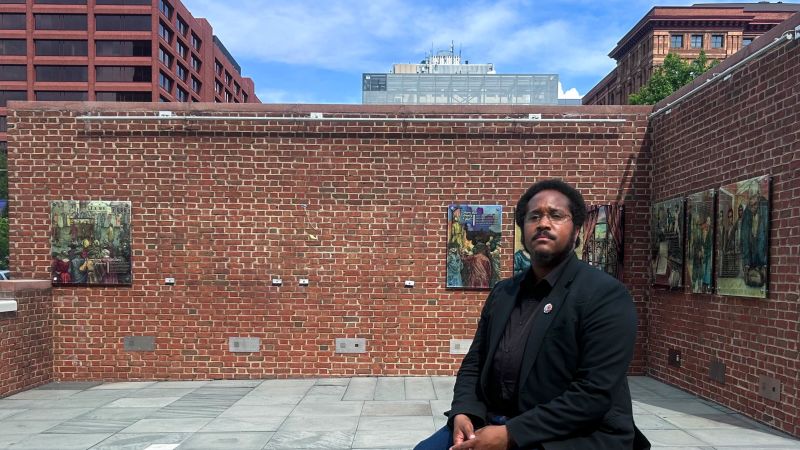
The Trump administration fought to change – As the nation approached its 250th anniversary, the historic heart of Philadelphia stood as a reminder of its founding, yet the city faced an unexpected disruption. A section of Independence National Historic Park was left incomplete, the victim of a prolonged legal clash between the city and the Trump administration over a display that highlighted the role of slavery in the nation’s history. Mijuel Johnson, a local tour guide with The Black Journey, described the situation as “a living historical moment,” emphasizing the significance of the exhibit in the city’s cultural narrative.
The President’s House, an open-air site within the park, has long served as a focal point for understanding the legacy of slavery in America. This location, which once housed George Washington and John Adams, now features a display that commemorates the nine enslaved individuals who lived in the household of the first president. The exhibit, a collaborative effort between Philadelphia and the National Park Service, originally included a timeline tracing the broader history of American slavery. However, the Trump administration sought to alter its content, sparking a legal battle that has kept the site in flux.
The dispute began under the framework of President Trump’s “Restoring Truth and Sanity to American History” executive order, which aimed to revise how historical events are portrayed in cultural institutions. This directive led the Department of Interior to target the President’s House exhibit, alleging that it “inappropriately disparages Americans past or living.” The original display, which acknowledged the harsh realities of slavery, was seen by the administration as too critical of the Founding Fathers.
In January, video footage captured federal workers using crowbars to dismantle large panels at the site, signaling the administration’s intent to reshape the narrative. The City of Philadelphia swiftly responded by filing a lawsuit, arguing that the federal government overstepped its authority in altering historical truths. In February, U.S. District Court Judge Cynthia Rufe ruled in favor of the city, stating, “This Court is now asked to determine whether the federal government has the power it claims — to dissemble and disassemble historical truths when it has some domain over historical facts.” Rufe concluded, “It does not,” asserting that the city retained control over the exhibit’s interpretation.
Despite this initial victory, the Trump administration appealed the decision, leading to a reversal in June. A panel of three judges from the Third Circuit Court of Appeals sided with the Department of Interior, declaring that the city no longer held ownership over the President’s House site. The ruling also endorsed the revised exhibit, which the administration claims “acknowledges the evil of slavery, including its injustices and hypocrisies.” The new panels, according to the opinion written by Thomas Hardiman, a George W. Bush appointee, “remind us of their essential humanity,” while providing a broader historical context.
For advocates of the original exhibit, the revised version falls short. They argue that the new panels soften the brutality of slavery, particularly in relation to George Washington’s role. One of the original displays noted that at his Virginia plantation, Washington “oversaw more than 300 enslaved people, nine of whom served in his Philadelphia household.” The updated panels, in contrast, focus on the shared history between Washington and the enslaved individuals, without emphasizing the systemic oppression they endured.
Johnson, who has led tours around the city’s historic landmarks, expressed disappointment with the revised exhibit. “When CNN read aloud the language of the opinion the day before Juneteenth,” he said, “I couldn’t help but hold back a laugh.” The date of the ruling, June 18, was chosen to align with the federal government’s efforts to frame the history of slavery in a more palatable light. Critics, however, believe the exhibit’s message has been diluted, trading depth for conciseness.
The legal battle has become a symbol of a larger ideological struggle. The Trump administration’s actions are seen as part of a broader campaign to reshape historical narratives in accordance with political priorities. For Philadelphia, the fight is about preserving the truth of its past, even as the federal government seeks to redefine it. The city’s refusal to back down reflects a commitment to ensuring that slavery’s impact is not forgotten in the nation’s founding story.
With the federal government now in control of the exhibit, the future of the site remains uncertain. While the new panels have been restored, the possibility of further revisions looms. Johnson and others hope that the city will eventually reclaim the narrative, adding a section that acknowledges the battle over the exhibit itself. “We might be able to add something talking about this part of the history of the memorial,” he said, envisioning a permanent tribute to the struggle for historical accuracy.
The President’s House exhibit, though contested, continues to draw attention as a microcosm of the national debate on how to teach slavery in American history. Its story, shaped by legal challenges and political shifts, underscores the importance of preserving diverse perspectives. For now, the site stands as a reminder of both the enduring legacy of slavery and the ongoing fight to ensure it is remembered with integrity.
