The Supreme Court’s cryptic mail ballot decision won’t be its last word on voting

Daftar Isi
Supreme Court’s Mail-Ballot Order Leaves Larger Voting Questions Open
Earthguardiansonline.com – The Supreme Court’s cryptic mail-ballot decision preserved existing protections for ballot delivery, but it offered little indication of how the justices may resolve future disputes over voting by mail. The unsigned order rejected an emergency request from the Trump administration and left a lower court’s preliminary injunction in place.
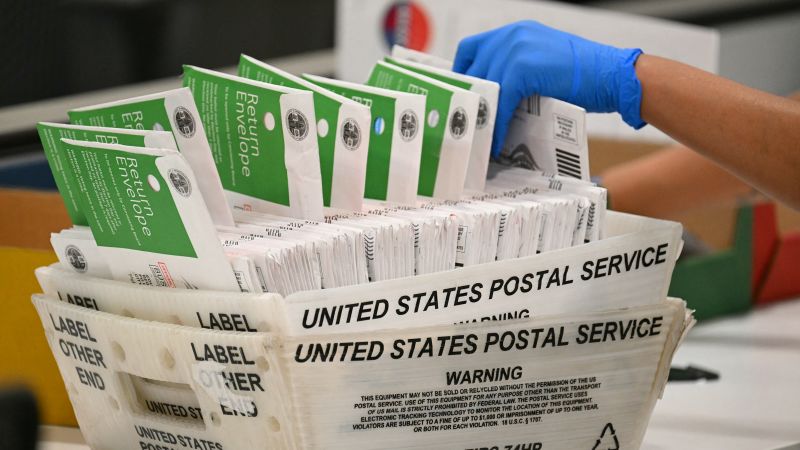
The case concerned a proposed US Postal Service policy that could have allowed the agency to decline delivery of ballots. Democratic-led states and voting-rights groups argued that the policy could disrupt mail voting. For now, the court’s action prevents the proposal from taking effect while the underlying legal challenge continues.
The Government is unlikely to succeed on the merits of its challenge to the District Court’s preliminary injunction. And the equitable factors applicable for obtaining emergency relief from this Court do not favor a stay.
Those two sentences settled the immediate request without deciding the central legal issues. The court did not fully explain the Postal Service’s claimed authority or whether a ballot-screening system could lawfully operate in practice. That limited approach means the Supreme Court’s cryptic mail-ballot ruling is unlikely to end litigation over election administration.
A Temporary Answer to a High-Stakes Dispute
The decision comes as election-related lawsuits carry major political consequences. Republicans hold both the House of Representatives and the Senate, while Democrats are seeking gains in future elections. Cases involving ballot access, district maps and voting procedures can affect voters, candidates and the officials responsible for running elections.
The brief order did not reveal a straightforward ideological split. Although the court has six conservative members, its election decisions have not always followed predictable lines. Justice Brett Kavanaugh wrote separately that the Postal Service might have a legitimate role in this area under different circumstances.
There is at least a fair prospect that the final rule falls within the Postal Service’s statutory authority.
Kavanaugh’s concurrence suggests that a later challenge could produce a different outcome after fuller legal review. The present decision addressed only whether the lower court’s ruling should be paused, not whether the policy is ultimately lawful.
Mail Voting Remains a Continuing Legal Target
Mail-in voting remains a frequent subject of political and legal conflict. Trump’s false claims that the 2020 election was affected by widespread fraud continue to influence public debate over ballot procedures. No evidence has established that mail ballots are inherently vulnerable to fraud, but the issue remains prominent in election litigation.
Justices Samuel Alito and Clarence Thomas have echoed concerns raised by the Trump administration about voting by mail. Alito dissented from the court’s action, illustrating the continuing disagreement among the justices. A separate June decision rejecting another attempt to impose mail-ballot rules was decided by a single vote.
Donald Verrilli, who served as solicitor general during the Obama administration, has said disputes surrounding mail ballots are likely to persist through the current election cycle and into 2028. The Supreme Court’s cryptic mail-ballot order may therefore be an early procedural step rather than the court’s final statement on the issue.
The uncertainty affects election administrators as well as voters and campaigns. States need time to train workers, explain procedures and prepare for ballot processing. Sudden changes can be especially difficult for people who depend on mail voting because of disability, military service, travel, work schedules or distance from a polling place.
Voting-Rights Cases Increase the Pressure
The mail-ballot dispute is part of a broader set of voting cases facing the federal judiciary. Earlier this year, the Supreme Court narrowed protections associated with the Voting Rights Act of 1965 and gave state lawmakers greater flexibility to draw electoral maps that may reduce the influence of Black and Latino voters.
As states respond to new legal standards and election challenges continue, the court’s handling of mail ballots will remain closely watched. A future ruling could provide the clarity missing from this narrow emergency decision—or create another closely divided chapter in the nation’s voting-rights debate.
FAQ: What the Mail-Ballot Decision Means for US Voters
Does this ruling change how people can vote by mail now?
No. The lower court’s preliminary injunction remains in place, so the proposed Postal Service policy cannot take effect while the legal case proceeds.
Did the Supreme Court decide whether the Postal Service policy is legal?
No. The court decided an emergency request about pausing the injunction. It did not issue a final ruling on the policy’s legality or the Postal Service’s authority.
Why does this matter before future elections?
Election officials need clear, stable rules to prepare ballots, train staff and inform voters. Continued litigation could affect how states plan for mail voting in future federal elections.