Whole grains are good for your heart. How do you know if you’re eating enough?

Daftar Isi
How Whole Grains Support Heart Health—and How Much to Eat
Earthguardiansonline.com – Whole grains are good for your heart because they can help improve several factors linked with cardiovascular health, including cholesterol, blood pressure, weight and waist size. Research suggests that making whole-grain foods a regular part of meals may offer benefits at about three servings a day.
A meta-analysis published in the European Heart Journal reviewed dozens of studies on whole-grain intake and health markers. Eating roughly 90 grams daily, or about three servings, was associated with improvements in measures connected to heart disease risk. That could include two slices of whole wheat bread and a bowl of oatmeal.
Studies lasting from two weeks to two years found that people eating three to six servings daily had modest improvements in about a dozen measures, including total cholesterol, LDL cholesterol, blood pressure, body weight and waist circumference. While no single change was dramatic, the combined pattern may matter for long-term heart health.
“Likely a causal effect” from eating whole grains “may translate into a reduced risk of cardiovascular disease,” said Dagfinn Aune, a research fellow in epidemiology and biostatistics at Imperial College London’s School of Public Health and a coauthor of the analysis.
What foods count as whole grains?
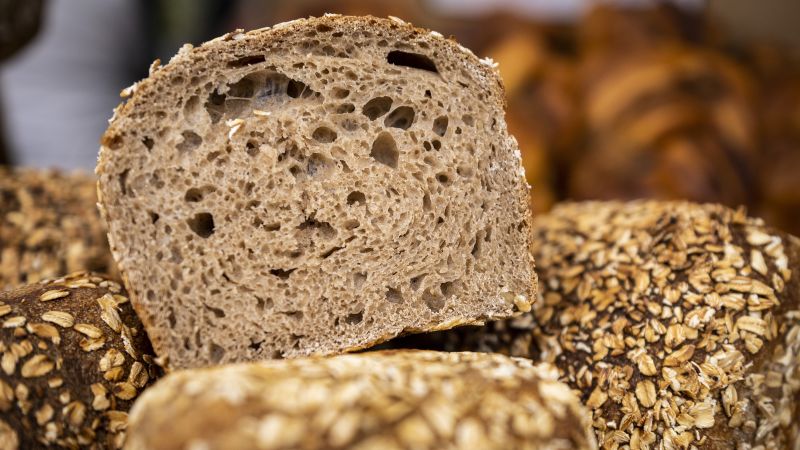
Whole grains contain the naturally occurring parts of the grain, preserving fiber and other nutrients that are often removed during refining. Oatmeal, brown rice, quinoa, farro, popcorn and whole wheat bread are common examples.
Refined grains, such as white rice and products made with white flour, are processed differently. They may be easier to cook or have a softer texture, but they generally contain less fiber and fewer nutrients than their whole-grain counterparts.
A serving may be one slice of whole wheat bread or one-half cup of cooked oatmeal, brown rice or quinoa. US dietary guidance generally recommends two to four servings of whole grains daily, though individual nutrition needs can vary based on health, body size and activity level.
Swap refined grains rather than adding extra food
Whole grains are good for your overall diet when they replace refined options instead of simply adding more carbohydrates and calories. A practical approach is to make one small substitution at a time: oatmeal for refined breakfast cereal, brown rice for white rice, or whole wheat bread for white bread.
Alice Lichtenstein, a professor at the Friedman School of Nutrition Science and Policy at Tufts University, said the health value of a whole-grain choice also depends on the food’s overall nutritional profile.
“If you eat a cinnamon bun made of whole grain, as opposed to a cinnamon bun made with refined grain, I’m not sure you’re going to see a benefit,” Lichtenstein said.
In other words, switching to a whole-grain version does not automatically turn every food into a heart-healthy choice. Added sugar, sodium, saturated fat and portion size still matter. Unsalted popcorn can be a whole-grain snack, for example, but heavy amounts of butter, salt or sugar can change its nutritional balance.
A gradual strategy may be easier to maintain. As pantry staples run out, replace them with whole-grain versions when possible. Over time, those routine choices can help make fiber-rich foods a consistent part of eating patterns.
How to identify a true whole-grain product
Color alone is not a reliable guide. A dark bread is not necessarily whole grain, and labels such as “multigrain” or “made with whole grain” do not mean that whole grains are the main ingredient.
Check the ingredient list and look for a whole grain, such as whole wheat, whole oats or brown rice, near the beginning. Nutrition labels can also help shoppers compare fiber content among similar products. Choosing foods with more fiber and fewer added ingredients is often a useful starting point.
Whole grains and heart health: FAQ
How many servings should I aim for? Research reviewed in the meta-analysis found benefits beginning at about three servings a day, while US guidance suggests two to four servings. If your usual diet contains few whole grains, start by replacing one refined-grain food each day.
Is whole wheat bread always a whole grain? Not always. Read the ingredient list to confirm that whole wheat or another whole grain is listed prominently. Terms such as “wheat bread” alone can be misleading.
Can I get whole grains without eating bread? Yes. Oatmeal, brown rice, quinoa, farro and plain popcorn are all options. Whole grains are good for your heart when they fit into an overall eating pattern that supports healthy weight, blood pressure and cholesterol.
Related Reading
Frequently Asked Questions
What is Whole grains are good for your?
Whole grains are good for your is the main topic of this guide. The article explains the context, practical details, and next steps readers should understand.
Why does Whole grains are good for your matter?
Whole grains are good for your matters because readers are looking for a useful answer, not just a short summary. Good content should match search intent and help them decide what to do next.