
Trump’s audacious bid to end birthright citizenship was not an entire loss at the Supreme Court
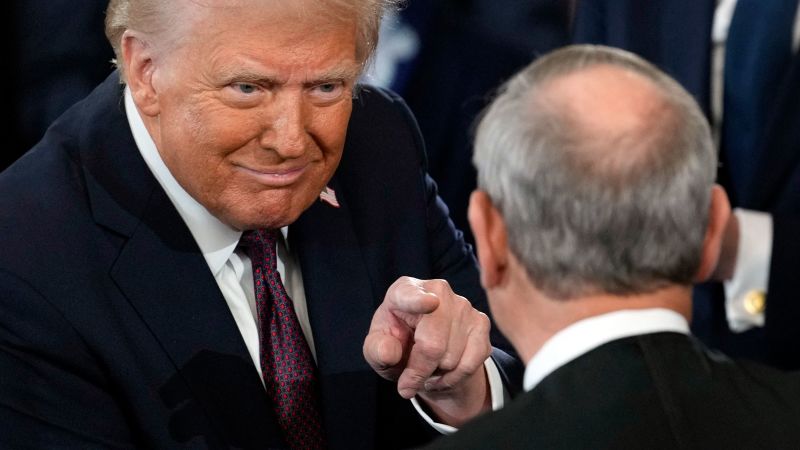
Supreme Court Upholds Birthright Citizenship Amid Trump’s Bold Legal Challenge
Trump s audacious bid to end birthright – President Donald Trump’s January 2025 executive order, aimed at curtailing birthright citizenship, was met with swift judicial scrutiny. The directive, signed with a black Sharpie on his first day back in office, sought to restrict automatic citizenship for children born in the United States to undocumented parents. While Trump framed the measure as a “big one,” the Supreme Court ultimately ruled against it, preserving the constitutional right of birthright citizenship. The 6-3 decision, delivered in the case of *Trump v. Barbara*, reaffirmed the foundational principle that all individuals born on U.S. soil are citizens, regardless of their parents’ immigration status.
Constitutional Foundations and Judicial Rulings
At the heart of the Court’s decision was the 14th Amendment, which guarantees citizenship to “all persons born or naturalized in the United States, and subject to the jurisdiction thereof.” The majority, led by Chief Justice John Roberts, argued that this provision is deeply rooted in English common law and the nation’s historical commitment to inclusive governance. Roberts emphasized that the amendment’s intent was to ensure that individuals, regardless of origin, could fully participate in American society. “The Framers extended this promise to ‘every free-born person in this land,’” he wrote, underscoring the enduring relevance of the principle.
“Citizenship, then and now, was the right to have rights – to freely participate in our political community,” Roberts declared in his forceful opinion. “We keep that promise today.”
Although the Court rejected Trump’s attempt to amend the policy through executive action, the ruling did not silence the debate. Justice Brett Kavanaugh, while joining the majority in blocking the order, cast doubt on the constitutional certainty of the decision. He argued that the executive order might have violated immigration statutes from the 1940s and 1950s, rather than the 14th Amendment itself. “Congress could – consistent with the Fourteenth Amendment – amend (the relevant laws) or enact new legislation to establish exceptions for children born to foreign citizens who are unlawfully or temporarily in the country,” Kavanaugh suggested, offering a pathway for legislative action.
Support for the Trump Initiative
Despite the Court’s rejection, Trump’s effort gained unexpected traction. The administration secured backing from 25 states and a notable number of congressional Republicans, including figures like Rep. Chip Roy and Sen. Eric Schmitt, who argued that the policy aligns with their broader immigration goals. This support, though not enough to alter the ruling, signaled a shift in political discourse. “The concept of birthright citizenship is now hanging by a thread,” said Vice President JD Vance, reflecting on the decision with cautious optimism during a Fox News interview. He framed the ruling as a temporary setback, suggesting that Congress could still act to reshape the policy.
Roberts’ majority opinion, spanning 189 pages, detailed the historical and legal rationale for upholding birthright citizenship. He highlighted the amendment’s role in post-Civil War Reconstruction, emphasizing its purpose to grant citizenship to newly freed enslaved individuals and their descendants. “The framers of the 14th Amendment envisioned a nation where everyone, no matter their background, could claim a stake in the American experiment,” Roberts noted. This argument countered Trump’s claim that the policy was an unnecessary expansion of rights.
The Shadow of a Previous Victory
The Court’s decision on birthright citizenship also served as a continuation of a broader trend. Last year, a separate ruling had already bolstered Trump’s legal strategy by curtailing the authority of lower court judges to block contested presidential initiatives. That decision, which allowed for widespread implementation of Trump’s policies, created a precedent that influenced Tuesday’s outcome. “The case has brought a bright light to the serious costs of birthright citizenship,” said appellate litigator Charles Cooper, who represented two Republican lawmakers who supported the administration’s stance.
While the majority upheld the Constitution, Justice Samuel Alito’s dissent highlighted concerns about the potential erosion of the principle. He questioned whether the 14th Amendment’s language, “subject to the jurisdiction thereof,” could be interpreted to exclude children of undocumented immigrants. Alito’s critique, though not altering the final outcome, kept the issue in the public eye and hinted at the possibility of future legal challenges. “This ruling is not the end of the debate,” Cooper added, noting that the decision may spur further legislative action or judicial reinterpretations.
Legacy of the Decision
The 6-3 vote underscored the ideological divide within the Court. The majority included Roberts, Barrett, and the liberal justices Sotomayor, Kagan, and Jackson, who collectively defended the 14th Amendment’s clarity. Meanwhile, the dissenters, led by Alito, argued that the Court should have allowed for a narrower interpretation of jurisdiction. Kavanaugh’s nuanced position, blending constitutional and statutory arguments, left room for debate about the feasibility of congressional legislation to achieve Trump’s goal.
Though the Supreme Court’s decision preserved birthright citizenship, the case revealed the administration’s growing influence over legal narratives. The support from states and lawmakers, despite the Court’s rejection, demonstrated a willingness to challenge the status quo. “The Supreme Court upheld birthright citizenship, which is too bad for our country,” Trump wrote on Truth Social, insisting that Congress could rectify the situation through legislation. He claimed that the ruling “determined during this process” would make legislative changes easier, without requiring a constitutional amendment.
However, legal experts caution that Trump’s assertion may be overstated. The current Court, with its clear majority, has already affirmed the 14th Amendment’s supremacy. “Any attempt to override the Constitution through legislation would face significant hurdles,” said one constitutional scholar, emphasizing that the Court’s interpretation of the amendment is a formidable barrier. Still, the case has reignited discussions about the balance between national sovereignty and individual rights. As the debate continues, the ruling may serve as a catalyst for further reforms, either through legislative action or future judicial interpretations.
Ultimately, the decision marked a pivotal moment in the legal battle over birthright citizenship. While Trump’s immediate goal was thwarted, the ruling highlighted the enduring tension between tradition and change. The 14th Amendment, a cornerstone of American law, remains a powerful shield against efforts to limit the rights of children born in the United States. Yet, the dissenting voices, particularly Kavanaugh’s, suggest that the principle is not yet set in stone. As the political landscape evolves, the future of birthright citizenship may depend on the interplay between judicial rulings and legislative will.
