
Meta is now designing its own, cheaper AI smart glasses
Meta Unveils In-House AI Smart Glasses with Lower Price Tag
Meta is now designing its own cheaper – On Tuesday, Meta unveiled a fresh collection of AI-integrated smart glasses, marking a significant shift in its approach to wearable technology. These devices, designed entirely within the company, aim to bring artificial intelligence into everyday life at a more accessible cost. The most notable change for users is the reduced price, which could be a game-changer in the competitive smart glasses market. Starting at $299, the new model is less expensive than the latest Ray-Ban offerings, which begin at $379. This price adjustment is crucial for Meta as it seeks to demonstrate the value of its AI initiatives to a broader audience.
A Strategic Move for Market Expansion
Andrew Bosworth, Meta’s chief technology officer, emphasized the importance of affordability during a press event on Monday. “Reaching people isn’t just about design and style—it’s also about the price point,” he stated. This focus on cost reflects Meta’s broader strategy to make AI-driven wearables more mainstream. Previously, the company collaborated with EssilorLuxottica to produce co-branded models with Ray-Ban and Oakley, but the new glasses represent a departure from those partnerships. While Meta still works with EssilorLuxottica for certain components like the lenses, the frames are now fully in-house, offering more design flexibility.
“You really want to be in many places in the market, so the price point is as important as the product itself,” Bosworth said.
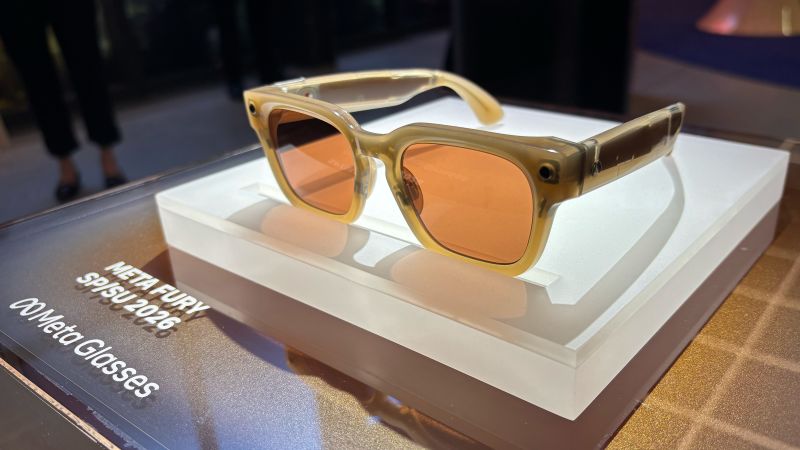
The new glasses come in three distinct styles, each tailored to different preferences. The smallest frame, dubbed Adventurer, is ideal for users prioritizing portability. Fury, a larger and slightly rounded design, caters to those seeking a bold aesthetic. Finally, the oval model, crafted by Kylie Jenner, adds a unique flair with its custom branding. This variety aims to attract a wider demographic, addressing concerns that previous models were too niche or style-focused.
Features and AI Capabilities
Meta’s latest smart glasses integrate a range of functionalities, including music playback, language translation, and real-time environmental analysis. By using onboard cameras, the devices can identify objects, estimate calorie content in food, and provide location-based recommendations. During a press preview, CNN tested the glasses and observed their ability to translate Arabic signs into English and recognize fake cherries in a demo setup. While these features are comparable to Meta’s existing smart glasses, the lower price may make them more appealing to a general consumer base.
The company claims its new Muse Spark AI model enhances the glasses’ ability to extract contextual details from photos and adapt to user preferences. Unlike the previous models, which will receive the update via software, the new glasses will launch with the advanced AI system pre-installed. This means users can immediately experience improved performance, such as more accurate calorie calculations and refined translation capabilities. Bosworth highlighted that the Muse Spark model represents a leap forward in how the glasses process and interpret visual data.
Privacy and User Experience Challenges
Despite the technological advancements, Meta faces ongoing challenges in addressing privacy concerns. CNN reported earlier this year that some users have recorded conversations without consent using smart glasses, raising questions about data security. To mitigate these issues, Meta includes an LED light that signals when the device is actively recording. The company also states the camera will only function if the LED is visible, ensuring transparency for bystanders.
“It is a cat and mouse game with people who are bad actors,” Bosworth remarked during the Monday press event. “We try to make sure that we’re doing everything we can generationally to continue improving, making sure the light is the indicator bystanders can rely on.”
These measures aim to balance convenience with user trust, a critical factor in the adoption of wearable tech. While the glasses offer practical tools, their success hinges on whether consumers see them as more than just an upgrade to smartphones. Runar Bjorhovde, an analyst from Omdia, noted that the broader challenge for tech companies is to prove wearables can perform tasks that smartphones cannot. “The question is whether these wearables can do something completely unique or different,” he told CNN earlier this month. “And the question is, what do you actually do with that?”
Market Trends and Future Projections
Market research firm The International Data Corporation (IDC) predicts that smart glasses will become more affordable in the coming years. The average selling price is expected to drop from $376 in 2026 to $229 by 2030, which could significantly boost their popularity. This trend aligns with Meta’s strategy to position its glasses as a cost-effective entry point into AI-enhanced wearables. If this projection holds, the company may soon see a surge in adoption, particularly among younger users who value innovation and affordability.
However, the current price point of $299 still presents a hurdle for some consumers. While the reduction from $379 is notable, the cost remains higher than that of standard sunglasses. Analysts suggest that further price cuts, combined with improved functionality, will be key to making smart glasses a staple in daily life. The new Meta models, with their diverse designs and AI features, are a step in the right direction, but they must compete with established devices like smartphones and other wearable gadgets, such as voice-recording pins.
Design and Personalization
Meta’s in-house design approach allows for greater customization, as seen in the Jenner-branded model. This particular pair features a custom chime sound that activates when the user dons the glasses, adding a personal touch to the experience. Additionally, the standard Meta AI voice can be replaced with a synthetic version based on Jenner’s real voice, appealing to fans of the influencer. These design choices underscore Meta’s efforts to blend functionality with user identity, a tactic that could differentiate its product from competitors.
The company’s move to self-design frames also reflects a growing trend in the wearable tech industry. As brands like Ray-Ban and Oakley continue to innovate, Meta is positioning itself to offer more tailored options. While the co-branded models previously showcased partnerships, the in-house designs suggest a stronger emphasis on Meta’s own vision for the future of AI-powered wearables. This could pave the way for even more unique iterations in the coming years.
Context and Real-World Applications
Bosworth stressed that the glasses’ true potential lies in their ability to create context in the real world. “We want to make sure the glasses can do more than just take photos—they can understand the environment and respond to it,” he explained. This concept of contextual awareness is central to Meta’s AI ambitions, aiming to transform how users interact with their surroundings. The current examples, such as translating signs and identifying objects, are just the beginning of what the technology could achieve.
While the test scenarios during the press event showcased impressive capabilities, some users may remain skeptical. The ability to estimate calories in strawberries or recommend nearby museums, though useful, might not convince everyone that smart glasses are essential. However, as AI models like Muse Spark evolve, the glasses could become more than just a novelty. The challenge for Meta is to ensure these features address real-world needs, rather than being seen as gimmicks.
Ultimately, the success of Meta’s new smart glasses depends on a combination of affordability, functionality, and user trust. By lowering the price and offering a range of styles, the company is addressing key barriers to adoption. Yet, the broader wearable market must continue to innovate, proving that these devices can offer unique value beyond what smartphones already provide. As the average price of smart glasses declines, the hope is that they will become a more mainstream accessory, seamlessly integrated into daily life. For now, Meta’s latest offering represents a bold step in this evolving landscape, blending AI prowess with practical design to redefine the future of wearable technology.
