
Germany battles aggressive outbreak of poisonous caterpillars
Germany Battles Aggressive Outbreak of Poisonous Caterpillars
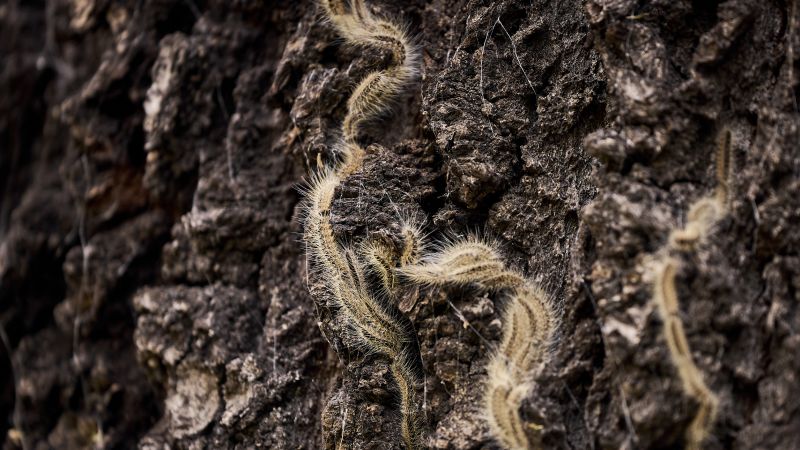
Germany battles aggressive outbreak of poisonous – Germany is grappling with a significant surge in the population of oak processionary moth caterpillars, which pose serious health risks to residents. These tiny creatures, known for their venomous barbed hairs, have led to the temporary closure of parks and other public outdoor areas, including in the capital city of Berlin. The situation has escalated to the point where some of the city’s most frequented green spaces now resemble scenes of cautionary alerts, with red and white warning tape marking off dangerous zones.
Health Risks and Spread Mechanism
The caterpillars, which are part of the oak processionary moth species, are coated in microscopic, toxin-laden hairs that can trigger a range of allergic reactions in humans. Contact with these hairs, either through skin exposure or inhalation, may result in rashes, eye irritation, and respiratory discomfort. The hairs are easily dislodged and can travel considerable distances via wind currents, complicating containment efforts. These pests also construct white, silk-like nests on infested oak trees, which serve as reservoirs for even more toxic fibers.
Authorities in Berlin have identified several districts as epicenters of the crisis. Among them, Charlottenburg-Wilmersdorf, Spandau, and Friedrichshain-Kreuzberg are particularly affected. In Spandau, a 39-acre park named Wilhelm-von-Siemens-Park has been shut down, along with nearby schools and daycare centers. The closures are a precautionary measure to limit human exposure to the hazardous hairs, which can be inhaled or touched without warning.
Control Measures and Challenges
Workers are employing specialized equipment to manage the infestation, including vacuum machines typically used for asbestos removal. These devices are used to extract nests from branches approximately 20 meters above the ground. In one instance, CNN observed two cherry pickers operating such machines in Jungfernheide, Berlin’s second-largest park, which is among the worst-hit areas. Seven laborers, fully clad in blue protective gear and equipped with ventilation masks, were actively removing nests from the canopy.
A city official overseeing the cleanup explained that the focus is on minimizing harm rather than complete eradication. “Our objective is damage limitation,” he stated. While 2,000 trees in the park are currently affected, the task is ongoing, and the infestation levels vary from one area to another. The official noted that some crews have spent entire days removing nests from a single tree, highlighting the scale of the problem.
Residents are being advised to take precautions, such as washing clothes thoroughly after visiting parks and keeping windows and doors closed to reduce the risk of airborne hairs entering homes. These measures aim to protect both the public and the environment from the ongoing threat of the caterpillars.
Tracking the Outbreak and Its Origins
Efforts to monitor the spread of the caterpillars have been bolstered by a digital platform called EPS-Radar. Developed by Britta Wunderwald, who previously worked in marketing, the tool was created after her friend’s son experienced symptoms consistent with exposure to the pests. “I was wondering if I could go outside and where a safe place to have a picnic was, but I saw there was no actual map for this year,” she recounted in a phone interview. Wunderwald hopes that the city will take the issue more seriously in the future, implementing proactive measures to prevent such outbreaks.
According to urban nature expert Derk Ehlert, the caterpillars have become more prevalent in Berlin than in prior years. His observations, shared on the city’s official website, indicate that the species originated in southern Europe but has steadily expanded its range northward. Ehlert attributed this spread to climate change, which has created more favorable conditions for the insects. “The oak processionary moth thrives in hot and dry weather, and its increasing presence is linked to biodiversity loss,” he noted in a recent post.
While the caterpillars have long been a part of Germany’s ecosystem, their recent surge has raised concerns about public health and environmental impact. The toxins in their hairs can cause hives, rashes, and, in severe cases, anaphylactic shock. These effects are especially dangerous for individuals with pre-existing allergies. The challenge lies in balancing the need to protect people while preserving the natural environment.
Authorities are working to identify and prioritize areas for intervention, focusing on trees closest to visitor pathways. This strategy allows them to address the most immediate threats while managing resources efficiently. However, the vast number of nests—up to 700,000 per caterpillar—makes complete elimination difficult. The goal is to reduce the risk of exposure as much as possible, even if the caterpillars continue to thrive in certain regions.
Broader Implications and Regional Spread
Reports of the outbreak extend beyond Berlin, with similar issues documented in Hamburg and the western state of North Rhine-Westphalia. The widespread presence of the caterpillars suggests that the problem is not isolated to one region but is part of a larger trend influenced by environmental changes. Ehlert emphasized that the infestation is a growing concern, urging the public to remain vigilant and avoid direct contact with the pests or their nests.
As the caterpillars continue to proliferate, experts warn that their impact could worsen unless more robust measures are implemented. The combination of climate change and habitat disruption has created ideal conditions for their survival and spread. This, in turn, has placed additional strain on public services, which must now allocate resources to manage the outbreak while ensuring community safety.
With the situation evolving rapidly, authorities are under pressure to find effective solutions. The use of advanced technology, such as the vacuum machines and digital tracking platforms like EPS-Radar, has become essential in managing the crisis. However, the challenge remains formidable, requiring sustained effort and collaboration between local governments, environmental organizations, and the public. The outbreak serves as a stark reminder of how climate change can alter ecosystems and introduce new health risks to urban populations.
