Deluge begins in Hawaii as Hurricane Nolo continues to strengthen

Daftar Isi
Hawaii Braces for Flooding Threat as Hurricane Nolo Strengthens South of the Islands
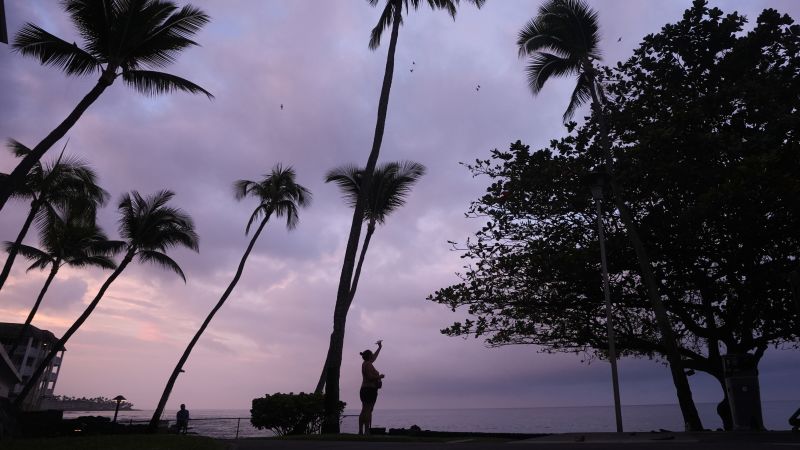
Earthguardiansonline.com – Hurricane Nolo is bringing increasingly heavy rain to southern Hawaii as the powerful storm moves near the state, creating a fresh risk of flooding and mudslides for communities still dealing with damage from earlier hurricanes.
The Big Island is expected to face the most severe conditions when Nolo makes its closest pass on Saturday local time. While the hurricane’s core is forecast to remain well offshore to the south, its outer rainbands are already affecting the island and will extend toward Maui, Lanai and Molokai through Saturday.
Nolo strengthened quickly into a Category 2 hurricane on Friday and was still at that intensity Saturday morning. A storm is considered to have undergone rapid intensification when its peak sustained winds rise by at least 35 mph within 24 hours or less. Such episodes are occurring more often as fossil-fuel pollution warms the planet.
Rain poses the most serious danger
Flooding from intense rainfall is the central concern. Eastern and southern sections of the Big Island could receive 8 to 12 inches of rain through Sunday, while the steepest terrain may see as much as 16 inches. Western parts of the island could receive up to 6 inches.
On eastern Maui, projected rainfall ranges from 4 to 6 inches, with isolated locations potentially reaching 8 inches. Elsewhere across the main Hawaiian Islands, totals of roughly 1 to 3 inches are expected.
Even with lower rainfall projections than earlier forecasts, the potential remains dangerous because much of the ground has already been saturated by recent storms. Mountain slopes can intensify rainfall as moist air is pushed upward, producing heavier precipitation and increasing the chance of flash flooding, fast-moving runoff and landslides.
Hurricane Lala demonstrated that danger in mid-August, when the Category 1 storm passed close to the Big Island. Its rainbands released more than 40 inches of rain in some mountainous areas, triggering catastrophic flash flooding. Recovery from that event is still underway.
Hawaii County Mayor Kimo Alameda urged residents in vulnerable areas to consider leaving before conditions worsen.
“If your home flooded before, or is at risk, consider moving to safer shelter before the full force of the storm hits,” Hawaii County Mayor Kimo Alameda said in a Wednesday news release. “Because the ground remains saturated, flooding may happen rapidly.”
Wind, waves and closures add to the disruption
Nolo could be a strong Category 2 hurricane or reach Category 3 strength, the threshold for a major hurricane, at its nearest point to the Big Island. Its most sustained hurricane-force winds are expected to stay over the ocean, but elevated terrain could still experience tropical-storm-force winds above 40 mph. Gusts exceeding 75 mph cannot be ruled out in exposed high-elevation locations.
Coastal and offshore conditions are also deteriorating. Dangerous seas are expected to peak Friday and Saturday, and rough surf conditions may continue through the weekend and into next week. The hazards could persist even after Nolo begins turning westward away from the islands late Sunday into Monday.
Officials have closed state and county offices, public schools and the University of Hawaii on the Big Island for Thursday and Friday. Maui closures were also planned for Friday. Bus service on Maui will be suspended at various times through the weekend as storm operations continue.
County shelters have opened on the Big Island, while the state has arranged 100 hotel rooms for residents there who choose to evacuate. Hawaii Gov. Josh Green said roughly 400 National Guard personnel had been deployed around the state, including 121 on the Big Island.
On Maui, local authorities have prepared emergency generators and response equipment while adding staff at police and fire agencies. The added preparations come as some residents remain displaced by earlier disasters, including Hurricanes Lala and Lowell, and are still staying in hotels.
Third hurricane-related emergency in six weeks
Gov. Green declared a state of emergency ahead of Nolo’s arrival, marking the third storm-related emergency declaration issued this month. President Donald Trump approved Hawaii’s request for a pre-landfall Presidential Emergency Declaration, Green said Friday.
Nolo is Hawaii’s third dangerous hurricane encounter in about six weeks. Hurricane Lowell, a Category 2 system, struck Kauai and Niihau in early September after Lala’s flooding event on the Big Island in August.
The unusually active stretch has unfolded during a super El Niño year. Extremely warm Pacific waters and relatively weak wind shear have created an environment more favorable for strong tropical cyclones. Wind shear can disrupt a hurricane’s circulation; when it is absent or limited, storms can organize and intensify more efficiently.
For residents, the key threat is not limited to a direct hurricane landfall. Heavy rain can produce life-threatening impacts far from a storm’s center, especially on islands with steep terrain, narrow valleys and already saturated soil. People in flood-prone locations are being urged to monitor local emergency instructions, avoid crossing flooded roads and seek safer shelter early if their homes have a history of inundation.
Related Reading
Frequently Asked Questions
What is Deluge begins in Hawaii as Hurricane?
Deluge begins in Hawaii as Hurricane is the main topic of this guide. The article explains the context, practical details, and next steps readers should understand.
Why does Deluge begins in Hawaii as Hurricane matter?
Deluge begins in Hawaii as Hurricane matters because readers are looking for a useful answer, not just a short summary. Good content should match search intent and help them decide what to do next.