
‘I need to be the lion’: Inside a boot camp teaching men how to talk to women
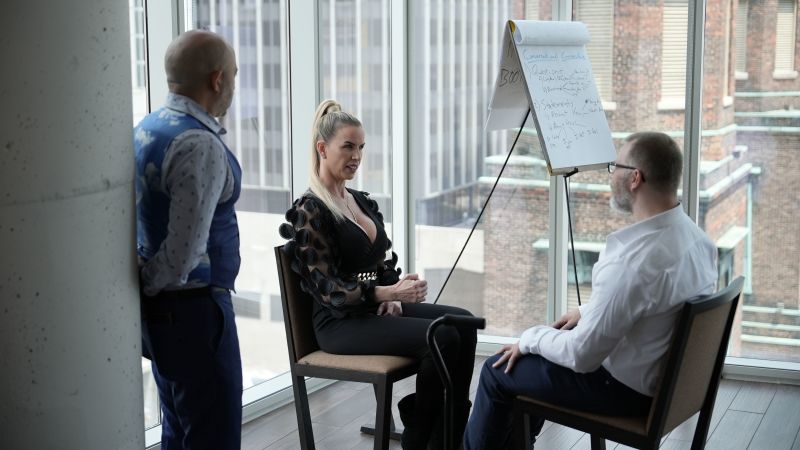
Inside a Nashville Boot Camp: Men Learning to Reclaim Social Skills
I need to be the lion – On a sunny afternoon in Nashville, Steve Crook finds himself in a bustling street, his gaze fixed on a cluster of women. The scene is typical: laughter echoes from nearby shops, and the sidewalks are alive with activity. But for Crook, this is a test. He scans the crowd, filtering out bachelorettes, dog walkers, and shoppers with bags in hand, as if searching for a specific target. “I’m very picky,” he says, his tone matter-of-fact. His standards are clear—physical appearance is key. “I’m a bit of a Barbie guy, really,” he admits. “Long legs, big boobs, slim.” Yet, when a young woman appears, laughing with friends, his focus sharpens. The moment is fleeting, but for Crook, it’s a chance to step out of his comfort zone and make a move.
A Mission of Confidence and Vulnerability
Crook’s approach is both bold and awkward. He jogs toward the woman, weaving through pedestrians with the urgency of someone trying to prove himself. “Let’s get out of the head and just do it,” he later explains, recounting the event in a play-by-play style. The encounter is a mix of enthusiasm and nerves. He stops her, heart racing, and says, “You’re breathtaking.” But the woman’s response is swift—she begins to turn away, signaling the end of the interaction. For Crook, it’s a moment of self-doubt. “I just feel like a p*ssy, basically,” he confesses, his frustration evident.
His coach, Matt Artisan, watches the exchange with a critical eye. Unbeknownst to the woman, Artisan has been recording the scene, using earphones connected to a microphone hidden beneath Crook’s shirt. Later, he delivers feedback: “The dynamic was not good. You were kind of behind them.” Artisan’s words are a reminder of the pressures Crook faces. “You’ve got to get in front of all of them,” he urges. Over the course of three days, Artisan will refine Crook’s technique, critiquing his vocal pitch, posture, and timing. “I heard the voice go up a few times,” Artisan notes. “We’ll work on that.” The goal is clear—help men master the art of approaching women with confidence and clarity.
The Rise of Male Social Training
Across the U.S., similar programs are gaining traction. From New York to San Francisco, and from Dallas to Las Vegas, intensive “boot camps” are equipping men with strategies to navigate social interactions. These workshops, often called “manosphere” training, blend elements of pickup culture with modern psychology. Participants like Brandon Viall, one of Artisan’s trainees, describe the phenomenon as a response to a growing sense of disconnection. “We’re suffering from an epidemic of loneliness,” Viall says. “We’re connected by all these screens, but is that real connection?”
The pandemic has accelerated this trend. With in-person meetings replaced by virtual chats, many men report feeling more isolated than ever. According to Pew Research Center data from 2024, one in six Americans says they often feel lonely or disconnected. Men, in particular, are less likely to seek support from friends or mental health professionals. “Dating apps, political divides, and the #MeToo movement have all contributed to this,” says a participant, reflecting on the challenges. “It scared the s**t out of a lot of guys.” Yet, despite these obstacles, the demand for human connection remains strong.
Reinventing the “Nice Guy” Narrative
For Crook, a 55-year-old former husband, the boot camp is a lifeline. After a divorce, he feels the need to rebrand himself as a more assertive presence. “I need to be the lion,” he says, embodying the mindset of many attendees. The program’s philosophy is straightforward: men are being trained to “win” the game of social interaction, even if the rules are constantly evolving. “It’s not just about charm—it’s about strategy,” Artisan explains. “You have to adapt, communicate, and own your confidence.”
Yet the methods are as old as the 2000s. The camps echo the bro culture of lad mags, with participants using phrases like “cracking the code” and “getting in front of the pack.” However, their goals are more nuanced. While some see these programs as a way to reconnect with women, others view them as a tool to reclaim masculinity in a world that’s increasingly favoring the “nice guy” stereotype. “I want to be more alpha,” Crook says, his words revealing a desire to shift from passive to proactive in his interactions. The challenge is real: how do you turn a quiet, introspective man into a confident, assertive suitor?
From Street Encounters to Global Influence
The Nashville camp is just one of many. Artisan’s company, The Attractive Man, operates in cities across North America and even in Europe, Asia, and Central America. These sessions are structured to simulate real-world scenarios, from crowded sidewalks to dimly lit nightclubs. Crook’s journey through the program is emblematic of the participants’ experiences. Over three days, he approaches dozens of women, using tactics ranging from energetic shouts to prolonged eye contact. At one point, he breaks down in tears, a testament to the emotional toll of the training. But Artisan’s presence is constant, offering guidance and encouragement as the men refine their skills.
These programs are not just about attracting attention—they’re about restoring a sense of purpose. In an age where digital interactions dominate, the boot camps provide a space for men to reconnect with the art of face-to-face communication. “It’s like a ritual,” says one participant, describing the training as a way to reclaim agency. The instructors emphasize the importance of presence, voice modulation, and body language, blending old-school pickup techniques with contemporary insights. For many, the experience is transformative, though it’s not without its flaws. The language of objectification occasionally slips through, even as the participants insist their approach is respectful.
A Broader Cultural Shift
While the boot camps are a response to personal struggles, they also reflect a larger cultural shift. In a society where relationships are often transactional, men are being taught to navigate these dynamics with precision. “We’re all just trying to make it work,” Artisan says, summarizing the collective aim of the participants. The camps have become a modern-day solution to an age-old problem: how to bridge the gap between attraction and connection. For Crook, the three days of training are a step toward that goal. “I’m not perfect,” he admits, “but I’m learning.”
As the world continues to grapple with isolation and digital disconnection, these programs offer a glimpse into a future where men are not just surviving social interactions but thriving. Whether it’s through the lens of pickup culture or the broader manosphere movement, the message is consistent: human connection is still possible, but it requires effort, practice, and a willingness to step out of the shadows. For Crook and his peers, the boot camp is more than a weekend of exercises—it’s a chance to redefine what it means to be a man in the modern era.
As the sun sets over Nashville, the participants reflect on their progress. Some have improved, others have faltered, but all agree that the experience is valuable. “It’s not just about picking up women,” one says. “It’s about understanding yourself and how you come across to others.” In a world where screens mediate so much of our lives, these camps remind us that the most powerful connections are still made in the real world—though they may take a bit more courage to forge.
