Kim Jong Un’s powerful sister says she is ‘completely unaware’ if he contacted Trump

Daftar Isi
Kim Jong Un’s Powerful Sister Denies Trump Contact
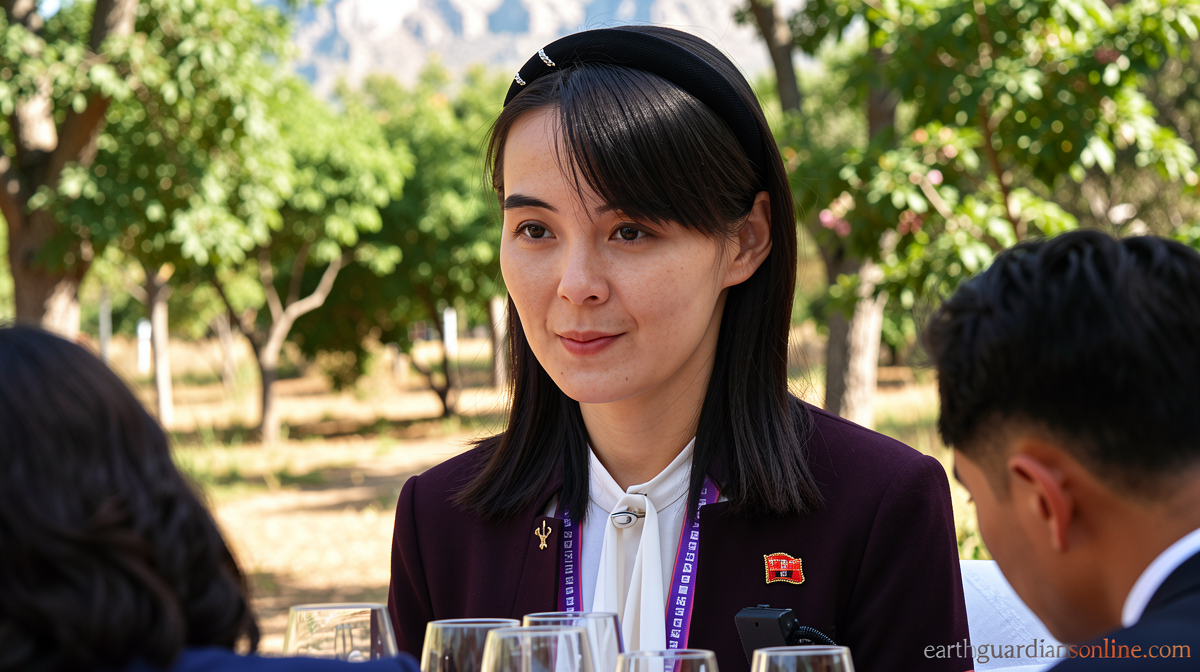
Earthguardiansonline.com – Kim Jong Un’s powerful sister, Kim Yo Jong, told state media on Wednesday that she is “completely unaware” whether her brother reached out to US President Donald Trump, despite Trump’s public claim this week that North Korea’s leader responded to his call for a conversation. In a statement carried by North Korean state outlets, Kim Yo Jong acknowledged that her brother harbors “good memories and feelings” toward Trump and enjoys a “great relationship” with him, yet she stopped well short of confirming any recent diplomatic exchange.
“I am not aware of it at all, and perhaps it may be the only thing I do not know as regards the foreign policy of our supreme leadership,” Kim Yo Jong said in the statement.
The remark carries weight because Kim Yo Jong routinely stands beside her brother at public events and delivers policy pronouncements on behalf of one of the world’s most opaque governments. Analysts note that if she truly does not know about a direct communication between two heads of state, the episode underscores just how tightly North Korea controls information flow around its leader.
Drill Reduction and the Seoul-Washington Tension
Trump first announced the sudden scaling back of annual joint military exercises with South Korea on Monday, framing the move as a gesture tied to his personal rapport with Kim Jong Un. The exercises, normally scheduled for ten days, will run for only five this year at Washington’s insistence. A US Forces Korea spokesperson explained last week that the shortened drills still incorporate training against drones, GPS jamming, and cyberattacks.
Strategists warn that trimming the war games undercuts Trump’s own stated objective of pushing Seoul to shoulder greater responsibility for its defense. Embedded in the full-scope exercises is training that would give South Korea wartime operational control of the combined US-South Korean force on the peninsula — a capability it has lacked since the Korean War erupted in 1950. Both governments treat that transfer as a long-term priority.
South Korean President Lee Jae Myung publicly welcomed the reduction late Wednesday, posting on X that he “sympathize[s] with President Trump’s determination and effort to create conditions for dialogue” and that Seoul “fully agrees” it should assume responsibility for its own security while rapidly raising defense spending to 3.5 percent of GDP. Trump, for his part, cited both his friendship with Kim and what he described as Seoul’s failure to assist the United States in the Iran conflict when justifying the drill cutback.
The episode echoes a parallel move from Trump’s first term. In March 2019, Washington and Seoul announced that their large-scale annual exercises would be reconfigured into a reduced format. Trump met Kim three times during that period for denuclearization talks; none produced a verifiable agreement, and North Korea’s nuclear arsenal has continued to expand since.
Frequently Asked Questions
Who is Kim Yo Jong and what role does she play? Kim Yo Jong is the elder sister of North Korean leader Kim Jong Un and serves as one of his closest aides. She regularly appears at his side at state events and issues policy statements on his behalf, making her public comments a rare window into Pyongyang’s diplomatic posture.
What did Trump say about contacting Kim Jong Un? On Monday, Trump told reporters that Kim had responded to his request for a conversation. By Wednesday he added that he intends to meet Kim later this year but declined to specify dates, formats, or whether any written correspondence has taken place.
Why are the joint drills being shortened? At Trump’s direction, this year’s ten-day exercise cycle has been cut to five days. The president framed the reduction as a signal of goodwill toward North Korea and as pressure on South Korea to fund its own defense more aggressively.
What happened in the 2019 exercise reduction? In March 2019, the United States and South Korea agreed to reconfigure their annual large-scale drills into a smaller format. The move coincided with Trump’s first-term denuclearization talks with Kim, which ultimately collapsed without a binding deal.