
Seven people and two firms charged over Hong Kong deadly fire that killed 168
Seven Individuals and Two Firms Face Charges in Hong Kong’s Devastating Fire Tragedy
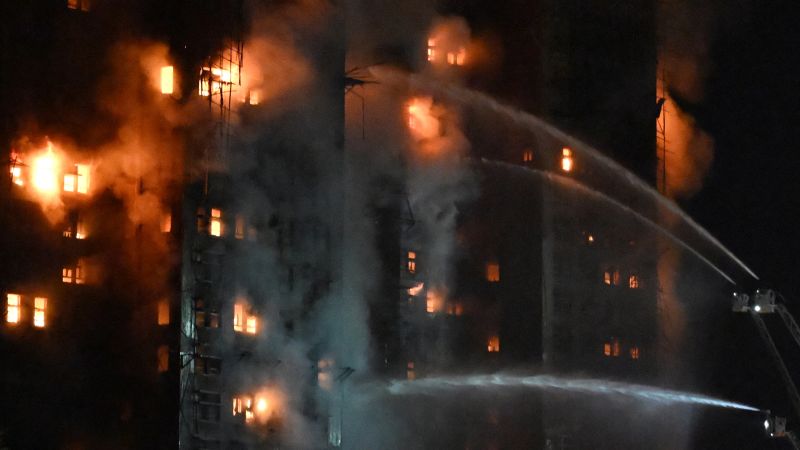
Seven people and two firms charged – In a significant legal development, Hong Kong’s authorities announced on Wednesday that seven people and two corporations have been formally indicted for a range of offenses, including manslaughter and conspiracy. The charges stem from the city’s most catastrophic fire incident in recent years, which occurred on November 26, 2025, and resulted in the tragic loss of 168 lives. The blaze, which engulfed seven residential buildings in the Tai Po district, has left families and communities grappling with grief, while investigators continue to piece together the causes behind the disaster.
A Night of Unimaginable Loss
The fire, which broke out in the Wang Fuk Court apartment complex, quickly spiraled out of control, turning what was once a familiar neighborhood into a scene of devastation. Located in the suburban district of Tai Po, the complex housed thousands of residents, many of whom were unaware of the risks lurking in their homes. For months, former occupants and loved ones of the victims have sought clarity, demanding accountability from those responsible for the collapse of safety measures that failed on that fateful night.
Authorities emphasized that the fire was not an isolated event but the result of a combination of factors, including structural flaws and negligence. The Independent Commission Against Corruption (ICAC) played a pivotal role in the investigation, uncovering evidence of systemic failures that contributed to the tragedy. While the exact sequence of events is still under scrutiny, the indictment of seven individuals and two firms marks a critical step in addressing the failures that led to the disaster.
The Legal Framework of the Charges
The charges against the seven people and two companies include 25 distinct offenses, ranging from manslaughter to conspiracy to commit fraud. Among the allegations are accusations of money laundering, attempting to obstruct justice, and tax evasion. These charges suggest that the defendants not only failed to uphold safety standards but may have also engaged in deceptive practices to conceal their role in the incident.
Each of the seven individuals is believed to have played a unique part in the major renovation project of Wang Fuk Court. The two companies involved—designated as the project consultancy and the main contractor—are now under scrutiny for their oversight and adherence to regulations. The court proceedings, set to begin Wednesday afternoon, will determine the next steps in holding these parties accountable for their actions.
Investigations and Arrests
By March 2026, the police had already arrested 38 individuals in connection with the incident, alleging involvement in offenses such as manslaughter and fraud. Of these, nine were formally charged, with the remaining suspects still awaiting court decisions. Meanwhile, the anti-graft agency added to the case by arresting an additional 23 people on suspicion of bribery and conspiracy to defraud. These arrests highlight the broad scope of the investigation, which now spans both criminal and corruption-related charges.
The legal proceedings have been shaped by the extensive evidence gathered during the inquiry. The Independent Commission Against Corruption, in collaboration with the police, has compiled a detailed list of allegations, including improper documentation of safety protocols and potential cover-ups of critical errors. As the case unfolds, the focus remains on how these failures were compounded by human negligence and corporate mismanagement.
Human Error and Systemic Failures
Victor Dawes, a legal representative for the independent committee overseeing the fire’s investigation, stated in a recent statement that “almost all fire safety systems failed on the day of the blaze due to deliberate human error.” This assertion underscores the gravity of the situation, suggesting that the disaster was not merely a result of mechanical malfunctions but also of decisions made by individuals and organizations tasked with ensuring safety.
“The collapse of safety measures was a direct consequence of negligence at every level,” Dawes said. “From the initial design of the buildings to the final inspection, there were clear lapses that should have been prevented.”
Dawes’ comments align with findings from the ongoing inquiry, which has identified multiple points of failure. These include the absence of emergency exits in certain areas, the improper installation of fireproofing materials, and the lack of timely maintenance on critical systems. The independent committee has also highlighted the role of poor communication between the two companies involved, which may have led to a failure in coordinating safety protocols during the renovation.
The legal charges are not only a reflection of the immediate consequences of the fire but also a broader critique of the oversight processes in place. The project consultancy firm, accused of providing inadequate guidance, and the main contractor, blamed for cutting corners during construction, are now facing the full weight of the law. Their defense teams will argue that the fire’s severity was unforeseen, but the evidence presented thus far paints a picture of preventable tragedies.
Community Impact and Ongoing Concerns
The fire has left an indelible mark on the Wang Fuk Court community, disrupting the lives of thousands and raising urgent questions about housing safety. Many residents, who had lived in the complex for years, are now questioning whether their homes were built to withstand such disasters. The incident has sparked calls for stricter regulations and more rigorous inspections, particularly in older apartment buildings undergoing renovations.
As the court hearings proceed, the case will serve as a focal point for public discourse on accountability and transparency. Families of the victims are hopeful that the charges will lead to justice, while others are concerned about the broader implications for Hong Kong’s construction industry. The legal battle is expected to shed light on the interconnected systems that govern residential safety, from regulatory compliance to corporate accountability.
With the cases set for court on Wednesday afternoon, the outcome could have far-reaching consequences. The seven individuals and two companies face not only potential penalties but also the scrutiny of a community that has lost trust in the systems meant to protect them. As the trial begins, the focus will remain on whether these parties can be held responsible for the lives they claimed in the catastrophic inferno.
Looking Ahead
The charges represent a milestone in the long process of uncovering the truth behind the fire. However, the case is far from closed. The independent committee continues its inquiry, and further details may emerge as evidence is presented. For now, the seven people and two firms stand accused, their fates hanging in the balance as the legal system seeks to deliver justice to the families who lost loved ones in the most devastating fire in decades.
