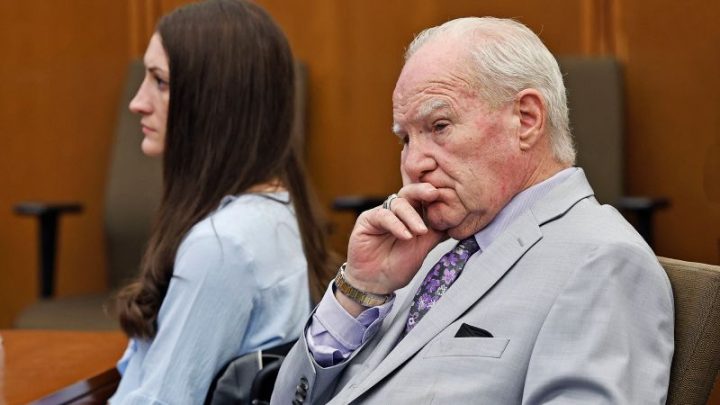
Texas judge denies Karmelo Anthony’s request for new trial in deadly stabbing at track meet

Karmelo Anthony’s Retrial Bid Rejected in Texas
Earthguardiansonline.com – A Texas judge denies Karmelo Anthony’s request for a new trial, ending what had grown into one of the most scrutinized criminal appeals in recent state history. Judge Michael Chitty of Collin County issued a brief order Saturday, ruling that the 19-year-old former basketball star will not get another chance to contest his conviction for the April 2025 stabbing death of 17-year-old Austin Metcalf at a high school track meet. The ruling followed a two-day hearing held near Dallas, during which Chitty said only that he had reviewed the evidence and both sides’ arguments before reaching his conclusion.
Anthony was convicted of murder in June and sentenced to 35 years in prison. The jury’s verdict, reached after days of testimony from spectators, coaches, and family members, stunned the small Collin County community and, through viral social-media clips, drew national attention. With the retrial motion now turned down, the conviction and sentence remain in force unless an appellate court reverses them.
Defense Prepares to Appeal
Russell Wilson, Anthony’s attorney throughout the case, confirmed the team will file a notice of appeal. He framed the next phase as a continuation of the same advocacy that carried the defense through trial.
“Our commitment to our client has not changed,” Wilson told reporters. “We will continue to advocate vigorously on his behalf through every lawful avenue available.”
That language echoed a consistent public posture since the verdict: a steady insistence that trial errors warrant correction. Earlier in the retrial proceedings, Anthony also withdrew plans to testify himself, a move his lawyers described as tactical rather than a concession of weakness.
Prosecutors Back the Court’s Ruling
Collin County District Attorney Greg Willis issued a statement shortly after the denial was announced, calling the trial fair and the outcome final at the trial-court level.
“We respect, and expected, the court’s decision denying the motion for a new trial,” Willis said. “The jury’s guilty verdict stands, and we remain confident in the process. Every defendant has the right to appeal, and our thoughts and prayers remain with the Metcalf family in the painful wake of last week’s hearing.”
Bill Wirskye, the prosecutor who argued the state’s case at trial, told reporters this week that nothing in the retrial arguments altered his assessment of the evidence.
Two Pillars of the Retrial Petition
The defense’s motion rested on two distinct complaints. The first challenged the trial itself, contending that the evidence did not support a murder verdict and that Anthony’s self-defense claim deserved reconsideration. The second targeted the conduct of trial judge John Roach, who had presided over the original proceedings.
Anthony’s lawyers argued that Roach’s courtroom rules were so restrictive they effectively shut the public out of the trial, limiting who could observe and how proceedings were broadcast. They further asked that Roach recuse himself from overseeing the retrial motion, pointing to a posttrial television interview in which he told a Dallas-area station’s viewers the jury had “got it right.” In the defense’s framing, that remark signaled a pre-formed opinion incompatible with impartial oversight. Roach pushed back, saying his rules were necessary to manage a proceeding that had drawn intense outside attention, and prosecutors sided with him.
Social Media and the Broader Conversation
The stabbing would have remained a local tragedy but for the speed with which video clips and commentary spread online within hours of the April 2025 incident. Anthony is Black; Metcalf was white. Within days, the killing had been folded into national debates about race, policing, and youth violence, and both families found themselves under sustained public scrutiny and, in some instances, harassment.
Lawyers on both sides told jurors during trial that the case had nothing to do with race and asked them to decide solely on the facts of the confrontation. The jurors ultimately rejected Anthony’s assertion that he was defending himself during a scuffle in the bleachers. They returned a murder verdict, and the sentencing judge imposed the 35-year term.
What Happens Next
With the retrial motion denied, the case moves to the appellate stage if the defense files its notice of appeal. A higher court will then review whether trial errors—evidentiary, procedural, or judicial—warrant a new proceeding. Until that review concludes, Anthony remains in custody serving his sentence.
Frequently Asked Questions
When was the retrial motion decided? Judge Michael Chitty issued his order on Saturday following a two-day hearing held near Dallas in Collin County, Texas.
What sentence is Karmelo Anthony serving? He was sentenced to 35 years in prison after his June murder conviction for the April 2025 stabbing death of Austin Metcalf.
What grounds did the defense raise for a new trial? The petition challenged both the sufficiency of the evidence supporting the murder verdict (arguing self-defense) and the conduct of trial judge John Roach, including his restrictive courtroom rules and a posttrial television remark.
Will the case go to an appellate court? Attorney Russell Wilson confirmed the defense will file an appeal, making an appellate review the next procedural step.