
The most controversial fossil site in human evolution just got even more puzzling
The Most Controversial Fossil Site in Human Evolution Just Got Even More Puzzling
The most controversial fossil site in human – For over a decade, the Rising Star cave system in South Africa has captivated researchers with its enigmatic collection of human-like fossils. Now, a new revelation from this deep and labyrinthine site is challenging existing theories about our evolutionary past. Scientists analyzing ancient proteins from 20 individuals discovered that all the remains belonged to females, raising questions about the species’ social behaviors and its place in the broader narrative of human origins.
Unearthing a Unique Hominin
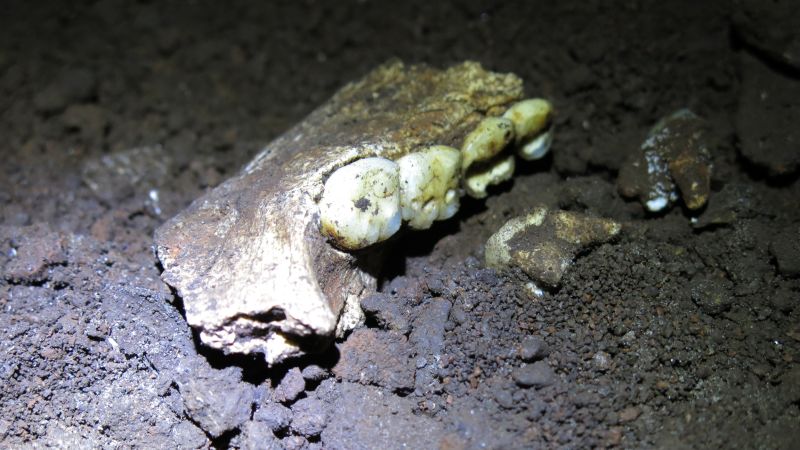
The Rising Star cave system, located in the Cradle of Humankind, has long been a focal point for paleoanthropologists. In 2015, a groundbreaking discovery was made within the Dinaledi Chamber, where over 1,500 fossils were unearthed. These remains, later classified as Homo naledi, defied conventional expectations. Despite their brain size being comparable to that of modern chimpanzees, the species exhibited features suggesting advanced cognitive abilities, such as deliberate burial of the dead. This practice, once considered uniquely human, hinted at complex social structures in Homo naledi.
Sexual Dimorphism and the Protein Clue
Recent research has added a layer of complexity to this already intricate story. A study led by molecular scientist Palesa Madupe, now a postdoctoral researcher at the Max Planck Institute for Evolutionary Anthropology, revealed that all the analyzed fossils originated from females. Madupe examined 23 tooth enamel samples, but two were unusable and two belonged to the same individual, narrowing the dataset to 20. The absence of the Y-linked amelogenin protein in each sample was the key evidence. This protein, typically present in males, is a marker for the presence of the Y chromosome, which is absent in females.
“When these results came out, there were a lot of quite nervous scientists. This was not what we expected,” said Lee Berger, a paleoanthropologist and National Geographic explorer in residence. Berger, who coauthored the study, emphasized the need for thorough validation, as two independent labs confirmed the findings. The technique used—paleoproteomics—has been applied to other ancient remains, including 2-million-year-old fossils from earlier human relatives. However, the results from Rising Star are particularly striking, as the Homo naledi remains are dated to between 335,000 and 241,000 years ago.
Sex Bias in Rituals or Genetic Anomalies?
Benjamin Berger, the lead researcher, proposed that the site’s lack of male remains could indicate a sex-specific mortuary practice. He suggested that Homo naledi may have buried their deceased according to gender, a concept previously observed in human cultures. “In hindsight, I should have noticed earlier that the fossils seemed to belong to females,” Berger admitted. “The adult remains found in the Dinaledi Chamber showed little variation in size and shape, which is unusual for hominins.”
Sexual dimorphism—the differences in size and physical traits between males and females—is a common feature in many animal species. However, the Homo naledi fossils exhibited minimal such variation, leading to the claim that they are the least sexually dimorphic ancient hominid ever documented. This characteristic, combined with the recent protein data, has sparked a debate about whether the species’ burial habits were purposefully gendered or if genetic factors might explain the absence of males.
Unraveling the Mystery
Enrico Cappellini, a professor at the Globe Institute in Copenhagen and one of the study’s senior authors, offered an alternative explanation. He noted that the AMELY gene, responsible for producing the Y-linked amelogenin protein, might have been deleted or mutated in some individuals. “This deletion has been observed in certain living males and even in a Neanderthal’s DNA,” Cappellini explained. “But it would be very unlikely for this to occur in more than half of the 20 individuals we studied, or across an entire population.”
The findings, published in the journal Cell, suggest that the sex of the remains could be determined by either systematic burial practices or genetic anomalies. This dual possibility adds to the site’s intrigue, as it challenges the assumption that the absence of male fossils reflects a cultural choice rather than a biological one. “The implications are huge,” Berger said. “This shows that even in ancient times, there might have been a distinction between male and female roles in ritualistic behaviors.”
A Broader Impact on Human Origins
The Rising Star cave system has long been a treasure trove for understanding human evolution. Alongside the Homo naledi remains, researchers have also uncovered fossils of a bizarre gliding creature that roamed the skies 120 million years ago. These discoveries highlight the diverse evolutionary paths taken by ancient species, many of which remain shrouded in mystery. The recent sex analysis of Homo naledi fossils, however, is particularly significant as it shifts the focus from physical differences to behavioral patterns.
“This study underscores the importance of interdisciplinary approaches in paleontology,” said Cappellini. “By combining ancient protein analysis with traditional fossil studies, we can uncover new insights into how these species lived and interacted.” The findings also invite comparisons with other hominin species, such as the Denisovans or Neanderthals, which showed varying degrees of sexual dimorphism. For Homo naledi, the lack of such differences may suggest a unique social structure, or it could simply be a case of rare genetic mutations.
As the scientific community grapples with these new revelations, the Rising Star site continues to serve as a critical window into our evolutionary past. The mystery of why only females were found there—whether due to ritualistic practices, genetic factors, or other unknown variables—remains a focal point for researchers. “This is one of the great scientific lessons that come out of this site,” Berger concluded. “It reminds us that even the most unexpected discoveries can reshape our understanding of human origins.”
