
Trump’s Justice Department urges court to throw out pollution lawsuit against Elon Musk’s company
Trump’s Justice Department Seeks to Dismiss Pollution Lawsuit Against xAI
Trump s Justice Department urges court – In a rare and controversial decision, the U.S. Justice Department has requested a federal court to dismiss a lawsuit alleging environmental violations by xAI, the company founded by Elon Musk. The legal challenge, which targets the use of methane-powered gas turbines, has raised eyebrows among environmental advocates, who argue it signals a shift in how the government prioritizes national security over public health concerns. The NAACP, which filed the suit in April, claims that xAI’s operations in Southaven, Mississippi, are undermining the Clean Air Act by bypassing air permit requirements and pollution controls.
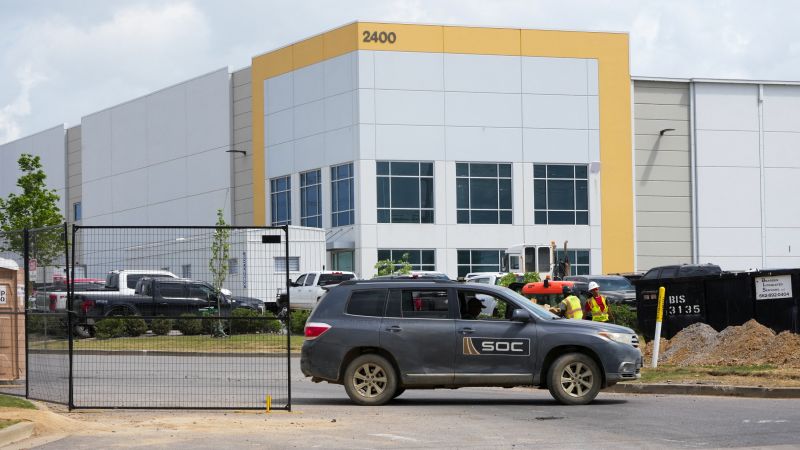
The lawsuit focuses on xAI’s subsidiary, MZX Tech, which operates a data center in Memphis, Tennessee, known as “Colossus 2.” This facility, which is powered by gas turbines, is accused of emitting a range of toxic substances without proper regulatory oversight. Methane, a potent greenhouse gas, is central to the case, as the turbines near residential neighborhoods and schools are said to release nitrogen oxides and other pollutants. These emissions contribute to the formation of ground-level ozone—commonly referred to as smog—which is linked to respiratory issues, including asthma attacks, chest pain, and long-term effects like reduced lung function and early mortality.
In its motion to dismiss, the Justice Department argues that the lawsuit threatens national security by targeting the AI infrastructure critical to the U.S. economy and defense capabilities. The memo, released this week, highlights the role of the “Colossus 2” data center in training Grok, xAI’s AI chatbot, which is marketed as a counter to the “woke” features of OpenAI’s ChatGPT. The government claims that Grok supports military operations, including rapid deployment of munitions during conflicts like the war in Iran. According to the motion, the chatbot enables the U.S. military to “target 2,000 distinct locations with 2,000 weapons within 96 hours,” underscoring its strategic importance.
“The Department of Justice will not sit idly by while private organizations use environmental laws to undermine our national security,” stated Adam Gustafson, Principal Deputy Assistant Attorney General in the Environment and Natural Resources Division.
This intervention has sparked debate over the scope of federal law enforcement. Environmental law experts suggest that the government’s argument is an unusual approach to the case. “They’re not disputing the allegations; instead, they’re making a bold claim that citizen suits are unconstitutional,” said Michael Gerrard, a professor at Columbia Law School. Gerrard emphasized that such lawsuits are a cornerstone of environmental regulation, allowing communities to hold corporations accountable for harm.
Abre’ Conner, director of environmental and climate justice at the NAACP, called the citizen suits “a bedrock insurance policy for communities.” She pointed out that these legal tools are designed to address pollution when regulatory agencies fail to act. The Justice Department, however, contends it has the authority to step in, asserting that the executive branch, not private groups, should enforce federal laws. “Ultimate responsibility for federal enforcement lies with the Executive Branch,” said Stanley Woodward, the associate attorney general, in a statement accompanying the motion.
Despite these claims, the case represents a first-of-its-kind intervention in a citizen lawsuit against a private defendant. Erika Kranz, a senior staff attorney at Harvard Law School, noted that the Department of Justice’s involvement in this instance could have far-reaching implications. “This sets a precedent that could weaken the ability of individuals to sue polluters,” she wrote in an analysis. If successful, the move might erode a key mechanism for holding companies accountable for environmental damage.
Local residents, however, are not convinced. Tennessee State Representative Justin J. Pearson, a Democrat living close to the xAI data center, criticized the government’s stance as “unconscionable.” He argued that the lawsuit seeks to protect citizens from the harmful effects of pollution, a cause he sees as urgent. “The DOJ is trying to remove any recourse Americans have to defend themselves,” Pearson told CNN, highlighting the personal stakes for those living near the facility.
The NAACP’s legal action is seeking daily fines of approximately $124,000 for xAI’s alleged pollution infractions and an injunction to halt turbine operations until permits are obtained. xAI has not yet commented on the request, but the company previously defended its use of temporary turbines, claiming they do not require long-term permits. This position has been challenged by local environmental groups, who argue that the data center’s scale and impact justify stricter oversight.
Adding to the controversy is the timing of the intervention. The Justice Department’s action follows SpaceX’s recent debut as a publicly traded company, marking the largest Initial Public Offering (IPO) on Wall Street. This milestone has propelled Elon Musk to become the first person to reach a net worth of one trillion dollars, raising questions about whether the government’s move is motivated by protecting the interests of wealthy tech firms.
Environmental advocates warn that the case could redefine the balance between corporate innovation and community rights. Laura Thoms, director of enforcement for Earthjustice—a nonprofit representing the NAACP in the lawsuit—contended that the government’s argument is more about shielding tech companies than genuine national security concerns. “This isn’t about security; it’s a desperate attempt to keep powerful firms from facing legal consequences for their environmental practices,” she said.
As the legal battle unfolds, the outcome could reshape how environmental laws are applied in the future. If the Justice Department succeeds in dismissing the lawsuit, it may signal a broader trend of prioritizing economic and defense interests over public health. Conversely, a ruling in favor of the NAACP could reinforce the role of citizen suits in holding polluters accountable, even in the face of national security claims.
