
Visualizing the Venezuela earthquakes in maps and charts
Visualizing the Venezuela Earthquakes in Maps and Charts
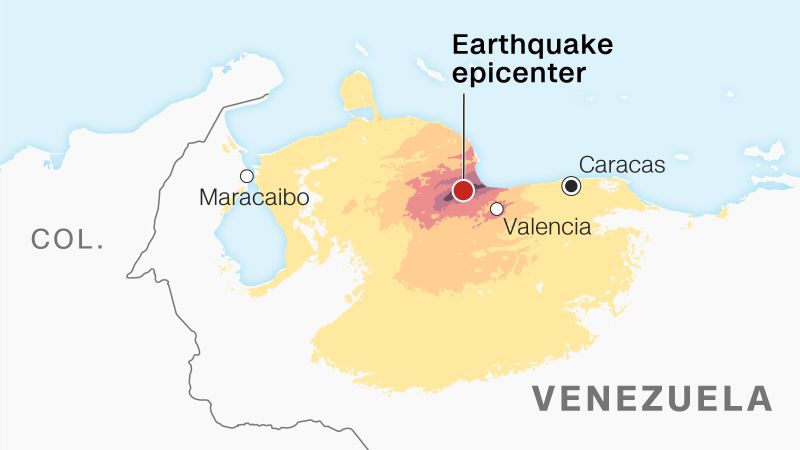
Visualizing the Venezuela earthquakes in maps – On the evening of June 25, 2026, Venezuela experienced a series of powerful seismic events that left a lasting mark on the region. Two major earthquakes, occurring within a short span of time, triggered widespread concern and chaos. By Thursday morning, the death toll had climbed to over 160, with hundreds more reported injured, and officials warned that the number of casualties could increase as the situation unfolds. CNN has been actively monitoring the crisis, providing real-time updates through a combination of visual maps and analytical charts to track the extent of the disaster and its implications.
A Sequence of Tremendous Impact
The first quake, measuring 7.2 on the Richter scale, was followed almost immediately by a second, more intense tremor with a magnitude of 7.5. This rapid succession of quakes, separated by just 40 seconds, has raised questions about their geological origins. The second earthquake, which registered as the strongest in Venezuela for more than a century, struck with such force that it was felt across both the country and its neighboring regions, including Colombia. The proximity of the quakes to populated areas amplified their destructive potential, leading to immediate calls for emergency assistance.
Earthquake magnitude is calculated using a logarithmic scale, which means that each whole number increase corresponds to a significant jump in energy. Specifically, a 7.5 magnitude quake releases 32 times more energy than a 7.2 magnitude one. This exponential difference makes the second tremor, though recorded at the same magnitude as the first, twice as powerful in terms of the energy it unleashed. Such a stark contrast in impact highlights the critical role of the scale in understanding the true severity of seismic events.
Regional Disruption and Infrastructure Damage
The quakes not only shook the ground but also disrupted essential services across Venezuela. According to data from the Netblocks watchdog, internet connectivity suffered a sharp decline, with power outages and telecommunications infrastructure damage crippling communication networks. This has complicated efforts to assess the full scale of the disaster, as residents in remote areas struggle to report their conditions. The destruction of power lines and cell towers has left many regions without access to critical information, further isolating communities in need of aid.
Maps and charts from CNN illustrate the spread of damage, showing which regions were most affected. The capital, Caracas, and surrounding areas were hit hardest, with reports of collapsed buildings, cracked roads, and damaged utility systems. The economic implications are also significant, as infrastructure repair efforts will likely require substantial resources and time. In addition to physical damage, the quakes have disrupted daily life, leaving families without electricity and businesses operating at a reduced capacity.
Historical Context and Scientific Insights
Venezuela’s seismic history provides some context for the recent events. While the country is not as seismically active as regions like Japan or Chile, it has experienced notable earthquakes in the past. The 7.5 magnitude quake on June 25 marks the most powerful recorded in over a century, surpassing previous records. Scientists are analyzing the quakes to determine if they were linked to tectonic activity in the Caribbean Plate or the South American Plate, which are known to interact along Venezuela’s coast.
The sequence of the quakes, with the first acting as a foreshock, suggests that the region may be on the brink of a larger seismic event. This pattern is often observed in tectonic zones where stress accumulates before a major release. The 7.5 magnitude quake, in particular, has raised alarms among geologists, who are closely monitoring the area for signs of further activity. The proximity of the quakes to the Andes mountain range also adds to the complexity, as it may influence the depth and direction of the seismic waves.
Community Response and Ongoing Challenges
Residents of Venezuela have been quick to respond, with local organizations and volunteers stepping in to assist those affected. However, the scale of the damage has outpaced initial relief efforts, prompting calls for international support. Maps from CNN show the spread of aftershocks, which continue to pose risks to both people and property. The charts also highlight the potential for secondary effects, such as landslides in mountainous regions, which could complicate rescue operations and exacerbate the crisis.
Authorities are working to restore power and communication services, but progress is slow. The impact on infrastructure has created a domino effect, with damaged roads hindering the movement of emergency vehicles and collapsed buildings trapping survivors. The government has declared a state of emergency, and evacuation orders have been issued in some areas. Meanwhile, the quakes have disrupted supply chains, affecting the availability of food, water, and medical supplies in the most affected regions.
“The sudden loss of internet connectivity across Venezuela underscores the fragility of the country’s infrastructure, especially in the wake of such a powerful seismic event,” said Netblocks, a group that tracks global internet performance. “This disruption could have long-term consequences for both emergency response and the overall recovery process.”
As the days pass, the focus remains on assessing the damage and planning for the long-term. The 7.5 magnitude quake has already been classified as a major event, and its aftermath will likely shape the region’s recovery efforts for months to come. With the potential for more quakes in the near future, the situation remains precarious, and the resilience of Venezuela’s communities will be tested. The combination of maps and charts provided by CNN offers a clear picture of the disaster, helping to guide both local and international aid efforts.
In the broader context, the earthquakes serve as a reminder of the unpredictable nature of natural disasters. Venezuela’s location on the edge of the South American Plate makes it susceptible to tectonic shifts, and the recent events highlight the need for improved disaster preparedness. As the nation grapples with the aftermath, the importance of real-time data and visual representation becomes evident, allowing for a more accurate understanding of the crisis. The maps and charts not only document the current situation but also provide a foundation for future risk assessments and mitigation strategies.
