
What we know about Venezuela’s biggest earthquake in more than a century
What We Know About Venezuela’s Largest Earthquake in Over a Century
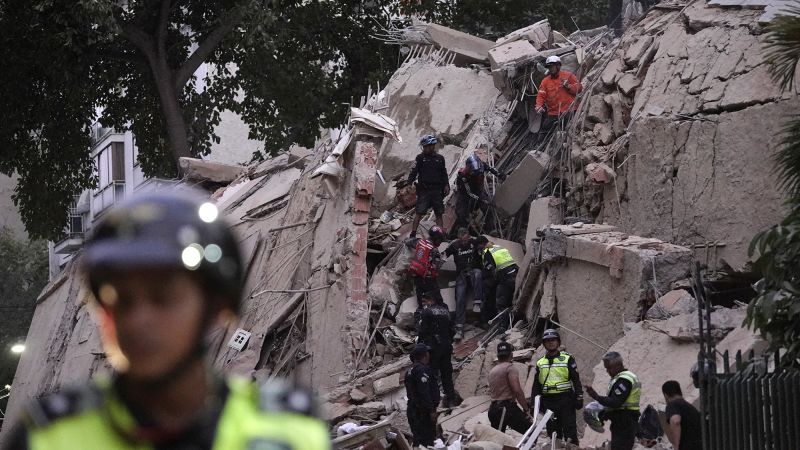
What we know about Venezuela s biggest – On Wednesday, Venezuela’s northern coast experienced a series of seismic shocks that left the nation reeling. Two major earthquakes, measuring 7.2 and 7.5 on the Richter scale, struck within a minute of each other, marking the most significant tremors in the country’s history in over a century. The quakes, which originated near San Felipe, the capital of Yaracuy state, and then 23 kilometers southeast of Yumare—a neighboring town in the same region—displaced thousands and triggered widespread panic. Initial reports indicated at least 164 fatalities and 971 injuries, though the actual toll is expected to climb as search teams continue their efforts.
Emergency Measures and Political Context
Venezuela’s interim administration, which has been in charge since the U.S. military captured President Nicolás Maduro earlier this year, declared a state of emergency in response to the disaster. This decision comes as the nation grapples with a deepening political crisis and an economy battered by years of hyperinflation. With resources stretched thin, the government has mobilized first responders across the country while seeking international support. The earthquakes have compounded existing challenges, including power outages and communication disruptions that have hampered immediate relief operations.
Quake Details and Public Holiday Impact
The first tremor, a magnitude 7.2 foreshock, occurred just after 6:04 p.m. ET, followed 40 seconds later by a more intense 7.5 magnitude quake. The epicenter, located near Yumare, caused widespread damage, with reports of collapsed buildings and infrastructure failures. The timing of the disaster—falling on a public holiday—meant many Venezuelans were at home or attending events, increasing their vulnerability. The tremors were felt across multiple states and even in neighboring Colombia, hundreds of kilometers away from the epicenter.
Residents’ Accounts and Immediate Reactions
Videos shared by CNN, geolocated from various regions, captured the chaos as people fled their homes, clutching belongings and pets. One Caracas resident described the scene as “like a horror movie,” with buildings crumbling and streets filling with frightened crowds. “The scene was like a horror movie,” said the individual, who escaped a damaged structure. Another survivor, Martha Añez, recounted the terror of being trapped in her apartment. “I couldn’t get out; there was hammering from one side and kicking from the other. I don’t know who actually rescued us, because they were shouting, ‘Get away from there, we’re coming and we are about six!’ until they finally burst through the door,” she told CNN.
“I couldn’t get out; there was hammering from one side and kicking from the other. I don’t know who actually rescued us, because they were shouting, ‘Get away from there, we’re coming and we are about six!’ until they finally burst through the door.”
Añez added that three floors of her building were “totally and absolutely wrecked,” emphasizing the scale of destruction. The earthquakes not only shattered physical structures but also left emotional scars, as residents gathered on streets to assess the damage and await news of missing loved ones.
Government Response and Infrastructure Crisis
Acting President Delcy Rodriguez, who assumed leadership after Maduro’s capture, announced the death toll and injury count in a televised address. She stressed that the number could rise further, underscoring the ongoing challenges in accounting for all victims. “We are currently engaged in arduous rescue operations to save as many lives as God allows. This is truly a tragedy,” Rodriguez said. She also highlighted the severity of the situation in La Guaira, which has been declared a disaster zone following the collapse of dozens of buildings, including a prominent waterfront hotel in Macuto.
Damage reports flooded in from across the country, with Catia La Mar witnessing several high-rises reduced to rubble. The U.S. Geological Survey (USGS) issued two separate red alerts via its PAGER system, warning of “high casualties and extensive damage.” This follows previous quakes in the region, which have often exposed the fragility of Venezuela’s infrastructure. The USGS noted that most residents live in structures ill-equipped to withstand such powerful shocks.
Communication and Transportation Disruptions
Following the quakes, Venezuela faced a sharp decline in internet connectivity, according to NetBlocks, a watchdog group tracking digital infrastructure. Power and telecom networks were damaged, cutting off access to critical information and slowing the coordination of rescue efforts. While connectivity improved slightly hours later, the disruptions are likely to affect the flow of updates from affected areas for the foreseeable future. Meanwhile, transportation services were also impacted, with Simon Bolivar Airport near Caracas temporarily closed after sustaining damage.
The government has since implemented emergency protocols, including the suspension of school classes nationwide for a week and the cancellation of non-essential activities. Authorities also announced nationwide prayers at 7 p.m. local time, urging citizens to unite in support of the victims. Security forces have been deployed to secure affected zones and assist in the search for survivors, while officials assess the structural integrity of buildings to prevent further casualties.
Long-Term Recovery Efforts
As the immediate aftermath subsides, the focus shifts to long-term recovery. Rodriguez revealed the creation of a high-level task force to oversee search and rescue operations and outlined an initial $200 million fund to rebuild the country. These measures aim to address the widespread devastation, though experts caution that the full cost of the disaster could far exceed current estimates. The collapse of infrastructure, combined with the country’s economic struggles, raises concerns about the speed and scale of recovery efforts.
The quakes have also reignited discussions about Venezuela’s preparedness for natural disasters. With the nation’s resources diverted to address political instability and economic decline, the response to this crisis highlights the challenges of balancing multiple emergencies. International teams are already en route to the country, offering hope that global support can alleviate the strain on local efforts. As night falls, rescue workers continue their tireless work, sifting through debris to find survivors trapped beneath the rubble.
The events of Wednesday serve as a stark reminder of the vulnerability of Venezuela’s coastal regions to seismic activity. While the exact magnitude of the disaster’s impact remains to be fully assessed, the combination of powerful quakes, fragile infrastructure, and a strained government has set the stage for an extended recovery period. For now, the nation holds its breath, waiting to see how the tragedy will shape its future in the months ahead.
