Why is there fighting in Lebanon and does it threaten the Iran deal?

Escalating Conflict in Southern Lebanon Tests US-Iran Agreement
Why is there fighting in Lebanon – Recent clashes between Israeli military forces and Hezbollah in southern Lebanon have raised concerns about the stability of the U.S.-Iran deal, which aims to resolve tensions over Iran’s nuclear program and sanctions. The ongoing violence, which has intensified in the past weeks, has forced the postponement of critical negotiations between the two nations, casting doubt on the agreement’s ability to maintain peace in the region. With both sides struggling to maintain control over the situation, the conflict’s impact on the fragile peace deal remains a focal point of international attention.
A History of Rivalry
The roots of the current conflict trace back to Hezbollah’s emergence as a dominant force in Lebanon during the 1980s. Backed by Iran, this Shiite Islamist group has long been at odds with Israel, driven by a shared goal of dismantling the Israeli state. Over the years, Hezbollah has developed a formidable arsenal of rockets, missiles, and drones, largely supplied by its Iranian allies. This has enabled the group to launch frequent attacks on Israeli territory, often in response to Israeli military operations in Lebanon.
One of the most notable confrontations occurred in 2006, when a Hezbollah raid into Israel resulted in the capture of two soldiers. The incident triggered an extensive Israeli campaign that spanned over a month, involving both air and ground operations. An independent Israeli report later described this conflict as a “serious missed opportunity,” noting that Israel’s military actions failed to achieve a decisive victory. Despite this, Hezbollah endured, and its influence in the region has only grown since.
The Ceasefire Deal and Its Collapse
In November 2024, Israel approved a ceasefire agreement that was meant to secure its withdrawal from southern Lebanon. The deal, part of broader U.S.-Iran talks, promised to end hostilities and preserve Lebanon’s territorial integrity. However, Israeli forces continued to operate beyond the stipulated deadline, conducting near-daily strikes on Hezbollah positions. These actions were justified by Israel as necessary to address perceived violations of the ceasefire by Hezbollah.
The agreement’s framework also emphasized the importance of ending attacks on Iran’s allies in Lebanon. For Tehran, this has always been a key demand in its negotiations with the U.S. A diplomat close to the talks told CNN that Iran insisted on guarantees that hostilities would cease before resuming discussions. The U.S. had previously outlined the deal’s terms, including a commitment to “immediate and permanent termination of military operations” on all fronts. Yet, the current situation has complicated these efforts, with the war in Lebanon becoming a focal point of contention.
A New Wave of Violence
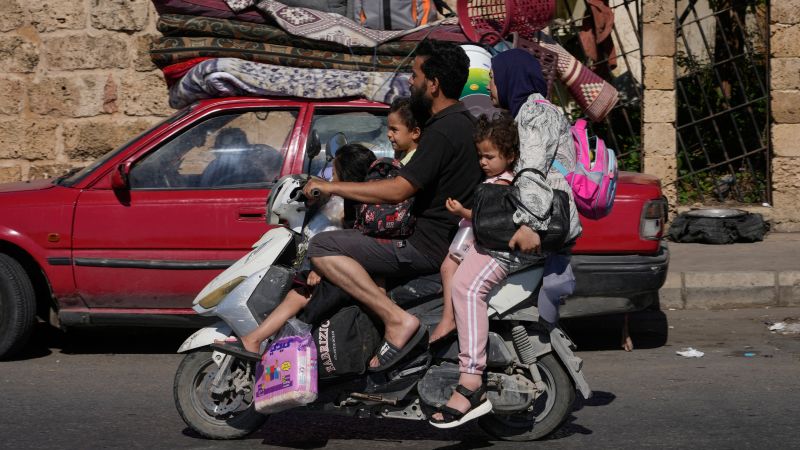
The conflict took a sharp turn in late February when Israel and the U.S. carried out an airstrike that killed Iran’s supreme leader, Ayatollah Ali Khamenei. This event marked the beginning of a new cycle of violence, as Hezbollah responded by launching rocket attacks on northern Israel. The Israeli military retaliated with a series of airstrikes, pushing deeper into Lebanese territory to establish a buffer zone. The operation led to the displacement of thousands of residents from southern Lebanon and the destruction of numerous homes.
As of now, over 3,900 people have been killed in Lebanon since the military escalation began. The health ministry reported these casualties, highlighting the human toll of the conflict. The Israeli government, under Prime Minister Benjamin Netanyahu, has remained resolute in its stance, stating that it will not withdraw from the region until its security needs are met. “We will restore security to the north,” Netanyahu declared in his first public remarks since the agreement was published, underscoring the importance of maintaining the security zone in southern Lebanon.
Quotes from Key Figures
“With all due respect to the Americans, Israel must make it clear to the entire world that the blood of our sons and the security of our citizens are not up for sacrifice.” – Itamar Ben Gvir, Israel’s far-right National Security Minister
Ben Gvir’s statement reflects the growing frustration within the Israeli government over the restrictions on its military actions. The U.S.-Iran agreement, which was announced earlier this year, had initially aimed to provide Israel with flexibility to target Hezbollah. However, the current escalation has tested this balance, with Israel’s continued strikes on Lebanese territory challenging the deal’s effectiveness.
“We expect a complete Ceasefire on all fronts, including Lebanon, Hezbollah, and Israel.” – Donald Trump, U.S. President
Trump’s remarks, posted on social media, reiterate the U.S. commitment to a comprehensive ceasefire. Yet, the reality on the ground suggests that achieving this goal may be more complex than anticipated. The deal’s success hinges on both sides adhering to its terms, but the persistent fighting in Lebanon has created a stalemate that threatens to derail the entire agreement.
Implications for the Iran Deal
The Iran deal, signed after months of tense negotiations, was meant to address longstanding issues between the U.S. and Iran, including the nuclear program and sanctions. However, the conflict in Lebanon has highlighted the challenges of maintaining peace in the region while balancing strategic interests. For Iran, the safety of Hezbollah is a non-negotiable condition, as the group plays a central role in Tehran’s regional ambitions. The ongoing violence has forced Iran to reconsider its participation in the talks, with some analysts warning that the deal could unravel if the situation in Lebanon remains unresolved.
At the same time, the Israeli government’s insistence on maintaining its military presence in Lebanon has created a dilemma for its allies. While the U.S. seeks to broker a ceasefire, Israel argues that its security cannot be compromised without risking a resurgence of Hezbollah’s attacks. This tension has complicated the negotiations, as both sides navigate the delicate balance between diplomacy and military action. The conflict in Lebanon, therefore, is not just a local issue but a critical test of the broader U.S.-Iran agreement.
Looking Ahead
As the situation in Lebanon continues to evolve, the international community watches closely for signs of a resolution. The agreement’s success will depend on whether both the U.S. and Israel can reconcile their differing priorities. For now, the fighting persists, with each side accusing the other of violating the ceasefire. The stakes are high, as the conflict’s outcome could determine the future of the Iran deal and the stability of the Middle East.