Where Trump sees a deal, Putin sees a win for Russia

Daftar Isi
Trump’s Search for a Ukraine Deal Meets Putin’s Different Calculation
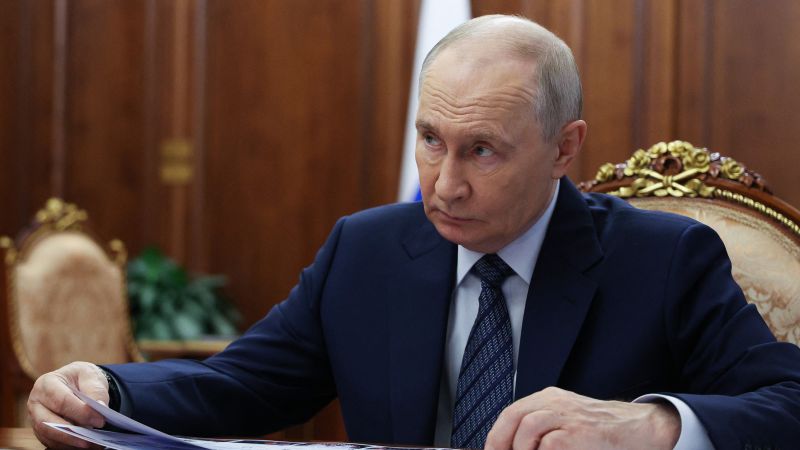
Earthguardiansonline.com – Donald Trump’s approach to ending the war in Ukraine rests on a belief that a negotiated settlement could quickly stop the bloodshed and unlock major economic opportunities. Vladimir Putin, however, appears to view the same diplomatic opening through a far different lens: as evidence that Russia’s pressure on Washington is paying off.
For Trump, the case for a rapid agreement is straightforward. The conflict, now in its fifth year, continues to kill large numbers of soldiers on the front lines each month. He has repeatedly described them as “young, beautiful kids,” framing a settlement as both a humanitarian necessity and a practical business opportunity. In this view, ending the war could clear the way for sanctions relief, renewed trade and a broader period of prosperity.
But the Kremlin’s objectives have not appeared to shift simply because economic incentives are offered. Putin has maintained hardline demands, including Russian control over the entire Donbas region in eastern Ukraine and influence over Ukraine’s future security arrangements. Those positions leave limited space for the type of quick compromise Trump has envisioned.
St. Petersburg Talks Highlight the Divide
The contrast was visible during Steve Witkoff’s meeting with Putin in St. Petersburg. Witkoff, Trump’s special envoy and longtime business associate, traveled to Russia to test whether a new peace proposal could provide a foundation for negotiations.
Putin asked about discussions held in Norway a day earlier, where US, European and NATO officials met with Ukrainian President Volodymyr Zelensky to work through possible peace proposals. The ideas included economic incentives intended to make an agreement more attractive to Moscow.
After the St. Petersburg meeting, a senior Kremlin aide said the Russian president had been briefed on those talks. Yet the Kremlin’s assessment was dismissive.
“In truth, these contained little of actual value for resolving the Ukrainian crisis.”
That response underscored the central problem confronting US diplomacy: Moscow does not seem to regard financial inducements as sufficient reason to retreat from its war aims. Rather than treating proposed concessions as a basis for mutual compromise, Russia may see them as confirmation that it can keep pressing for more favorable terms.
Economic Offers and Political Signals
The White House may have expected greater flexibility from Moscow after Trump lifted sanctions on Russian diesel exports the previous week. The move was linked to an effort to lower fuel prices in the United States before the midterm elections, while also providing Russia with a significant economic benefit.
Trump later announced an energy ceasefire that ultimately did not succeed. The proposal would have required Ukraine to stop drone strikes that had damaged Russian oil refineries. The dispute surrounding those efforts also affected US intelligence sharing, while Trump called for a change in Ukraine’s leadership.
Such developments were likely welcome in Moscow. But Russian officials do not appear to interpret them as reasons to make corresponding concessions. Instead, the Kremlin may see them as signs that its strategy is generating results: maintaining military pressure while keeping the prospect of business ties and diplomatic engagement open.
Putin’s government has repeatedly used potential commercial cooperation as part of its outreach to the Trump administration. During the St. Petersburg talks, Putin praised the diesel arrangement and suggested Russia could increase supplies of key fertilizers to the United States.
Kiril Dmitriev, who heads Russia’s sovereign wealth fund and has served as an important contact with Trump administration figures, said the three-hour meeting also covered broader commercial possibilities.
“We are also discussing different projects such as data centers, projects in energy and energy cooperation,” Dmitriev said.
These proposals carry political value beyond their commercial merits. They offer Trump the prospect of visible economic achievements while allowing the Kremlin to project itself as a potential partner despite the continuing war. For Putin, the appeal is not necessarily an immediate agreement, but the chance to shape Washington’s priorities and weaken the pressure for a settlement on terms favorable to Kyiv.
Humanitarian Gestures in a Wider Strategy
Russia also paired diplomatic engagement with a high-profile humanitarian gesture. Before the St. Petersburg meeting, Putin released Stephen Hubbard, a 74-year-old American citizen from Michigan who had been held by Russia since he was captured in Ukraine in 2022, at the beginning of Moscow’s full-scale invasion.
Witkoff described Putin as “a humanitarian” in connection with Hubbard’s release. Hubbard was reported to have suffered serious health problems while in custody, giving the case particular emotional weight.
The release offered the Kremlin another way to cultivate goodwill with the Trump administration. Prisoner releases can be meaningful for families and for diplomatic relations, but they do not in themselves resolve the deeper disagreements that have kept the war going. Russia’s willingness to make selective gestures has existed alongside its continued insistence on demands Ukraine and its European partners are unlikely to accept.
A Fundamental Misreading?
The gap between Trump’s deal-making instincts and Putin’s strategic goals may explain why repeated efforts to move toward negotiations have failed to produce a breakthrough. Trump appears to see economic normalization, sanctions relief and reduced casualties as mutually beneficial incentives. Putin appears focused on securing outcomes that would reshape Ukraine’s territory, security position and political future.
That difference matters because each side may believe it is offering something valuable while the other sees little reason to respond. Washington can present trade, energy cooperation and sanctions relief; Moscow can offer selective cooperation, humanitarian gestures and the possibility of talks. Yet none of those steps addresses the core dispute over sovereignty, territory and Ukraine’s security.
As long as the Kremlin believes time and pressure are working in its favor, the promise of a quick, profitable peace may not be enough to change its calculation. For Trump, a deal could represent an end to a devastating war and a route to renewed business ties. For Putin, the current diplomatic environment may look less like a reason to compromise than an opportunity to seek a Russian victory on terms of his choosing.
Related Reading
Frequently Asked Questions
What is Where Trump sees a deal Putin?
Where Trump sees a deal Putin is the main topic of this guide. The article explains the context, practical details, and next steps readers should understand.
Why does Where Trump sees a deal Putin matter?
Where Trump sees a deal Putin matters because readers are looking for a useful answer, not just a short summary. Good content should match search intent and help them decide what to do next.