Iran reports commercial vessel struck in Strait of Hormuz

Daftar Isi
Commercial Vessel Hit Near Qeshm as Strait of Hormuz Tensions Deepen
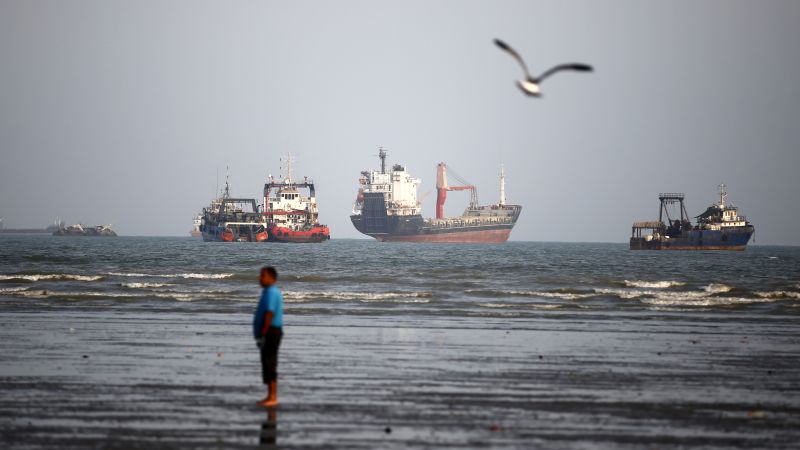
Earthguardiansonline.com – An Iranian commercial ship was struck near Qeshm Island in the Strait of Hormuz late Saturday, Iranian state media said, with one person killed and four others injured. The incident comes as Iran and the United States remain locked in a confrontation over access to one of the world’s most important energy shipping routes.
Iran’s state broadcaster, IRIB, said the vessel was attacked close to Qeshm, a strategically placed island near the Iranian port city of Bandar Abbas. The island lies roughly 14 miles from Bandar Abbas and is central to Tehran’s ability to influence traffic moving through the narrow waterway.
The governor of Qeshm was cited by the state-run Islamic Republic News Agency as blaming a “terrorist enemy” for the strike. No party has publicly claimed responsibility, and US authorities had not commented. US Central Command was asked for a response.
The reported attack occurred shortly before planned discussions in Oman involving Iran and Gulf Arab states on the future management of shipping in the strait. Those talks were later postponed, highlighting the diplomatic difficulties surrounding efforts to ease the crisis.
Multiple Maritime Incidents Under Investigation
It remains unclear whether the Iranian vessel was the same ship involved in a separate incident off Oman’s coast. India’s Ministry of External Affairs said Sunday that the Panamanian-flagged MT El Gaia had been attacked, with 14 Indian nationals among its crew.
Thirteen Indian crew members had been rescued, ministry spokesperson Randhir Jaiswal said in a post on X, while search-and-rescue work continued for one missing Indian national.
“Of the 14 Indian crew onboard, 13 Indians have been rescued so far. Search and Rescue operations for the missing Indian national are continuing.”
In another event late Saturday, the United Kingdom Maritime Trade Operations Centre said a vessel in the strait had been struck by an unidentified projectile. A fire followed, and local authorities assisted with evacuating crew members. The vessel’s registration was not disclosed.
The series of incidents underscores the danger facing commercial crews in waters that normally carry a major share of global oil supplies. Before the conflict, roughly 20 million barrels of oil moved through the Strait of Hormuz each day. Shipping volumes remain about 90% below their pre-conflict level, sharply limiting movement through the corridor.
Shipping Talks Delayed in Oman
Iran had been expected to meet Gulf officials in Oman on Monday to address maritime traffic. Iranian Foreign Ministry spokesperson Esmail Baghaei said Saturday that senior diplomats from Gulf Arab countries were expected to attend discussions with Iran’s foreign minister.
Omani Foreign Minister Badr Albusaidi said Sunday that the meeting had been delayed “in the interests of consensus.” Bahrain had already said it would not participate, and it was uncertain which other countries would have joined had the gathering gone ahead.
Oman holds the opposite shore of the Strait of Hormuz and has spent months in negotiations with Iran over possible rules for shipping. Yet Tehran has repeatedly indicated that any arrangement would depend on broader disputes with Washington rather than a simple regional deal.
Iranian President Masoud Pezeshkian tied the prospect of reopening the route to a change in US policy during an interview with India Today TV on Saturday.
“The waterway would be opened up on the condition that the US will terminate its blockade.”
Ebrahim Azizi, who leads the Iranian parliament’s national security committee, expressed a similar position in a post on X.
“As long as the American side does not accept all of Iran’s conditions, dialogue and negotiation are of no use.”
A senior Iranian official said Sunday that the intended talks were meant to support regional security and develop “safe maritime routes,” but cautioned that they would not automatically restore normal passage through Hormuz.
“However, this agreement does not imply an automatic reopening of the Strait of Hormuz.”
“The strait will not become secure until the US fulfills its obligations and halts its naval blockade and economic warfare.”
Pressure Extends Toward the Red Sea
The Hormuz crisis is unfolding alongside a widening conflict involving Yemen’s Iran-backed Houthi rebels. The group said Sunday that it had attacked a Saudi military base in the Sharurah area, using what spokesperson Yahya Saree described as a “barrage of ballistic missiles and drones.”
Saree said the operation targeted weapons storage sites as well as command-and-control rooms, without giving a time for the strike. The Houthis have intensified their confrontation with Yemen’s Saudi-backed government and expanded their presence toward a critical Red Sea route linking Asia and Europe.
The group had said Saturday that Saudi forces carried out 129 airstrikes, adding another layer to a regional conflict now affecting two vital maritime passages. The Strait of Hormuz connects the Persian Gulf to the Gulf of Oman, while Red Sea routes are essential for shipping moving toward the Suez Canal and Mediterranean markets.
For energy markets and shipping companies, the risks in these waterways reach beyond individual attacks. Lower traffic through Hormuz can disrupt crude oil deliveries, raise insurance and transport costs, and increase uncertainty for importers dependent on seaborne fuel supplies. Attacks, evacuations and rescue operations also place civilian crews at immediate risk.
With diplomatic discussions delayed and no clear explanation for the latest strikes, commercial shipping through the region remains exposed to further disruption. The unresolved dispute over the US blockade, Iran’s conditions for reopening the route, and the expanding conflict in Yemen leave little indication that normal maritime traffic will return quickly.
Related Reading
Frequently Asked Questions
What is Iran reports commercial vessel struck in Strait?
Iran reports commercial vessel struck in Strait is the main topic of this guide. The article explains the context, practical details, and next steps readers should understand.
Why does Iran reports commercial vessel struck in Strait matter?
Iran reports commercial vessel struck in Strait matters because readers are looking for a useful answer, not just a short summary. Good content should match search intent and help them decide what to do next.