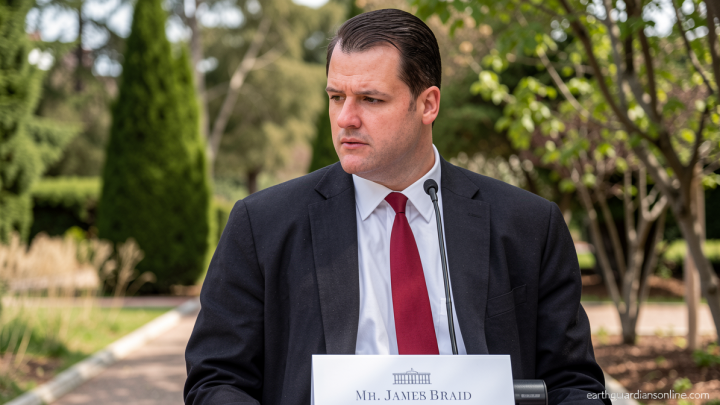
China-linked hackers impersonated US AI insiders as global race heats up

Daftar Isi
Suspected China-Aligned Hackers Targeted US AI Policy and Security Experts
Earthguardiansonline.com – People involved in shaping US artificial-intelligence policy and studying the military uses of the technology were targeted in an apparent espionage effort that used the identities of prominent AI and government figures.
The campaign, detected by Silicon Valley cybersecurity firm Proofpoint, involved emails that impersonated an Anthropic employee and former US officials. The apparent goal was to obtain access to the email accounts and professional networks of people with expertise in AI export controls, national security and AI governance.
The activity took place in February and July, at a moment when artificial intelligence has become an increasingly important point of competition between Washington and Beijing. Proofpoint said it had not identified evidence that the targeted organizations were successfully compromised. Still, cybersecurity specialists warn that state-linked groups can repeatedly pursue valuable targets over time.
Focus on AI policy, export controls and military applications
The recipients included experts working at US universities, think tanks and law firms. Their work places them close to debates over how advanced AI systems should be regulated, how powerful computing technology should be protected and how AI may be used in defense settings.
Access to those accounts could provide insight into the way US institutions are weighing the opportunities and risks of rapidly advancing AI. Such information could be useful to a foreign government seeking to understand potential export restrictions, security priorities or policy disagreements before they become public.
Proofpoint researcher Mark Kelly said the company assessed the group as aligned with the Chinese government after examining the choice of targets, technical indicators and supporting information from industry partners.
“We are confident that [the hacking group] is a Chinese government-aligned threat actor based on targeting consistently in line with Chinese government interests, observed infrastructure and technical artifacts, and corroboration from industry partners,”
Beijing has frequently rejected US allegations involving cyber espionage. A request for comment was sent to the Chinese Embassy in Washington, DC.
Impersonation of Lynne Parker
One part of the operation used the identity of Lynne Parker, who held senior technology roles at the White House during the Trump and Biden administrations. The message sent under her name invited an employee of a US law firm to join an “AI policy advisory committee.”
A later email contained a document that was presented as further information about the supposed committee but was designed to deliver malware. The tactic relied on a familiar and trusted name to make an unexpected invitation appear credible.
Parker, now associate vice chancellor emerita at the University of Tennessee, Knoxville, said colleagues alerted her after receiving messages sent by people claiming to be her.
“My first concern was for the colleagues who might receive the impersonated email,”
She said the difficulty was that she could not warn every possible recipient because she did not know who had been selected.
“I wanted to warn them but realized that’s very difficult to do when I don’t know who is being targeted.”
Parker also described the personal impact of seeing professional relationships used as a tool for deception.
“On a personal level, I felt sadness that relationships I’ve built over my career were being exploited by bad actors to deceive others,”
Anthropic identity used in credential-theft attempt
Proofpoint also identified an email sent on February 26 that impersonated a senior employee at Anthropic, a US AI company known for its Claude models. The recipient was an AI policy analyst at a US think tank.
The message used the subject line “Request for Feedback on Military Integration of Claude,” framing the exchange as a discussion about defense use of the company’s technology. During the ensuing correspondence, the operators attempted to obtain the analyst’s email login credentials.
The timing was notable. One day after that email, the Trump administration directed federal agencies and military contractors to end business with Anthropic after the company declined to let the Pentagon use its AI technology without restrictions.
That episode illustrates why messages about AI policy, military integration and commercial access can be especially persuasive. These are active subjects of debate involving government agencies, research organizations, technology companies and legal advisers. An email that appears to invite informed feedback can exploit the ordinary professional exchange of ideas in this field.
AI competition creates a broader security challenge
The attempted intrusions emerged as the United States and China compete for influence over a technology widely seen as strategically significant. President Donald Trump discussed AI with Chinese leader Xi Jinping at the White House last week, though the meeting did not result in a substantive agreement on the issue.
Trump has pushed back against proposals for stricter safeguards on highly advanced AI models, arguing that excessive limits could leave the United States behind China. At the same time, the administration accused Chinese AI companies last month of carrying out “industrial-scale” theft of American competitors’ trade secrets in an effort to cut costs and accelerate development. China denied that accusation.
Concerns about the transfer of AI expertise extend beyond the United States. Britain’s MI5 said Wednesday that academics in the United Kingdom had contributed AI and cybersecurity research to a Chinese institute with close links to Chinese intelligence. The advisory indicated that some researchers may not have understood those ties.
The cases point to a security problem that reaches beyond source code or semiconductor designs. Researchers, policy specialists, lawyers and technology executives can hold sensitive information in their email accounts, calendars, documents and professional contacts. Protecting AI-related knowledge therefore depends not only on securing systems, but also on recognizing carefully crafted impersonation attempts.
For organizations and individuals involved in AI policy or research, unexpected invitations and document attachments merit particular caution, even when they appear to come from a recognizable colleague. The latest campaign shows how quickly professional trust can be turned into an entry point for espionage.
Related Reading
Frequently Asked Questions
What is China linked hackers impersonated US AI insiders?
China linked hackers impersonated US AI insiders is the main topic of this guide. The article explains the context, practical details, and next steps readers should understand.
Why does China linked hackers impersonated US AI insiders matter?
China linked hackers impersonated US AI insiders matters because readers are looking for a useful answer, not just a short summary. Good content should match search intent and help them decide what to do next.