
The US Navy lost $136 million worth of jets in an air show crash. Why risk it?
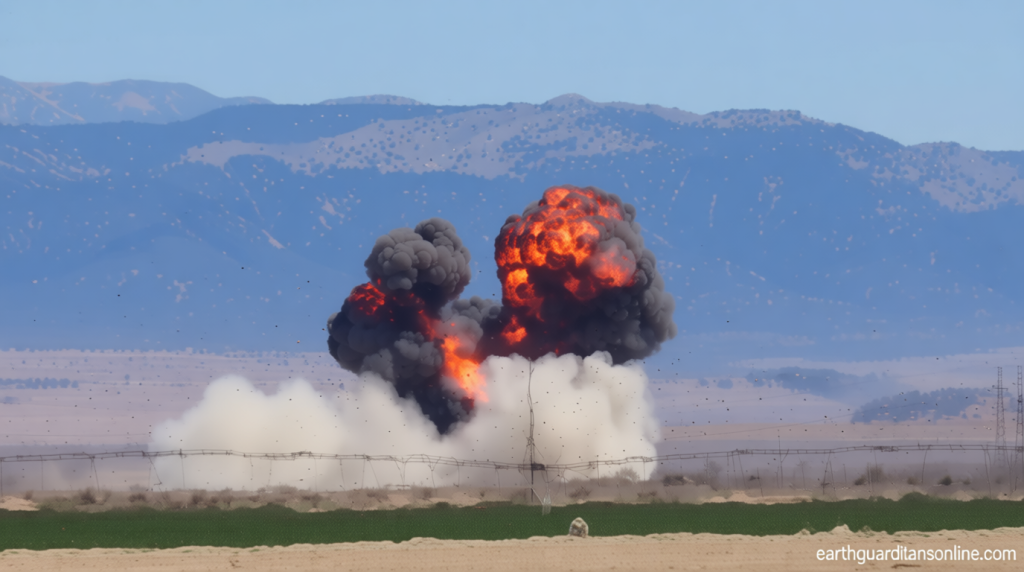
The US Navy Lost $136 Million in an Air Show Crash: Was It Worth It?
The US Navy lost 136 million – During an air show in Idaho, the US Navy incurred a significant loss of $136 million when two EA-18G Growler aircraft collided mid-air, resulting in their destruction. The incident, which occurred at the Gunfighter Skies Air Show at Mountain Home Air Force Base, has reignited debates about the financial and operational risks of using high-cost military jets for public displays. While the event aims to showcase the Navy’s aerial capabilities to civilians, the loss of two $68 million planes raises questions about whether the investment justifies the potential dangers.
“Accidents at air shows are always scrutinized, especially when they involve expensive aircraft,” noted John Venable, a senior resident fellow at the Mitchell Institute for Aerospace Studies. “The US Navy lost 136 million in this crash, which challenges the long-standing assumption that these demonstrations are a cost-effective way to promote military readiness.”
The two jets involved were part of Electronic Attack Squadron 129, based at Whidbey Island, Washington. According to the Navy, all four crew members ejected safely, with one sustaining minor injuries that required hospital care. This incident highlights the extreme maneuvers performed during air shows, which often involve flying at low altitudes and high speeds, pushing both aircraft and pilots to their limits.
Operational costs for the EA-18G are substantial. A 2022 Boeing report estimated that each hour of flight for the F/A-18 family—of which the Growler is a variant—costs around $20,000. This includes fuel, maintenance, and crew salaries, contributing to the overall expense of air show participation. The US Navy lost 136 million in direct losses from the crash, but the long-term financial impact could be even greater, as replacement costs for these specialized jets are likely to exceed their initial value.
Financial Implications of the Crash
The destruction of two EA-18G Growlers represents a major blow to the Navy’s budget. With each plane valued at approximately $68 million, the total loss of $136 million underscores the vulnerability of such events to unexpected setbacks. The incident has prompted renewed calls for transparency in military spending, particularly as the Pentagon seeks to balance public engagement with fiscal responsibility.
Despite the high cost, air shows are often justified as a means of fostering national pride and recruitment. However, the 2012 study by Navy officers on the Blue Angels’ cost-benefit ratio revealed that these demonstrations generate minimal returns. The research showed a 99% loss in ROI, with less than $1 million in recruitment benefits for an annual budget of $98.6 million. This finding has been amplified by the recent crash, which highlights the risk of investing in such events when financial gains are unclear.
With the US Navy lost 136 million in this incident, the debate over the economic value of air shows intensifies. While local tourism and vendor revenue can provide some benefits, the study suggests these are often outweighed by the costs. The Pentagon’s 2024 mandate for a new cost-benefit review has not yet yielded public data, leaving critics to question whether the financial gamble is still justified.
Public Perception and Military Presence
Air shows serve as a platform to demonstrate military prowess and inspire public confidence in defense capabilities. However, the crash has sparked concerns about the safety of these displays and the potential for accidents to overshadow the positive image they aim to project. The US Navy lost 136 million in the incident, but the reputational risk to the military may be even higher.
Smaller demonstration teams, such as the EA-18G Growler unit, play a unique role in engaging communities that might not otherwise witness military aviation. These teams provide access to advanced aircraft and highlight the Navy’s commitment to public outreach. Yet, the recent crash has raised doubts about whether the benefits of these performances outweigh the risks, particularly when the cost of failure is so steep.
While the Thunderbirds were set to participate in the Mountain Home air show, the inclusion of the Growler team illustrates the Pentagon’s strategy of maximizing visibility. However, the incident serves as a reminder that even routine demonstrations can carry significant consequences. The US Navy lost 136 million in this case, but the broader implications for military spending and safety protocols remain under scrutiny.
