
The most powerful rocket ever built is now even bigger and more powerful. But will it work?
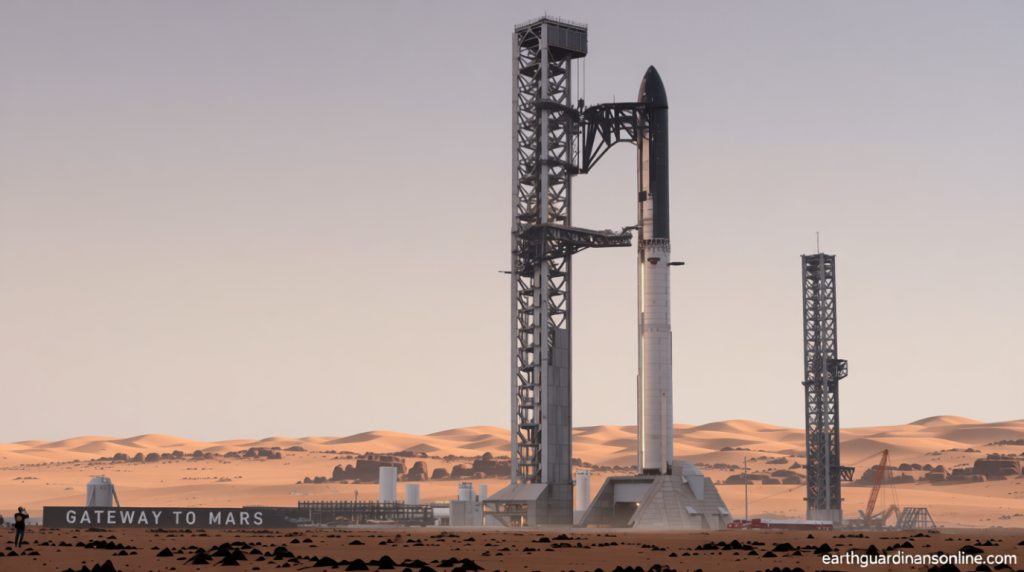
The most powerful rocket ever built is now even bigger and more powerful. But will it work?
The most powerful rocket ever built – After a seven-month pause, SpaceX is preparing to unveil a reimagined Starship rocket — a version that surpasses its predecessors in size and power — as part of a pivotal testing phase. This endeavor, crucial for overcoming groundbreaking challenges in aerospace engineering, marks a critical step toward readiness for NASA missions to the moon. However, as the company approaches its next major milestone, questions linger about whether this latest iteration can achieve the reliability needed to secure its place in the evolving space race with China.
A High-Stakes Launch Amid Intense Scrutiny
The upcoming launch, scheduled for Thursday at 6:30 p.m. ET, carries immense weight for SpaceX. With the company set to break records in its initial public offering, the event coincides with heightened investor focus. Any mishap during this high-profile test could amplify concerns about the firm’s track record, particularly following recent setbacks. “This test has more eyes on it than any previous one,” remarked Andrew Chanin, CEO of investment firm ProcureAM, highlighting the precarious timing of the launch relative to the IPO. Despite the risks, Chanin acknowledged that “fortune favors the bold,” underscoring the importance of bold moves in the competitive aerospace sector.
The Starship’s Role in Expanding Space Capabilities
Starship’s success is not just about reaching the moon; it’s also a cornerstone for SpaceX’s broader ambitions. The rocket is integral to the company’s Starlink project, which aims to provide global broadband via satellite. Additionally, it’s designed to support U.S. military and NASA operations, positioning it as a key asset in space exploration and commercial ventures. Yet, as the test flights progress, the question remains: can Starship consistently deliver on its promises?
Test Flights: Triumphs and Trials
SpaceX has achieved notable milestones with Starship, particularly during uncrewed suborbital missions. In October 2024, the Super Heavy booster was successfully retrieved, landing precisely in the arms of SpaceX’s “Mechazilla” launch tower at Starbase, Texas. This success demonstrated the company’s ability to recover and reuse critical components, a major step toward sustainable spaceflight. However, the journey has not been without turbulence.
The second iteration of the Starship, Version 2, faced several challenges. During two test flights in January and March 2025, the vehicle exploded near populated areas east of Florida, leaving debris on roadways in Turks and Caicos and washing ashore in the Bahamas. The Indian Ocean test flight in May 2025 showed improved performance, but the spacecraft ultimately lost control during descent. Even the Super Heavy booster, intended for a controlled splashdown in the Gulf, exploded early in the mission. These incidents, though costly, have become a recurring theme in SpaceX’s development timeline.
A Ground Test Mishap in Brownsville
Another significant incident occurred in June 2025 during a ground test of the Starship. The explosion, which took place in Brownsville, Texas, prompted an urgent emergency response from local authorities. According to an incident report obtained by CNN through a freedom of information act request, the situation was chaotic. “Dispatchers were forced into rapid-fire triage, making split-second decisions to prioritize life-threatening emergencies,” the report stated. At the same time, public panic spread, and command staff had to swiftly reallocate resources across the city.
Local officials did not comment on how the region’s emergency preparedness has evolved since the incident. Despite the setback, SpaceX maintains that such failures are a natural part of its development process. “Anomalies are expected,” said Joe Petrzelka, vice president of booster engineering at SpaceX, in a recent promotional video. “The test site incurred very little damage, and nobody was hurt in the incident.” This perspective aligns with the company’s philosophy of embracing risk for rapid progress.
Rapid Iterative Development: A Different Approach
Unlike traditional aerospace methods, SpaceX employs a strategy known as “rapid iterative development.” This approach prioritizes swift prototyping and testing, allowing engineers to refine designs quickly. While this method can lead to frequent failures, it also enables faster innovation compared to more conservative, ground-heavy testing processes. The company argues that this strategy is essential for achieving milestones in a short timeframe, even if it means occasional explosions.
Yet, the frequency of these incidents has raised concerns among critics. Each explosion and anomaly triggers federal investigations, yet the company insists that these challenges are part of the learning curve. For example, the November 2025 fueling test of a Starship V3 rocket resulted in a catastrophic failure, though the test site remained largely undamaged. Petrzelka emphasized that “nobody was hurt,” reinforcing SpaceX’s confidence in its safety protocols.
The Road Ahead: Can Starship Deliver?
As the testing campaign continues, the stakes are high. Starship’s success could redefine space travel, offering reusable systems capable of carrying humans to the moon and beyond. However, its reliability is under constant evaluation. With competitors like Blue Origin pushing for their own solutions, the outcome of these tests may determine which spacecraft ultimately shapes the future of interplanetary exploration.
SpaceX’s path forward hinges on its ability to turn these setbacks into breakthroughs. The company’s latest version, Version 3, is designed to address past issues while pushing the boundaries of what’s possible. Whether this megarocket can achieve consistent performance remains to be seen. For now, the world watches closely, eager to see if the bold approach of rapid development will yield a rocket that’s as dependable as it is powerful.
Conclusion: Innovation at a Cost
Despite the explosions and the intense scrutiny, SpaceX’s commitment to pushing the envelope in rocketry is unwavering. The company’s strategy has yielded early successes, but it also demands a tolerance for risk. As the next test flight approaches, the balance between innovation and reliability will be key. The outcome could not only determine the future of Starship but also influence the trajectory of the U.S. space program in the face of global competition.
With the launch window narrowing and the IPO looming, SpaceX’s engineers face a critical juncture. The next test flight is more than a technical milestone — it’s a proving ground for the company’s vision. Will the Starship Version 3 finally deliver the stability and performance needed to secure its place in history? The answer may soon be clear, but for now, the question remains: can the rocket rise above its past challenges?
