
Trump ups Reflecting Pool renovation projections to ‘less than $20 million’ amid court fight
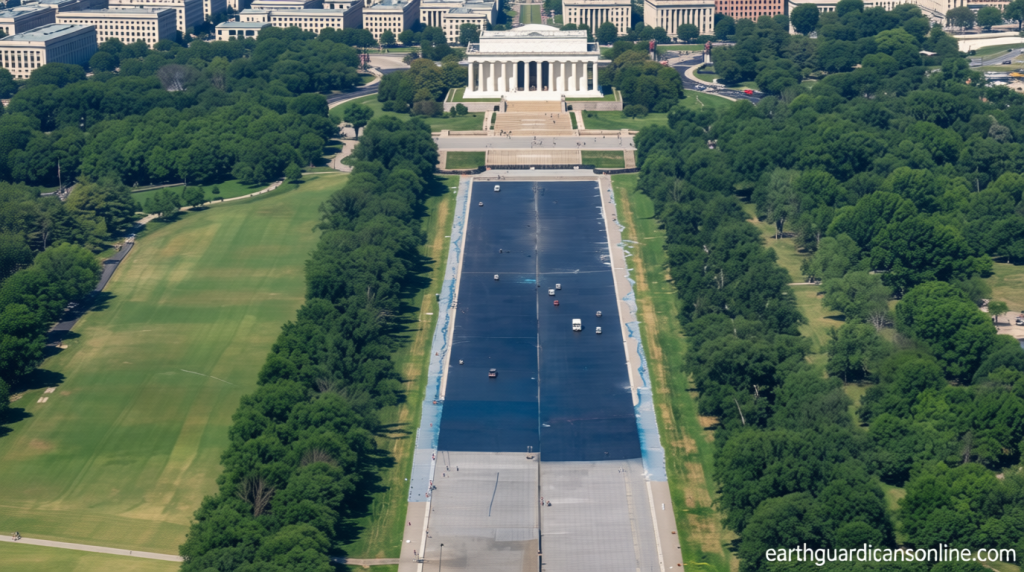
Trump Adjusts Reflecting Pool Renovation Budget to ‘Less Than $20 Million’ Amid Legal Dispute
Trump ups Reflecting Pool renovation projections – President Donald Trump announced on Thursday that the estimated cost of renovations to the Reflecting Pool in Washington, DC, would now be “less than $20 million,” a significant increase from his initial projection of $1.8 million. The adjustment came as he acknowledged the need for more extensive exterior work, which had not been part of his original plans. Trump’s remarks, delivered in the Oval Office, highlighted his ongoing commitment to restoring the iconic site, which he has repeatedly criticized as being in disrepair and visually unappealing.
Renovation Cost Adjustments and Judicial Scrutiny
Speaking to reporters, Trump described the revised budget as a reflection of the project’s evolving scope. “I originally thought I’d do it for $2 or $3 million,” he said, emphasizing that the initial plan had focused on a basic renovation. However, after inspecting the site last week, he decided to address both the exterior and interior conditions. “Now we are fixing up the exterior of it so we will probably be in it for less than $20 million,” Trump added, underscoring his belief in the project’s economic efficiency.
Federal records, however, indicate that the project’s expenses have already reached $13.1 million, according to CNN. This discrepancy has fueled the legal battle surrounding the renovations. A federal judge in Washington, DC, is currently weighing a motion to halt the work, with the Cultural Landscape Foundation, a nonprofit, arguing that the changes violate federal laws. The judge, Carl Nichols, a Trump appointee, has expressed skepticism about the urgency of the injunction, questioning whether the ongoing work constitutes an irreparable harm.
“It seems to me that if there is any harm to be done it is both reparable and temporary,” Nichols stated during the hearing, as he pressed attorneys for the plaintiffs on the merits of their case. The judge also noted that the government could reverse the color changes by repainting the Reflecting Pool, suggesting that immediate intervention may not be necessary.
Trump’s decision to expand the project’s scope has drawn criticism from historians and environmental advocates. The plaintiffs in the lawsuit argue that the proposed dark blue hue—referred to by the administration as “American Flag Blue”—will transform the pool into a “large swimming pool,” detracting from its historical and civic significance. The color change, they claim, undermines the site’s original design and alters the visitor experience, which has drawn millions annually to the area near the Lincoln Memorial.
The Color Debate and Legal Challenges
Trump has repeatedly emphasized that the color of the Reflecting Pool is a critical factor in its restoration. “No one likes the color,” he said, pointing to the need for a more aesthetically pleasing finish. His administration contends that the previous administrations failed to address issues like leaks and maintenance, leaving the pool in a state of neglect. The choice of dark blue, however, has sparked controversy, with some arguing that it diminishes the monument’s visual harmony with the surrounding landscape.
The legal challenge centers on the Interior Department’s compliance with federal regulations. According to the lawsuit, the agency must complete a consultation process that includes public notification and input from other federal agencies before proceeding with any major changes. The plaintiffs assert that the current renovations bypass these requirements, making them a violation of established procedures. “The new coloration will cause the pool to resemble a large swimming pool rather than the reflective civic landscape it was designed to be,” the group’s lawyers wrote in their filing.
Meanwhile, Trump has framed the project as a demonstration of his efficiency in managing public works. He contrasted the current estimate with earlier projections of $350 million, which he claimed would have taken four years to complete. “I’ll be doing it in basically a couple of months for less than $20 million,” he said, implying that the revised budget reflects a more practical approach. However, the prolonged cost increase has raised questions about the project’s timeline and budgeting accuracy.
Broader Context of Trump’s Urban Transformation Efforts
The Reflecting Pool case is part of a larger pattern of Trump’s initiatives to modernize historic landmarks in the nation’s capital. Other projects under scrutiny include the construction of a massive new ballroom at the White House, an arch similar to Paris’ Arc de Triomphe, and the repainting of a historic federal office building adjacent to the presidential residence. These efforts have been met with legal opposition, as critics argue they prioritize aesthetics over historical preservation.
Despite the growing legal challenges, Trump remains resolute in his vision for the Reflecting Pool. “The key is to have it done before July 4,” he said, hinting at the importance of completing the project in time for a major public event. The president’s insistence on speed and cost-effectiveness has put pressure on the Interior Department to finalize the renovations quickly, even as the court deliberates on whether to intervene.
As the hearing continues, the judge’s decision will have implications beyond the Reflecting Pool. If he grants the injunction, it could set a precedent for halting other Trump-administration projects. However, if he denies the motion, it may signal that the government can proceed with its plans, at least temporarily. The outcome of this case could also influence the broader debate on how to balance preservation with modernization in Washington, DC.
Historians and conservationists have expressed concern that the color change, combined with the physical alterations, risks altering the pool’s historical character. The monument, which has been a symbol of American heritage for decades, now faces a transformation that some argue could diminish its cultural value. “The Reflecting Pool is not just a body of water; it’s a landmark that represents the nation’s history and values,” one historian noted, calling the current design changes “a step away from its original purpose.”
Trump’s administration, on the other hand, maintains that the renovations are necessary to restore the pool’s functionality and appeal. “We’re fixing up the exterior so it looks better for the public,” Trump said, reinforcing his argument that the project benefits both visitors and the city’s overall image. The White House has also highlighted the economic benefits of the renovations, suggesting that they will attract more tourists and enhance the capital’s attractiveness.
As the legal battle unfolds, the Reflecting Pool remains a focal point of public and political discourse. The dispute has brought attention to the intersection of presidential authority and federal regulations, with both sides presenting compelling arguments. Whether the judge sides with the plaintiffs or allows the project to continue, the decision will have lasting consequences for how historic sites are managed in the future.
