
Sidelined on Iran and Venezuela, Gabbard instead pursued Trump’s Deep State grievances amid her own suspicions
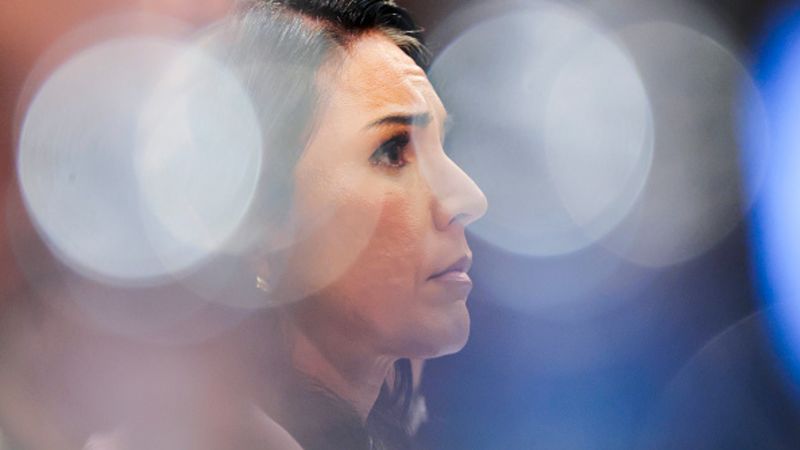
Sidelined on Iran and Venezuela, Gabbard instead pursued Trump’s Deep State grievances amid her own suspicions
Trump’s Selection and Gabbard’s Role
Sidelined on Iran and Venezuela Gabbard – President Donald Trump appointed Tulsi Gabbard as his principal intelligence advisor, favoring her “America First” ideology that had shifted her allegiance from the Democratic Party to the MAGA movement. Her early career in politics was marked by a distinct stance on international engagement, emphasizing diplomacy over militarism. However, this approach soon led to tension with Trump’s aggressive foreign policy agenda, particularly his support for military interventions in Iran and Venezuela. Gabbard’s role as Director of National Intelligence (DNI) placed her at the center of these ideological clashes, as her preference for restraint in global affairs often conflicted with the administration’s expansive military strategy.
The Resignation and Its Context
Months prior to her formal resignation, citing her husband’s rare bone cancer diagnosis, Gabbard was increasingly excluded from major foreign policy decisions during Trump’s second term. Her absence from key meetings became noticeable, especially during critical moments like the U.S. operation in Venezuela. On New Year’s Day, Trump’s national security team convened at Mar-a-Lago to review the mission, but Gabbard was far from the scene, sharing snapshots of her time at a beach in Hawaii with followers. This disconnect underscored her growing marginalization within the administration.
Clashes Over Iran and Venezuela
Her disagreements with Trump’s military actions were particularly pronounced when it came to Iran. Ahead of the summer strikes, Gabbard released a video warning that the world was “closer to the brink of nuclear annihilation than ever before,” a statement that drew sharp criticism from the White House. The clip, which highlighted her concerns about escalation, prompted Trump to question her commitment to the mission. Similarly, her stance on Venezuela led to friction, as she advocated for diplomatic solutions while the administration pushed for regime change.
During the February joint strikes on Iran with Israel, Gabbard was in Washington, meeting with Vice President JD Vance and other cabinet members. Meanwhile, Trump was at Mar-a-Lago, surrounded by top officials like CIA Director John Ratcliffe and Defense Secretary Pete Hegseth. Despite these moments of collaboration, her influence on the decision-making process remained limited. A source close to Gabbard revealed that Trump had inquired about her resignation during a pre-strike discussion, asking whether she would leave if the operation proceeded. She reassured him the rumors were false and that she would stay, though the conversation hinted at the strain in their relationship.
Deep State Accusations and Internal Isolation
As DNI, Gabbard became a focal point for Trump’s suspicion of the so-called “deep state”—a term used to describe insiders within the intelligence community perceived as opposing his policies. Her tenure was defined by efforts to root out these critics, with one source describing the environment as “scorched earth” for those who crossed Trump. Gabbard’s isolation extended beyond the White House, as she surrounded herself with a small circle of trusted advisers, creating a rift within her own office.
Her distrust of the CIA, a key agency in the intelligence network, was a notable point of contention. Gabbard objected to having CIA officers as part of her security detail, a move that many analysts viewed as an indication of paranoia. However, another source challenged this narrative, stating that she only removed one member of her team due to incompetence and lack of professionalism. A spokesperson for the Office of the Director of National Intelligence defended her, emphasizing that she “was extremely grateful for her protective team and trusted them with her life.” This contrast in perspectives highlighted the complexity of her position within the administration.
Struggles with the Administration’s Inner Circle
Despite her loyalty to Trump personally, Gabbard’s tenure was marked by a sense of alienation. She often found herself excluded from major discussions, with insiders referring to her as “do not invite” in the context of White House events. This sentiment was echoed by Beth Sanner, a former deputy director of national intelligence, who told CNN’s “The Lead” that Gabbard was “just not in sync with this administration.” Sanner added that her presence had become more of a symbolic gesture than a substantive contribution, ultimately leading to her decision to step down.
Gabbard’s struggles with the administration’s inner circle were compounded by her growing skepticism of the intelligence community’s motives. Her interactions with Ratcliffe, the CIA director, were described as “fraught,” with sources noting that she felt he bypassed her to communicate directly with Trump. This perceived lack of cooperation, combined with her public criticism of military actions, left her in a precarious position. While she maintained a personal rapport with the president, her ability to shape policy was increasingly constrained.
The Final Days and Public Reception
On the day of her resignation, Gabbard met with Trump in the Oval Office to present her letter of departure. The encounter, which was brief and cordial, saw Trump praise her efforts, calling her work “incredible.” This positive assessment came despite the numerous disagreements they had over Iran and Venezuela. The White House’s focus on her performance overshadowed the tensions that had defined her time in the role, offering a mixed narrative of achievement and conflict.
While her resignation was framed as a personal decision influenced by her husband’s diagnosis, it also reflected broader frustrations with her role. Sources close to Gabbard indicated that the decision to leave had been a long-time consideration, with her wrestling with the weight of her responsibilities for weeks. Her departure marked the end of an 18-month tenure that was as much about her outsider perspective as it was about her attempts to align with Trump’s vision of the intelligence community. As the administration moved forward, her influence on foreign policy was replaced by a more centralized approach, leaving her to redirect her efforts to other endeavors.
Throughout her time as DNI, Gabbard’s journey was a blend of ideological conviction and political maneuvering. Her commitment to “America First” principles was evident in her resistance to military interventions, but her ability to navigate the administration’s internal dynamics was tested. The combination of her personal circumstances and her strategic focus on the deep state grievances underscored a unique chapter in her political career. As she steps down, the legacy of her tenure remains a subject of debate, with some viewing it as a testament to her independence and others as a case of misalignment with the Trump administration’s priorities.
Legacy and Reflections
Her time in the role also revealed the challenges of bridging ideological divides. While Gabbard and Trump shared a mutual respect, their strategies often diverged. The final weeks of her tenure were a culmination of these tensions, as her resignation became both a personal and political statement. The White House’s public acknowledgment of her work, despite private disagreements, highlighted the delicate balance of praise and criticism that characterized her relationship with the administration.
As the administration continues without her, Gabbard’s absence leaves a void in the intelligence community’s leadership. Her efforts to address the deep state’s influence, while controversial, reflect her determination to challenge the status quo. The story of her tenure serves as a case study in the complexities of political loyalty and the pressures of navigating a high-stakes role in a divided administration. Whether viewed as a principled stance or a strategic misstep, Gabbard’s time as DNI remains a pivotal chapter in her political trajectory.
