
A hardline general wanted by Interpol emerges as a key player in Iran war
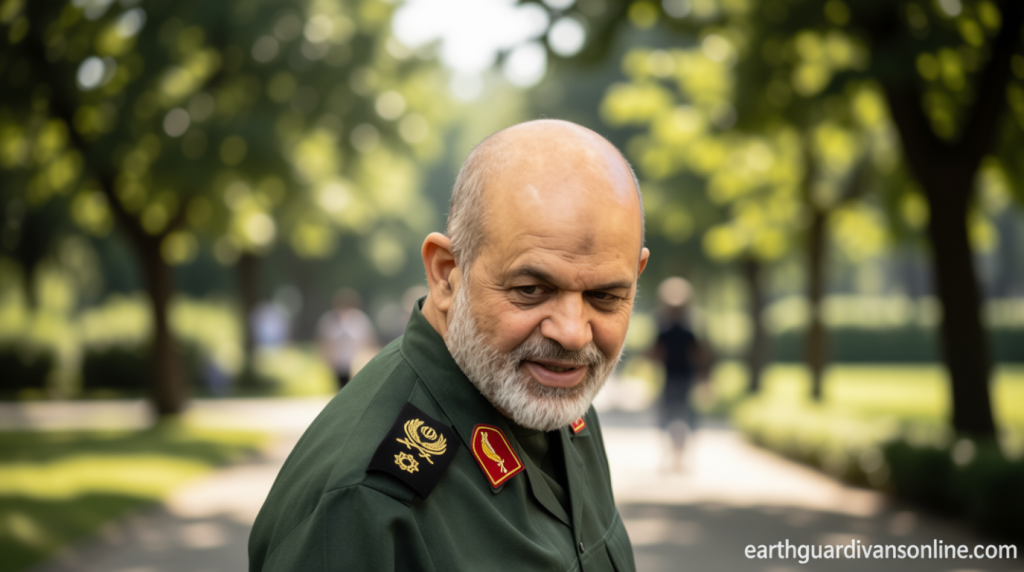
A Hardline Iranian General Emerges as a Key Player in the War
A hardline general wanted by Interpol – As the situation in the Iran war grows increasingly volatile, a pivotal figure in the country’s military strategy is gaining prominence. Brig. Gen. Ahmad Vahidi, a top-ranking commander in Iran’s Islamic Revolutionary Guard Corps (IRGC), has taken center stage in shaping Tehran’s response to ongoing hostilities. His ascent follows the death of his predecessor, Mohammad Pakpour, who was eliminated in a coordinated strike by US and Israeli forces on February 28, marking the beginning of the conflict. Vahidi’s influence now extends beyond the battlefield, as he plays a critical role in steering Iran’s diplomatic and military objectives in the war.
Interpol and US Sanctions Highlight His Notoriety
Vahidi has long been a target of international scrutiny. He is under US sanctions for his involvement in quelling internal dissent and is also listed by Interpol for alleged participation in a bombing incident in Argentina over three decades ago. These designations underscore his reputation as a staunch advocate for Iranian hardline policies. Despite his prominent role, experts note that Vahidi operates within a broader political framework, though his voice carries significant weight in decision-making circles.
“He is influential, but he is part of a system,” remarked Ali Vaez, Iran project director at the International Crisis Group. “Decisions are made in a consensual manner, and undoubtedly Vahidi has a very loud voice in the room.”
The US and Israel have sought to disrupt Iran’s leadership through targeted strikes, aiming to replace moderates with more assertive figures. However, Vahidi’s rise suggests that these efforts have not yielded a more conciliatory leadership. Instead, he has solidified his position as a formidable force within the IRGC, known for his unwavering commitment to confrontation with Washington.
Leadership Shifts and Negotiation Challenges
The current Iranian leadership, though often represented by high-profile officials like parliament speaker Mohammad Bagher Ghalibaf and foreign minister Abbas Araghchi, is believed to be guided by a select group of IRGC loyalists. Vahidi is among these key players, who have emerged as the driving force behind Iran’s war strategy. Despite his relative absence from public view, his decisions impact the trajectory of negotiations with the US.
Iran’s latest offer in talks with Washington has not shown substantial concessions, according to a source close to the discussions. The country remains firm on its demands, with nuclear enrichment remaining a central issue. The persistence of these hardline positions indicates that the war is far from a stalemate, and Vahidi’s leadership is central to maintaining this stance.
“You cannot agree on something without passing him,” said Danny Citrinowicz, former head of the Iran branch of Israel’s military intelligence. “He is among the people saying if we don’t get what we want, if Trump wants to go back to war, welcome.”
Meanwhile, US President Donald Trump has signaled his intent to escalate pressure on Iran. During a recent press briefing, he claimed the country’s regime is fractured, hinting at the possibility of renewed military action. However, he also acknowledged the need for patience, stating that the time for talks is limited. “We’re in the final stages of Iran. We’ll see what happens,” he remarked. “We’ll either have a deal or we’re going to do some things that are a little bit nasty,” he added, though he expressed hope for a peaceful resolution.
Vahidi’s Statements Signal Escalation
Vahidi has issued stark warnings about the potential for conflict to spread beyond regional borders. In a recent statement, he declared that “if any further aggression is committed against the soil of Iran, that fire whose promise was previously given and remained confined within the framework of a limited regional war, this time will erupt into flames and transcend every border and domain.” His remarks, shared via X, reflect a growing sense of urgency among Iran’s leadership.
The general’s rhetoric aligns with the broader hardline sentiment within Iran. While public figures like Ghalibaf and Araghchi project an image of diplomacy, Vahidi’s behind-the-scenes advocacy for rigid policies ensures that Iran’s negotiating stance remains uncompromising. His ideology, shaped by decades of conflict and Western confrontation, has cemented his status as a radical force in the country’s leadership.
Debunking Claims of Public Engagement
Recent media coverage has highlighted Vahidi’s visibility in public forums, including a meeting with Pakistan’s interior minister. However, Iranian state outlets have refuted these claims, stating that the images are outdated and that Vahidi did not meet the Pakistani official in person. This incident underscores the complex media landscape in Iran, where even seemingly decisive actions can be contested.
Despite such scrutiny, Vahidi’s influence remains undiminished. His leadership has been instrumental in maintaining Iran’s strategic grip on critical infrastructure, such as the world’s most vital oil checkpoint, where traffic has been effectively restricted. This control highlights his role in both military and economic dimensions of the conflict, further complicating US efforts to secure a deal.
Expert Perspectives on His Impact
Analysts suggest that Vahidi’s leadership has not only reinforced Iran’s hardline policies but also deepened the divide between moderates and radicals within the government. “Vahidi’s apparent willingness to scrap US-Iran talks indicates that he is prepared to resume the war if needed,” noted the Institute for the Study of War (ISW) in Washington, DC. Yet, Vaez of the International Crisis Group argues that there is currently no concrete evidence of Vahidi actively obstructing the peace process.
The balance of power within Iran’s leadership is a key factor in the ongoing negotiations. While Vahidi represents a faction that prioritizes confrontation, others may seek compromise. The challenge for the US is to navigate this intricate political environment, where external pressures and internal dynamics converge to shape Iran’s response.
A Legacy of Confrontation
Vahidi’s early life in Shiraz, Iran, and his experiences during the Iran-Iraq War in the 1980s have molded his ideological outlook. The war, which left deep scars on the nation, instilled in him a commitment to resistance against Western influence. This legacy continues to inform his approach to the current conflict, where he remains a symbol of the “super revolutionaries” — a term used to describe those who view any concession to the US as a betrayal of Iran’s revolutionary principles.
As the war enters its next phase, Vahidi’s role will likely intensify. His leadership has not only ensured Iran’s military resilience but also kept its diplomatic demands high. Whether he becomes a major roadblock in reaching a deal or a strategic asset in negotiations depends on the broader political forces at play. For now, his actions and statements continue to shape the course of the conflict, making him a central figure in the struggle between Iran and its adversaries.
The battle for influence in the Iran war is far from over. With Vahidi at the helm of the IRGC, the country’s leadership remains steadfast in its pursuit of dominance. As Trump’s administration tightens the clock on talks, the outcome of these negotiations will hinge on the ability to reconcile Iran’s radical faction with its more pragmatic counterparts. The path forward remains uncertain, but Vahidi’s presence ensures that the fight for control will continue to define the conflict.
