
Senate votes to limit Trump’s Iran war powers in rare rebuke
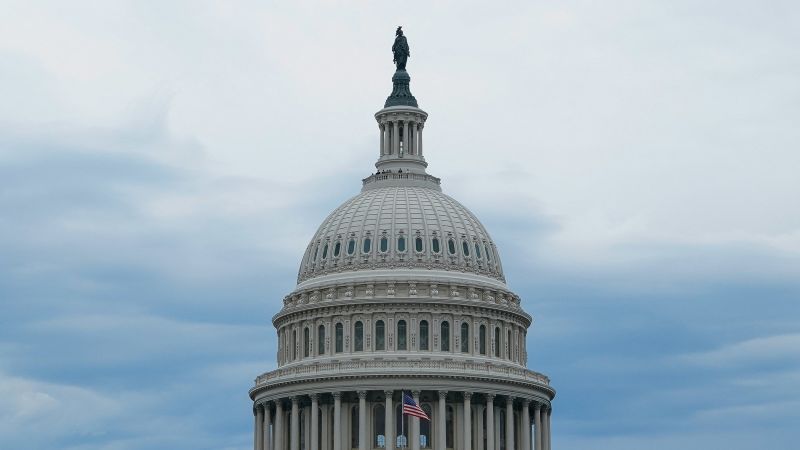
Senate Passes War Powers Resolution to Curtail Trump’s Iran Conflict Authority
Senate votes to limit Trump s Iran – The U.S. Senate enacted a resolution on Tuesday that mandates the president to withdraw U.S. military forces from the ongoing conflict with Iran, marking a notable rebuke of Donald Trump and signaling a congressional stance against continued hostilities. This bipartisan action, which passed with a narrow 50-48 margin, underscores growing tensions between the executive branch and legislative leaders as the war in the Persian Gulf enters a pivotal phase. The resolution, which emerged as a key legislative maneuver, serves as a symbolic yet impactful statement that Congress is exerting its authority to constrain Trump’s decisions on military engagement.
The Resolution’s Passage and Key Votes
Democrats spearheaded the effort to pass the resolution, which aims to limit the administration’s war powers in the region. The measure gained unexpected traction as several Republican senators joined the effort, including Rand Paul, Susan Collins, Lisa Murkowski, and Bill Cassidy, who have historically resisted similar proposals. Notably, Democratic Senator John Fetterman cast a vote against the resolution, while the absences of Senate Majority Leader Mitch McConnell and Republican Senator Dave McCormick—both of whom had previously opposed advancing such measures—proved decisive in securing the required support.
This rare display of cross-party alignment highlights shifting dynamics within the Republican caucus. While the majority of GOP senators remained steadfast in their backing of Trump’s military strategy, four defectors provided the margin needed for the resolution to pass. The outcome reflects a broader pattern of increasing Democratic pressure on the executive branch to justify its actions in the Iran conflict, particularly as the war has dragged on without a clear resolution.
Trump’s Reaction and Political Consequences
President Donald Trump swiftly criticized the Senate’s decision, dismissing it as a “poorly timed and meaningless” move. In a post on his Truth Social platform, he accused the chamber of “providing aid and comfort to the Enemy” and framed the resolution as a political attack on his leadership. “Four Republican Losers voted with the Dumocrats,” he wrote, adding that the measure has “made my job more difficult, but I will get it done, one way or the other.”
Trump’s ire was further stoked by the resolution’s structure, which he argued lacks real authority. The concurrent resolution, he claimed, is a “formality” that does not bind the administration to withdraw troops, even though the conflict with Iran has since paused following a ceasefire agreement on April 7th. His comments have intensified the debate over the legal weight of such measures, with critics questioning whether the resolution can be enforced without congressional backing.
Legislative Context and Historical Precedent
The resolution follows a similar vote in the House of Representatives earlier this month, where the measure passed with a 215-208 majority. In that instance, four Republican representatives also crossed party lines to support the Democrats, prompting Trump to label them “Grandstanders” and accuse them of “unpatriotic” behavior. Despite the bipartisan support in both chambers, the resolution’s effectiveness remains a subject of contention, as it does not require presidential approval or carry the force of law.
Democrats, however, maintain that the measure is a critical tool for asserting legislative oversight. A House Democratic aide emphasized that while concurrent resolutions are not binding, they can still serve as a legal foundation for future disputes. “It’s about setting the stage for accountability,” the aide told CNN. “Even if the president doesn’t sign it, the message is clear: Congress is not standing by while the war continues without our consent.”
This is the tenth time the Senate has considered a war powers resolution related to Iran since the start of the year. Previous efforts had stalled due to lack of support, but the latest vote appears to be a turning point. The resolution’s passage has also reignited discussions about the role of Congress in authorizing military actions, especially amid ongoing negotiations with Tehran. Some lawmakers, including Virginia Senator Tim Kaine, argue that the vote is essential to prevent the conflict from resuming without congressional approval.
White House Dismissal and Strategic Implications
A White House official downplayed the Senate’s decision, calling it “symbolic” and attributing its passage to the absence of key Republican votes. “Concurrent resolutions do not go to the president and have no force of law,” the official stated, asserting that the measure is unlikely to affect the administration’s operations. The official also pointed out that the resolution’s directive to remove troops from hostilities is moot, as the ceasefire has already ended the active conflict.
Despite the White House’s dismissal, the resolution’s passage is seen as a significant step in the legislative battle over war powers. The narrow margin of victory—50-48—highlights the fragile balance of support in the Senate, with the outcome hinging on the defection of a handful of Republicans. This could set a precedent for future conflicts, where Congress may seek to limit the president’s ability to deploy forces without explicit authorization.
Broader Political Ramifications
The vote has sparked discussions about the long-term implications for Trump’s foreign policy agenda. With the resolution passed, the administration now faces the challenge of either complying with congressional directives or defending its actions in court. The measure’s passage also underscores the growing influence of moderate Republicans in the Senate, who have increasingly aligned with Democrats on issues of military engagement.
Meanwhile, the resolution’s focus on Iran has drawn attention to the broader geopolitical landscape. While the ceasefire has paused direct hostilities, the underlying tensions between the U.S. and Iran persist. The resolution’s adoption is viewed as a symbolic victory for congressional oversight, but its practical impact remains to be seen. As the debate continues, the question of whether such measures can effectively constrain executive power in times of crisis looms large.
Some Democratic senators, including Tim Kaine, have argued that the resolution is necessary to maintain congressional oversight, even in the face of diplomatic progress with Iran. “This is a moment to reaffirm that Congress must be involved in decisions that affect our nation’s military involvement,” Kaine said in a recent interview. The resolution’s passage has also been framed as a test of unity, with lawmakers on both sides of the aisle grappling with the balance between executive authority and legislative accountability.
As the conflict with Iran continues to evolve, the resolution serves as a reminder of the Senate’s role in shaping foreign policy. While the administration may not be obligated to follow its terms, the vote reinforces the idea that Congress is prepared to challenge presidential decisions when they conflict with broader national interests. The measure’s narrow approval suggests that the battle over Iran’s war powers is far from over, with political maneuvering likely to continue in the coming weeks.
With the Senate’s action and the House’s earlier approval, the resolution has become a focal point in the ongoing debate about war powers. The fact that it has passed in both chambers without significant opposition from the president’s allies highlights a growing willingness among lawmakers to assert their role in military decision-making. Whether this will translate into tangible changes in the Iran conflict or remain a symbolic gesture remains to be determined, but the vote signals a shift in the political landscape.
This story has been updated with additional developments. CNN’s Kristen Holmes and Alayna Treene contributed to this report.
