
Uganda’s military chief orders shutdown of two major media outlets
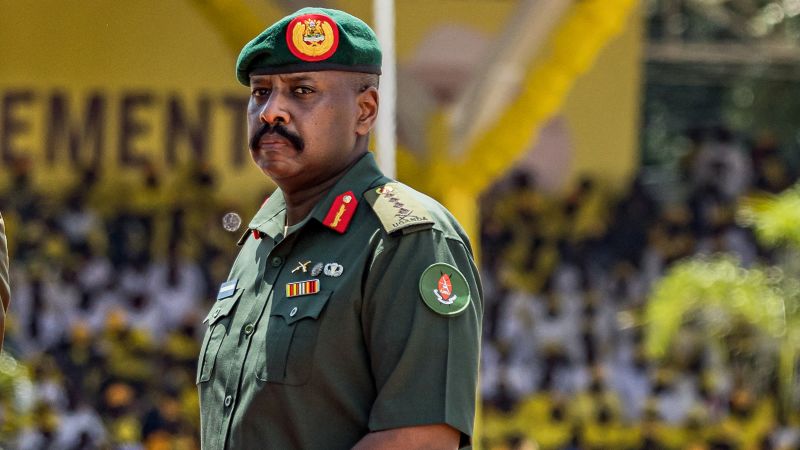
Uganda’s Military Chief Orders Closure of Two Major Media Outlets
Uganda s military chief orders shutdown – On Sunday, Uganda’s military chief, Muhoozi Kainerugaba, a prominent figure also known as the president’s son, issued an order to shut down two significant news organizations. The decision, which has sparked widespread concern, was announced in a series of posts on the X platform. Kainerugaba claimed he did not believe in a free press, emphasizing that media should be “guided by cadres of the revolution.” His directive targeted the Daily Monitor, the nation’s largest independent daily newspaper, and NTV Uganda, one of the country’s major private broadcasters. Both outlets, under the ownership of Nation Media Group (NMG), have been pivotal in shaping public discourse and reporting on political developments.
Background on the Media Outlets
Nation Media Group, headquartered in Kenya and listed on the Nairobi stock exchange, operates a network of news organizations across Uganda. The Daily Monitor, in particular, has long been recognized for its investigative journalism and critical coverage of government activities. NTV Uganda, a television network, has also played a key role in providing news to a broad audience, often highlighting issues of public interest. The closure of these outlets, however, has raised questions about the influence of the military and the government’s stance on media freedom.
According to reports, military personnel were deployed at NMG’s headquarters in Kampala, the capital city, as the closure took effect. Staff members were reportedly prevented from entering or leaving the premises, creating an atmosphere of tension. The Daily Monitor’s website and NTV Uganda’s broadcast services were entirely offline by Sunday morning, with no immediate explanation provided for the abrupt shutdown. The government’s spokesperson, Alan Kasujja, did not respond to a Reuters inquiry for comments, leaving the public in uncertainty.
“In Uganda, I do not believe in a free press! The press should be guided by cadres of the revolution,”
declared Kainerugaba in his social media posts. His statement underscores a pattern of control over the media, a strategy that has been employed by the ruling regime in the past. While the specific reasons for the closure were not disclosed, the move is widely seen as an effort to curb independent reporting and align media narratives with the interests of the military leadership.
Context and Political Implications
Kainerugaba, who is both the head of Uganda’s armed forces and a potential successor to President Yoweri Museveni, has a history of using social media to assert authority and influence public opinion. His recent posts include threats to behead opposition leader Bobi Wine, a move that has drawn criticism from human rights organizations. This latest action against the media is believed to be part of a broader strategy to consolidate power and ensure that information disseminated to the public aligns with the government’s agenda.
The closure of the Daily Monitor and NTV Uganda comes at a time when the ruling party has been increasingly scrutinizing the media. In 2013, President Museveni’s government had previously shut down the Daily Monitor for 10 days over reports about his succession plans. That incident highlighted the government’s willingness to restrict press freedom when it perceived a threat to its narrative. The 2026 closure, while not explicitly tied to succession, suggests a continuation of this approach, with the military chief playing a central role in enforcing it.
News of the shutdown has been met with mixed reactions. While some supporters of the government have praised the decision as a necessary measure to maintain order, others have condemned it as a move to stifle dissent. Susan Nsibirwa, the managing director of NMG in Uganda, remained silent on the matter, indicating that the company may be awaiting further instructions or assessing the situation internally. The absence of immediate comments from both the government and NMG has only added to the speculation surrounding the closure.
Media’s Role in Uganda’s Political Landscape
The media in Uganda has long been a battleground for political influence. Independent outlets like the Daily Monitor and NTV Uganda have often challenged the government’s policies and exposed corruption, making them targets of scrutiny. Kainerugaba’s directive to close these entities signals a shift toward stricter control, with the military leadership asserting its authority over the flow of information. This move could have lasting implications for the independence of the press and the ability of citizens to access diverse perspectives.
Analysts suggest that the closure is not just a response to current events but also a strategic maneuver to align media with the ruling party’s priorities. By directing the shutdown, Kainerugaba is likely reinforcing his position as a key player in the political landscape, ensuring that media coverage reflects the interests of the revolutionary cadres he represents. This approach has been used historically to suppress opposition voices, and the current situation may be no different.
As the media blackout continues, concerns about the impact on democratic processes have grown. With limited sources of news, the public may be less informed about critical issues, such as economic policies, social reforms, and international relations. The absence of the Daily Monitor and NTV Uganda could lead to a concentration of media power among state-aligned outlets, reducing the diversity of viewpoints available to Ugandans. This raises questions about the role of the media in a democracy and the potential for manipulation of public opinion.
While the government has not officially stated the reasons for the closure, the timing and context suggest a deliberate effort to control the narrative. The move comes as the nation prepares for upcoming elections, a period when media scrutiny is typically heightened. By silencing two of the most influential outlets, Kainerugaba may be aiming to limit the spread of information that could challenge his father’s legacy or the ruling party’s dominance. The international community has also expressed concern, with some observers warning of a growing trend toward authoritarianism in Uganda.
In the days following the closure, it remains to be seen whether the media outlets will be allowed to reopen or if their operations will be permanently altered. The decision has sparked debates about the balance between national security and press freedom, with many arguing that the closure undermines the principles of an open society. As the situation develops, the implications for Uganda’s political and media landscape will become clearer, but for now, the nation watches closely as its independent voices are temporarily silenced.
