
Iraqi officials arrested on corruption charges in overnight raid in fortified Green Zone
Iraqi Officials Arrested on Corruption Charges in Overnight Raid in Fortified Green Zone
Iraqi officials arrested on corruption charges – On the early hours of Sunday, Iraqi security forces launched a surprise operation targeting several high-ranking political figures, charging them with corruption. The Iraqi News Agency, the country’s state-run media outlet, confirmed the arrests, which were linked to a statement released by former Deputy Minister of Oil Adnan al-Jumaili. Al-Jumaili, who had been detained last month, allegedly provided the evidence that led to the raids. The arrests included members of Parliament who had their legal protections revoked, marking a significant disruption in the capital’s political sphere.
The Raids in the Green Zone
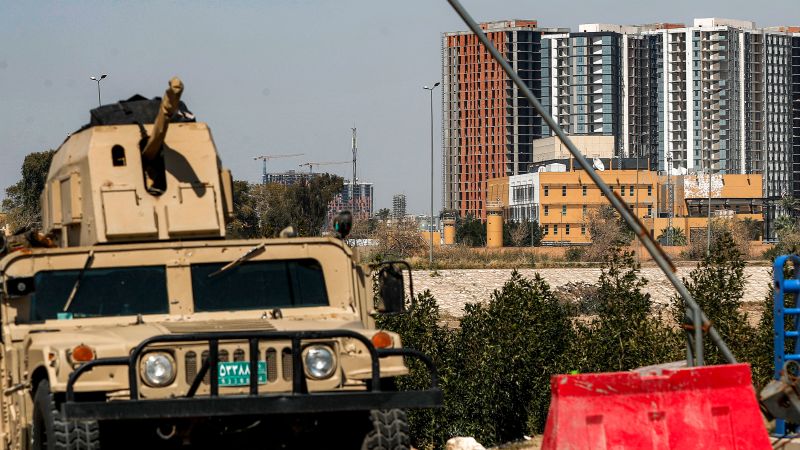
The security forces cordoned off the Green Zone, Baghdad’s heavily guarded administrative district, sealing all entry points before conducting searches within the complex. This area, home to critical government buildings and foreign embassies, has long been a symbol of power and privilege in Iraq. The operation targeted individuals within the compound, with officials confirming that seven people were apprehended during the early morning hours. Among them were five parliamentary members, including figures from the political coalition led by former Prime Minister Mohammed Shia al-Sudani. The swift nature of the raids suggested a coordinated effort to dismantle alleged networks of graft.
The Iraqi News Agency stated that the arrests were initiated following a tipoff from al-Jumaili, who had previously served in the government and was later implicated in corruption scandals. His statement, obtained by The Associated Press, detailed the evidence against the accused, though specifics of their alleged misconduct remained unclear. Security sources indicated that the operation was part of a broader crackdown on corruption, which has increasingly become a focal point in Iraq’s political discourse.
Political Rivalries and Power Struggles
Al-Sudani’s political bloc, which had secured the most seats in November’s parliamentary elections, found itself at the center of this controversy. Despite its electoral success, the group faced internal divisions that culminated in a deadlock over the selection of a prime minister. This impasse within the Coordination Framework—a coalition of Shiite parties closely aligned with Iran—led to al-Sudani’s resignation. His departure paved the way for Ali al-Zaidi, a businessman and relative newcomer to politics, to step in as the consensus candidate. The United States expressed support for al-Zaidi’s appointment, viewing it as a step toward stabilizing the country’s political framework.
Al-Zaidi’s rise to power has been marked by his ability to navigate the complex dynamics of Iraq’s political landscape. His coalition, while not as dominant as al-Sudani’s, has managed to secure key positions through strategic alliances. However, the recent arrests have reignited debates about the role of corruption in the country’s governance. Critics argue that such actions are not only about punishing individual misconduct but also about silencing opposition and consolidating influence within the ruling factions.
Corruption as a Political Tool
Corruption in Iraq has historically been a tool for both political maneuvering and economic exploitation. The arrests of seven officials, including five MPs, have been interpreted by some as a direct attack on the entrenched interests of the Coordination Framework. Analysts note that accusations of graft often serve as a means to settle rivalries or shift blame during times of political instability. The Green Zone, known for its high concentration of power, has been a frequent target of such investigations, with its secure environment making it a symbol of elite control.
While the specific charges against the detainees have not been fully disclosed, the timing of the raids suggests a broader strategy to address systemic issues. The Coordination Framework, which had supported al-Sudani’s leadership, now faces scrutiny over its ties to past scandals. Adnan al-Jumaili’s role in exposing the network highlights the potential for internal dissent within the coalition. However, the arrests also raise questions about the fairness of the process, as some view them as politically motivated.
These developments come at a critical juncture for Iraq, which has struggled with governance and security challenges since the 2003 invasion. The country’s political landscape remains fractured, with competing factions vying for control over resources and decision-making. Corruption allegations, often tied to oil revenues, have further complicated this situation, eroding public trust in institutions. The overnight raid in the Green Zone underscores the persistent efforts to hold power holders accountable, even in the face of entrenched interests.
Broader Implications for Iraq’s Stability
The arrests are expected to have far-reaching consequences for Iraq’s political stability. By targeting members of the Coordination Framework, the operation may weaken the coalition’s influence and create new power dynamics. However, it could also fuel resentment among those who perceive the move as an attempt to marginalize their interests. The security forces’ actions have been praised by some as a necessary step to restore integrity to the government, while others warn of potential retaliation or further polarization.
Ali al-Zaidi’s leadership, though supported by the United States, will need to navigate the challenges posed by these arrests. His ability to unite factions and address corruption will be crucial in shaping the country’s future. Meanwhile, the political bloc that once held significant sway may face a leadership vacuum, prompting new alliances and strategic shifts. The international community is closely watching the developments, as they could influence Iraq’s economic policies and regional relationships.
As the investigation into the corruption allegations continues, the focus will shift to determining the extent of the network and its impact on Iraq’s finances. The arrests have already sparked discussions about the need for institutional reforms to prevent similar incidents. For now, the Green Zone remains a focal point of these efforts, symbolizing both the country’s aspirations for transparency and the challenges of maintaining it in a politically fragmented environment.
With the political landscape in flux, the overnight raids represent a pivotal moment in Iraq’s ongoing struggle to balance power and accountability. The country’s leaders will need to demonstrate that these actions are part of a long-term strategy rather than isolated incidents. As the details of the arrests unfold, the focus will remain on how this event reshapes the trajectory of Iraq’s governance and its relationship with the global stage.
