
‘Odyssey’ fever grips the Classics world
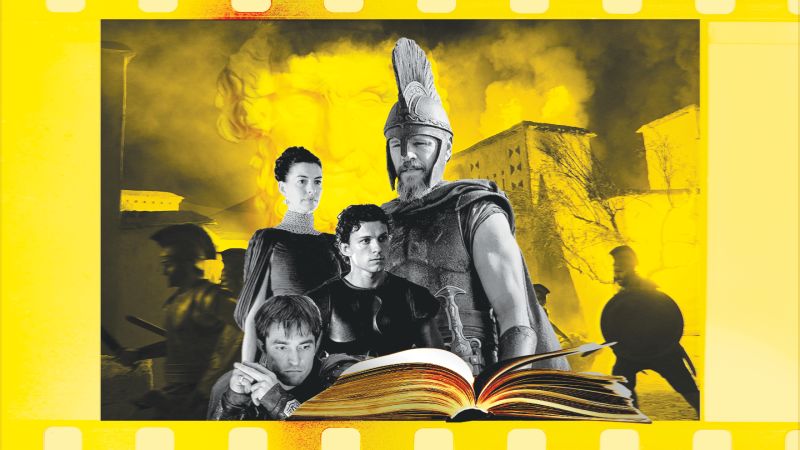
‘Odyssey’ Fever Sweeps Classical Studies Scene
Odyssey fever grips the Classics world – As the July 17 release of Christopher Nolan’s cinematic adaptation of Homer’s *Odyssey* approaches, a wave of enthusiasm is sweeping through academic circles and educational institutions. This excitement extends beyond Nolan’s dedicated fanbase to encompass scholars and educators passionate about ancient civilizations, who are anticipating a renewed interest in classical literature. From university lecture halls to high school classrooms, the film has become a catalyst for broader engagement with the epic’s enduring themes and historical significance.
Academic Revival in the Wake of a Modern Adaptation
Classics educators worldwide are preparing for a surge in student participation, hoping to leverage the film’s popularity to inspire deeper exploration of the original work. In Austin, Texas, Jennie Luongo, a Latin instructor at St. Andrew’s Episcopal School and president of the American Classical League, expressed optimism about the potential impact. “It’s going to be a huge moment for our field,” she said. “When students see the story brought to life in such a visually compelling way, they’re more likely to connect with the source material.”
“I knew it was going to be big if Christopher Nolan was directing it, and anytime we can get people talking about the things that we’re studying in class, it’s exciting for me as an educator,” said Luongo.
Similar sentiments are echoed across institutions, where teachers are incorporating discussions of the *Odyssey* into lesson plans and organizing events to complement the film’s release. Museums and cultural organizations have also joined the fray, hosting themed exhibitions and public lectures. The film’s global reach is expected to spark a renewed dialogue around ancient Greek culture, with educators hoping to bridge the gap between modern storytelling and classical scholarship.
The Epic Tale Reimagined by a Master of Narrative
Nolan’s version of *Odyssey* stars Matt Damon as Odysseus, the cunning king of Ithaca who embarks on a decade-long journey home after the Trojan War. The film promises to highlight his encounters with mythical creatures, such as the Cyclops and the Sirens, through Nolan’s signature blend of visual spectacle and philosophical depth. This reworking of an ancient text is seen as a bold attempt to make Homer’s epic accessible to contemporary audiences, blending cinematic innovation with time-honored storytelling.
Given Nolan’s history of producing blockbusters that redefine cultural conversations, industry analysts are predicting record-breaking box office results for *Odyssey*. His previous works, including *Oppenheimer* (2023), *Inception* (2010), and the *Batman* trilogy, have demonstrated an ability to captivate both mainstream and niche audiences. The film’s projected revenue is already being compared to past successes, with some forecasting that it could exceed $1 billion in worldwide sales. Such numbers underscore the potential for *Odyssey* to become a defining moment in cinematic history.
Media Attention and Scholarly Spotlight
The film’s promotional material has already ignited widespread discourse, with debates about casting, costume design, and linguistic authenticity dominating social media and online forums. Emily Wilson, the classicist whose 2017 translation of *The Odyssey* Nolan cited as a key influence, has become a focal point of this conversation. Her insights into the poem’s structure and meaning are being sought by journalists and critics, highlighting the film’s academic credibility.
“With the movie coming out, I am inundated with queries from journalists,” Wilson told CNN.
Classics teachers are also observing a shift in how the ancient world is being perceived by the public. “This is a rare opportunity to engage people with the origins of Western literature,” noted Nina Papathanasopoulou, a classics professor at College Year in Athens and public engagement coordinator for the Society for Classical Studies. “It’s not just about the film—it’s about sparking curiosity in the classical canon.”
Historical Precedent: The ‘Gladiator’ Effect
The current surge in *Odyssey* interest is not without historical parallels. The 2000 release of Ridley Scott’s *Gladiator* is often cited as a turning point for classical studies, leading to a noticeable increase in academic publications and public interest in ancient history. The film’s five Academy Awards, including Best Picture, and its $460 million box office earnings demonstrated the power of blockbuster storytelling to elevate the profile of classical themes.
Following *Gladiator*, a wave of ancient-inspired films and TV series emerged, including *Alexander* (2004), *Troy* (2004), and *300* (2006), alongside HBO’s *Rome* (2005–2007). These productions not only entertained audiences but also served as educational tools, bringing the study of antiquity into mainstream media. The *Odyssey* phenomenon is now being positioned as the next chapter in this legacy, with educators and cultural institutions eager to replicate the success of past classics-driven projects.
Global Initiatives to Amplify the Impact
Efforts to maximize the film’s influence are unfolding across continents. In Los Angeles, the Getty Museum has curated a series of events inspired by *Odyssey*, featuring lectures, interactive discussions, and performances based on a folk opera adaptation. Meanwhile, in Australia, a major book retailer is organizing a month-long program of in-person and virtual events centered on the epic, culminating in a cinema screening. The UK’s Classical Association is also planning film screenings for members, with a focus on Homer’s work in regional book clubs.
UC Berkeley’s Arts & Humanities department has taken a proactive approach, launching an “epic book club for the world’s most epic tale” in anticipation of the film’s release. The initiative, which includes seven online sessions, was designed to create a space for interdisciplinary exploration of *Odyssey*. Organizers had anticipated modest turnout, but over 1,300 participants from across the globe have already signed up, signaling a significant shift in how the classical canon is being embraced.
Kim Shelton, a professor of ancient Greek and Roman studies at UC Berkeley, was enlisted to provide a nine-minute commentary on the film’s interpretation of Homer’s work. “This is a unique chance to connect the ancient text with modern narratives,” Shelton remarked. “It’s about showing how timeless these stories really are.”
“The movie has already attracted new audiences to our charitable work and events and we’re excited for more engagement,” said Katrina Kelly, the Classical Association’s engagement director. “We are very much looking forward to seeing Nolan’s take soon!”
As the release date approaches, the cultural significance of *Odyssey* continues to grow. The film represents not just a new entry in the Hollywood canon but a bridge between past and present, inviting viewers to rediscover the richness of ancient Greek literature. For educators, it’s an opportunity to reinvigorate classroom discussions, while for scholars, it’s a chance to see their field gain broader recognition. The result is a global movement that underscores the enduring relevance of Homer’s masterpiece in the modern era.
