
Fact check: Trump told NBC that he never promised not to start a new war. He did, repeatedly
Fact Check: Trump’s Claims About Not Starting New Wars
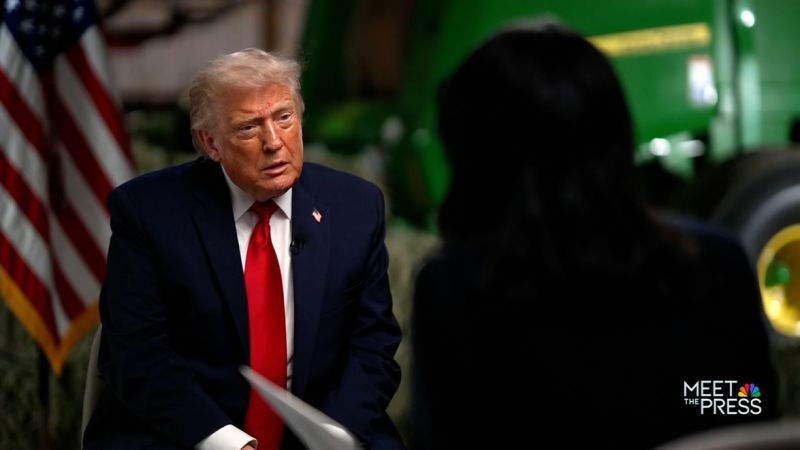
Fact check – During a June 2024 interview on NBC’s Meet the Press, President Donald Trump challenged the idea that he had committed to avoiding new wars. The exchange, which aired on Sunday, became a focal point for critics analyzing his campaign rhetoric. NBC anchor Kristen Welker pressed Trump on his earlier promise of “no new wars,” a phrase she had highlighted during the 2024 election cycle. Trump’s responses, however, were marked by contradictions, drawing scrutiny from fact-checkers and political analysts.
Contradictory Statements During the Interview
Welker’s questioning centered on Trump’s actions in the Iran conflict, which had escalated during his first term. When asked about his commitment to the campaign promise, Trump initially claimed,
“First of all, I didn’t guarantee no war.”
This statement directly refuted the idea that he had pledged to avoid new military engagements. Later, he doubled down, asserting,
“So when you say I promised – I didn’t promise anything. I don’t like these endless wars. This is not an endless war.”
Yet, the facts tell a different story.
Despite these denials, Trump had made repeated promises throughout 2024 that the United States would not be involved in new wars during his second presidency. His rhetoric was consistent in several key moments, even as he occasionally softened his language. For instance, in a June 2024 social media post, he wrote,
“This election is a choice between STRENGTH or WEAKNESS, COMPETENCE or INCOMPETENCE, peace and prosperity or war and no war.”
The phrase “war and no war” appears to encapsulate his campaign’s dual focus: ending perpetual conflicts while avoiding new ones.
Promises in High-Profile Speeches
At the Republican National Convention in July 2024, Trump delivered a speech that emphasized his commitment to peace.
“With our victory in November, the years of war, weakness, and chaos will be over. I don’t have wars.”
This statement was particularly striking because it came after his first term, during which he had launched multiple military campaigns. The promise was reiterated during an August 2024 rally in Pennsylvania, where he declared,
“Under Trump, we will have no more wars, no more disruptions, and we will have prosperity and peace for all.”
The audience’s enthusiastic response underscored the appeal of this message.
Trump’s pledge to avoid wars was also reinforced in an August 2024 interview with Adin Ross, a popular online figure. After stating that his first administration had seen no wars, he added,
“And we won’t have wars again.”
While acknowledging the possibility of conflict before his re-election, he framed it as a problem rather than a certainty. This nuance was further highlighted during a rally in North Carolina, where he referenced Viktor Orbán, the Hungarian prime minister, with a quote that echoed his own promises:
“Make sure that Trump gets re-elected president and you’re not going to have any more wars.”
The audience’s applause suggested the resonance of this message.
Repetition and Variations of the Promise
Trump’s commitment to “no more wars” was not confined to a single event. In October 2024, during a rally in Wisconsin, he recounted Orbán’s statement, saying,
“Viktor Orbán said, ‘If Trump comes back, you won’t have any wars. You won’t have any wars.’ And he’s about as tough as they get, and he said it loud and clear and he said why. But you won’t have any wars.”
The repetition of the phrase “you won’t have any wars” emphasized his belief in a clear separation between his leadership and military conflict.
Even in his victory address in November 2024, Trump reaffirmed his pledge.
“Four years, we had no wars, except we defeated ISIS. … They said, ‘He will start a war.’ I’m not going to start a war, I’m going to stop wars.”
This statement, delivered after securing his re-election, was a direct counter to critics who had questioned his approach to foreign policy. However, the phrasing of his promises sometimes included qualifiers, such as his reference to “endless wars” or his focus on preventing “World War III.”
Complexity in Campaign Rhetoric
While Trump’s overall message was clear in its promise of peace, his rhetoric on the subject was not entirely straightforward. At a Madison Square Garden rally in October 2024, he appeared to confuse his audience by oscillating between assurances and open-ended possibilities.
“We sort of need (domestically manufactured) steel in this country. Like, we’re not going to go to war with me as your president. But if we – on the long shot that we do, we don’t want to say, ‘We need steel. Can we get it from China? Or can we get it from someplace else?’ You know, it’s always a possibility. But I will tell you, you’re not going to have a war with me, and you’re not going to have a third World War with me,”
he said. This back-and-forth reflected the complexity of his campaign messaging, where the promise of peace was often intertwined with the acknowledgment of potential military action.
Trump’s campaign speeches frequently framed his anti-war stance as a rejection of “endless” conflicts, such as those in Afghanistan or Syria. In Arizona, for example, he told young supporters,
“So we are going to make sure there’s no wars.”
However, he later hedged this statement by adding,
“We don’t want to have wars. I call them endless wars. I call them wars where people don’t even want us involved.”
This distinction between “endless” wars and new conflicts allowed him to maintain his image as a leader who would end prolonged conflicts without necessarily avoiding all forms of warfare.
Political Context and Strategic Messaging
The recurring theme of avoiding new wars was part of a broader strategy to appeal to voters concerned about military overreach. Trump’s promises were strategically positioned to contrast his leadership with the previous administration’s policies. While he acknowledged that wars could occur under his watch, he framed them as necessary and controlled, rather than inevitable. This approach allowed him to address criticism while maintaining a narrative of strength and decisiveness.
Despite the contradictions in his statements, Trump’s campaign consistently emphasized his commitment to peace. His repeated use of the phrase “no more wars” across multiple platforms—social media, speeches, and interviews—suggested a deliberate effort to reinforce this message. Yet, the inclusion of qualifiers like “endless” or “World War III” highlighted the nuanced nature of his promises. This duality in rhetoric raises questions about the specificity of his commitments and the potential for interpretation.
In summary, Trump’s statements about not starting new wars were both definitive and ambiguous. While he made clear pledges in certain contexts, such as his victory speech, he often softened these promises with phrases that allowed for flexibility. The fact-checking community remains divided on whether these nuances undermine his claims or simply reflect the realities of political discourse. Regardless, Trump’s message resonated with many voters, even as it invited scrutiny over its consistency and scope.
