JD Vance’s telling ‘give us another chance’ flub

Daftar Isi
Vance’s Call for More Time Highlights a Tension in the GOP Message
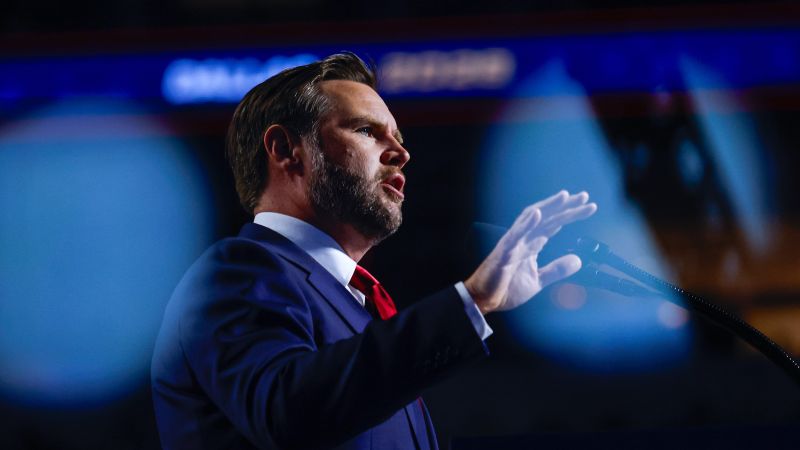
Earthguardiansonline.com – Vice President JD Vance may have revealed an uncomfortable reality for the Trump administration when he briefly asked voters to give Republicans “another chance” during an appearance on the “All In” podcast.
He quickly adjusted the wording, saying voters should instead give the administration “another couple of years” to continue its work. But the initial phrase stood out because it sounded less like a victory lap and more like an acknowledgment that many voters remain unconvinced by the results so far.
“Give us another chance — or, give us another couple of years to continue to work on the amazing things that we’ve been doing for the past two years.”
That distinction matters in the run-up to the midterm elections. President Donald Trump has framed his return to office as the beginning of a national revival, repeatedly promoting a “golden age” and portraying the country as dramatically improved. Vance’s appeal, by contrast, carries a more cautious implication: the administration’s work is unfinished, and voters should allow more time for its agenda to take hold.
A More Cautious Political Pitch
Vance has increasingly adopted a tone that recognizes frustration among voters, particularly those concerned about household costs and the administration’s decisions abroad. At the Republican midterm convention last week, in his podcast appearance, and in private remarks to House Republicans, he has sought to show that the party understands dissatisfaction rather than simply dismissing it.
In a meeting with GOP lawmakers, Vance urged them to be direct about the public mood.
“Right now, we have a country where people are frustrated. You got to level with them.”
That advice reflects a politically sensible instinct. Candidates often benefit from demonstrating that they understand voters’ worries before making the case for their own record. Yet there is a meaningful difference between recognizing unhappiness and suggesting that an administration needs a fresh opportunity to prove itself.
“Another chance” can imply that the first opportunity fell short. For an administration that campaigned on rapid and sweeping change, that framing creates an opening for critics to argue that its promises have not matched the public’s experience.
The Burden of Trump’s 2024 Promises
The challenge is especially acute because Trump’s 2024 campaign did not merely promise gradual improvement. Its message was that he would quickly repair problems associated with the Biden administration and deliver visible results. Trump has long favored expansive promises; during his 2016 campaign, he declared, “I will give you everything.”
Such language can be powerful when voters believe conditions are moving in the right direction. It becomes harder to sustain when major concerns persist. Trump’s pledge to bring down prices immediately has become a central political vulnerability as Americans continue to focus on affordability. Three-quarters of Americans believe he has neglected the issue.
The Iran war presents another difficult issue for the administration. It clashes with the image Trump cultivated as a leader who would avoid costly foreign entanglements. Unlike a narrow dispute over an individual policy, the conflict touches a broader question about whether Trump has governed in the way voters expected when they supported him.
Vance’s language appears to recognize that these concerns cannot simply be brushed aside. His approach is more conciliatory than Trump’s usual rhetoric, but it also risks underscoring the distance between the president’s upbeat claims and the unease felt by many voters.
Accomplishments With Limited Political Reach
Before making his “another chance” remark, Vance pointed to achievements he sees as evidence of progress. He cited initiatives such as “no tax on tips” and border security. Those are tangible policy areas with clear constituencies, and they may resonate strongly with voters who prioritize them.
Still, they are narrower than the broad economic and national renewal message that defined Trump’s campaign. They do not directly answer the question many households ask first: whether life has become more affordable. Nor do they fully address whether the administration has delivered the sweeping transformation associated with the promise of a new golden age.
For that reason, Vance’s list of accomplishments may be notable as much for what it did not emphasize as for what it did. It did not center on lower prices across the economy or make an unequivocal case that Americans are broadly experiencing the prosperity Trump promised.
What It Means for Vance’s Future
Vance remains the leading early figure in discussion of the Republican presidential nomination in 2028. Many observers view him as a potential successor to Trump’s political movement. But inheriting a movement is not the same as commanding it.
Trump’s appeal has always relied heavily on his ability to project certainty, grievance, confidence and personal connection with supporters. Vance’s more measured style may help him speak to voters who feel overlooked or disappointed, but it does not automatically ensure that he can consolidate Trump’s coalition.
His comments also raise a larger strategic question for Republicans heading into the midterms. Should the party insist that the administration has already produced an unmistakable success story? Or should it concede that voters are dissatisfied and ask them to stay patient while policies develop?
Vance appears to be attempting the second route. It may be more realistic, but it is difficult to reconcile with a campaign built around immediate solutions. His brief verbal correction on the podcast captured that tension in a few words: Republicans want credit for progress, while also asking voters to wait longer for the results they were promised.
Related Reading
Frequently Asked Questions
What is JD Vance s telling give us another?
JD Vance s telling give us another is the main topic of this guide. The article explains the context, practical details, and next steps readers should understand.
Why does JD Vance s telling give us another matter?
JD Vance s telling give us another matters because readers are looking for a useful answer, not just a short summary. Good content should match search intent and help them decide what to do next.