With a new breed of candidate, Democrats are challenging in states they usually lose

Daftar Isi
Democrats See New Senate Openings in Places Long Tilted Toward Republicans
Earthguardiansonline.com – Republicans are confronting a difficult midterm climate that extends beyond President Donald Trump’s weakening public standing. Democratic candidates with unusually strong local profiles are making Senate contests competitive in states that have often been treated as safely Republican, raising the possibility of a far broader electoral map than either party expected.
Democrats need a net gain of four Senate seats to take control of the chamber. Their chances have improved as they also seek a House majority next month, though the party continues to carry substantial baggage with voters. The opportunity is not simply a referendum on Trump. It is also a test of whether Democrats can present candidates and messages that reconnect with voters who moved toward the GOP in recent years.
Different Candidates, Different Paths
Several Democratic contenders are relying on distinct regional identities rather than a single national template. In North Carolina, former two-term Gov. Roy Cooper has remained popular among independent voters and has shown enough appeal in rural communities to threaten Republican advantages outside metropolitan areas. His recognition in the state contrasts with that of Republican Michael Whatley, the former Republican National Committee chair who is familiar in party circles but has struggled to equal Cooper’s public profile.
Iowa has produced one of the cycle’s more unexpected races. State legislator Josh Turek describes himself as a “common sense prairie populist,” a label designed to fit a state where Trump won by 13 points just two years earlier. His campaign is trying to turn frustration over economic conditions into a meaningful Senate challenge.
The contest is complicated for Republican Rep. Ashley Hinson, a former television anchor known for communicating effectively and engaging with Iowa’s central concerns. She would ordinarily appear well positioned to win the seat being vacated by Joni Ernst. But Iowa’s agricultural economy has been hurt by Trump’s tariffs, while elevated fuel prices have added pressure for voters and producers.
Ohio offers another example of a Democrat leaning into an established working-class message. Former Sen. Sherrod Brown has long centered his politics on blue-collar populism. That approach may find new resonance as a president increasingly seen alongside billionaires faces voter unease about the economy. Trump carried Ohio comfortably in 2024, yet Brown’s profile reflects the argument that a candidate’s connection to a state can matter as much as its recent presidential results.
Southern Races Draw Attention
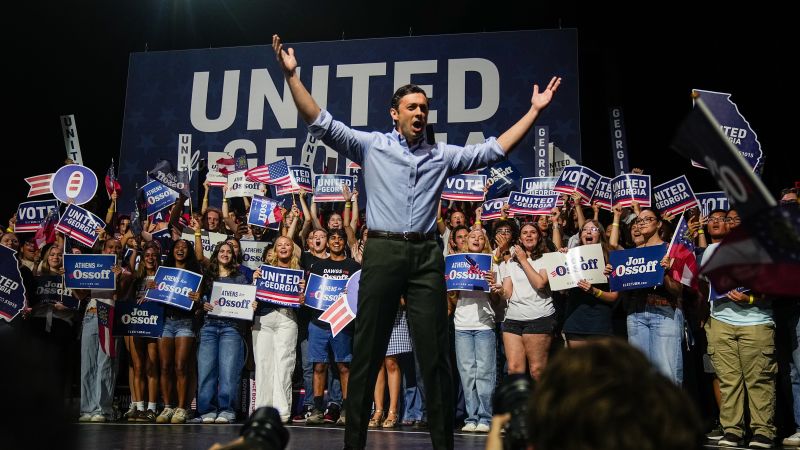
Georgia and Texas are also becoming important tests of Democratic strategy. Sen. Jon Ossoff of Georgia has built a recognizable political identity through sharp criticism of Trump. His success in a closely divided state and his growing national visibility have prompted discussion about a possible role in the party’s 2028 presidential field.
Texas Democrat James Talarico is attempting a different combination: economic populism paired with Christian faith. Democrats have repeatedly hoped that demographic and political changes could finally produce a statewide breakthrough in Texas, where the party has not won statewide in 30 years. Talarico’s campaign is an effort to make that aspiration feel less remote.
Some Democratic candidates have also benefited from Republican opponents whose weaknesses create openings. In Georgia, MAGA-aligned Rep. Mike Collins has support from Trump despite concerns among more traditional Republican leaders. Texas Attorney General Ken Paxton, whose campaign has been shadowed by scandal, was likewise backed by Trump despite reservations within the GOP establishment.
A Party Still Facing a Trust Problem
Strong recruits do not erase the challenges Democrats face nationally. A late-July CNN/SSRS survey found Democrats leading by 8 points for the fall election, yet both congressional parties remained deeply unpopular. Voters also showed limited confidence that potential Democratic majorities would accomplish much.
That disconnect explains why candidate quality is so central to the party’s hopes. Democrats are trying to improve a brand damaged by past failures in message, policy positioning and language. Their best prospects are seeking to speak directly to local economic concerns while avoiding the impression that they are merely carrying a national party agenda into states where it has struggled.
The larger question is whether these campaigns represent a durable shift or a favorable moment created by a difficult environment for Republicans. A candidate can appear politically gifted after a victory, while a defeat can make the same strategy look misguided. Timing and fortune, alongside campaign discipline and personal appeal, often determine how such judgments are made.
Michigan Could Shape the Senate Fight
Michigan may host the cycle’s most consequential Senate contest. Democrat Abdul El-Sayed, a 41-year-old epidemiologist, is viewed as a high-risk but potentially transformative candidate. A victory over former Republican Rep. Mike Rogers would elevate El-Sayed as a figure in a younger political generation and within the progressive movement.
But the stakes for Democrats are considerable. If Rogers wins, critics may argue that progressive primary voters made a costly choice when they rejected the more moderate Rep. Haley Stevens. In a closely divided Senate, one lost opportunity could carry national consequences.
Maine Republican Sen. Susan Collins faces another closely watched reelection contest. Collins has repeatedly survived difficult political environments, but this campaign may be her hardest yet. The turbulence of the Trump era has complicated her long-standing reputation for independence, forcing her to navigate demands from Republican base voters while retaining support among moderates.
Across the country, Democrats are betting that candidates who can appear authentic, disciplined and locally grounded will be more persuasive than national party labels. Whether that formula delivers Senate control will depend on the political climate, Republican missteps and the ability of these candidates to turn dissatisfaction into votes.
Related Reading
Frequently Asked Questions
What is With a new breed of candidate?
With a new breed of candidate is the main topic of this guide. The article explains the context, practical details, and next steps readers should understand.
Why does With a new breed of candidate matter?
With a new breed of candidate matters because readers are looking for a useful answer, not just a short summary. Good content should match search intent and help them decide what to do next.