
This anti-AI evangelist is growing more popular. That could be a problem for Trump
This anti-AI evangelist is growing. Could it challenge Trump’s influence?
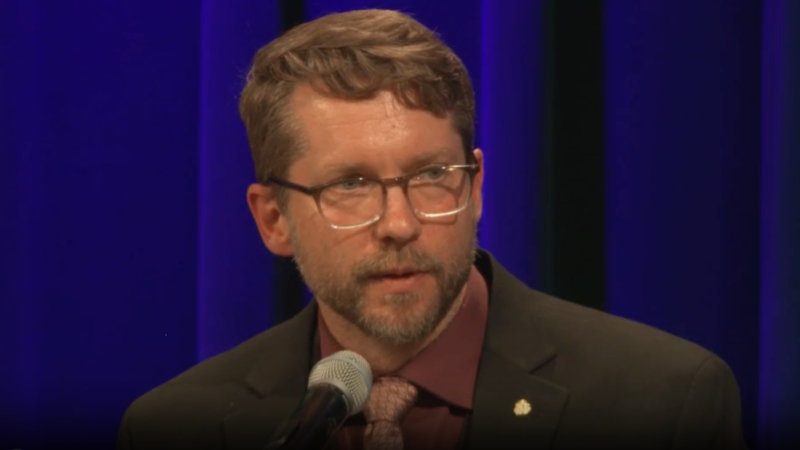
This anti AI evangelist is growing – Joe Allen, an outspoken critic of artificial intelligence, has emerged as a rising figure in the anti-AI movement, a trend that could reshape political dynamics in the United States. As concerns about AI’s role in shaping society intensify, Allen’s growing popularity highlights a significant shift in public opinion, one that directly impacts traditional political leaders like Donald Trump. His transformation from a concert technician to a vocal advocate against technological overreach underscores a broader ideological awakening, particularly among voters who fear automation’s impact on jobs, privacy, and human values. With his message gaining momentum in conservative circles, the question remains: will this anti-AI evangelist’s influence threaten Trump’s standing in the upcoming midterm elections?
From Technical Expert to Public Voice
Allen’s journey began in the high-energy world of live events, where he spent years managing the intricate machinery that brought concerts and festivals to life. However, the pandemic forced a dramatic career pivot, pushing him to reflect on the broader implications of AI in everyday life. As he transitioned from behind-the-scenes work to public commentary, Allen began to emphasize how technology’s rapid advancement threatens core human experiences. His background as a technician gives him a unique perspective, allowing him to blend technical expertise with philosophical concerns about AI’s societal impact. This duality has made his arguments more compelling, especially as he speaks to audiences who question the unchecked proliferation of AI in sectors like manufacturing, healthcare, and media.
The Rise of a New Political Narrative
What was once a niche concern has evolved into a cultural phenomenon, driven by a growing number of Americans who believe AI poses existential risks. A June survey by Pew Research Center revealed that 62% of respondents feel AI will harm society more than it will benefit, a figure that has steadily increased over the past year. Allen’s message, framed through a religious lens, has resonated with a segment of the American right that views technology as an encroachment on human dignity. His advocacy has found fertile ground in conservative media, where he has been featured in articles and podcasts that amplify fears about AI replacing human labor and distorting democratic processes. This convergence of faith and technology has positioned Allen as a moral authority in the debate over AI’s future.
Allen’s influence extends beyond public discourse, as his ideas have begun to shape the political strategies of certain factions within the Republican Party. Some conservatives see his anti-AI stance as a way to differentiate themselves from figures like Donald Trump, who has often embraced technological innovation as a tool for political and economic dominance. By aligning with the anti-AI movement, these groups aim to appeal to voters who prioritize human values over technological efficiency. However, this shift also raises questions about the broader implications for the party’s platform, as it signals a growing divide between technologically optimistic and cautious conservatives. The movement’s success could redefine the political landscape, forcing leaders to address concerns that extend beyond traditional economic or social issues.
A Global Perspective on AI Anxiety
While the anti-AI movement in the U.S. has gained traction in recent months, similar sentiments are emerging in other countries, reflecting a global concern about technology’s role in governance and daily life. In Europe, debates over AI regulation have intensified, with lawmakers proposing stricter controls on data usage and algorithmic decision-making. Allen’s message, though rooted in American politics, taps into these international anxieties, framing AI as a universal threat to human autonomy. His growing popularity suggests that the movement may transcend regional boundaries, creating a coalition of voices that demand transparency, ethical oversight, and a human-centric approach to technological progress. This global resonance could amplify his impact, influencing not just domestic politics but also international policy discussions.
As the anti-AI movement gains momentum, its influence on political campaigns is becoming increasingly evident. Allen’s speeches and writings have been cited in debates about the future of jobs, with some politicians using his arguments to bolster calls for retraining programs and labor protections. His ability to articulate fears about AI’s encroachment on privacy and decision-making has also drawn comparisons to the 1950s-era Luddite movement, which opposed industrialization’s impact on manual labor. While the stakes are different today, the underlying tension between technology and human agency remains strikingly similar. This parallel has helped frame Allen as a modern-day figure in the ongoing struggle to balance innovation with tradition, a narrative that could reshape the political discourse in the years ahead.
“AI isn’t just a tool—it’s a force that’s reshaping our world in ways we can’t fully control,” Allen said in a recent interview. “If we don’t act now, we risk losing the very essence of what it means to be human.”
Allen’s rise also highlights the power of grassroots movements in shaping political narratives. Unlike traditional campaigns that rely on large-scale advertising, his influence has grown through social media engagement, live speaking events, and collaborations with influential figures like Steve Bannon. This decentralized approach has allowed his message to spread rapidly, challenging the centralized narratives of major political parties. As his profile continues to rise, the anti-AI movement is no longer a fringe concern but a force that could redefine the priorities of the Republican Party and its candidates. With AI-related issues gaining prominence, the stage is set for a new era of political competition—one where the battle over technology’s role in society becomes as crucial as debates over taxes or healthcare.
