
Canada faces an unprecedented World Cup situation as the knockout rounds begin
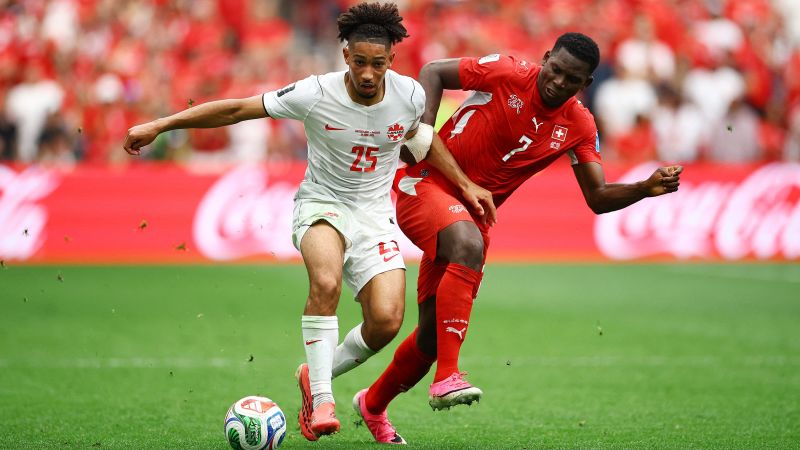
Canada’s Unique World Cup Challenge Begins
Canada faces an unprecedented World Cup situation – The World Cup group stages have concluded, marking the end of a grueling phase where 16 teams competed for advancement. For many fans, this transition feels like a sigh of relief, but for Canada, it heralds an unusual predicament. As the knockout rounds commence, the nation’s team finds itself in a position that has never been seen before—a host country competing in a decisive match away from its own territory. The match between Canada and South Africa at SoFi Stadium in Los Angeles, set for 3 p.m. ET, is not just a game of survival; it’s a test of resilience for both nations.
A Global Shift in Hosting Dynamics
This year’s tournament has been a showcase of innovation, with co-hosting arrangements reshaping traditional expectations. Canada, one of the host nations, now faces a critical challenge as it ventures beyond its borders to secure a place in the Round of 32. The team’s path has been complicated by a 2-1 loss to Switzerland in its final group match, which left them second in Group B. This outcome has sparked debate about FIFA’s decision to schedule the knockout stage in the United States rather than Canada. While the Swiss will play their next match in Vancouver at BC Place, the Canadians are now fully committed to their road trip, with no return to home soil in sight.
Home-field advantage has long been a cornerstone of World Cup strategy, offering teams a psychological and logistical edge. Canada’s situation highlights a growing trend in modern tournaments: the necessity for host nations to adapt to global scheduling demands. Fans in Canada have expressed frustration, arguing that the team’s lack of prior World Cup success—never having won a game before this cycle—should have been a factor in the decision. Yet, FIFA’s approach has been consistent, prioritizing the spread of matches across multiple venues to maximize excitement and accessibility.
Looking Ahead to the 100th Anniversary
The 2030 World Cup, coinciding with the 100th anniversary of the inaugural tournament in Uruguay, promises to be an unprecedented spectacle. The event will feature matches in South America, including Montevideo, the birthplace of the World Cup, and Buenos Aires, Argentina’s iconic soccer hub. Paraguay, home to CONMEBOL, will also host games, creating a unique blend of history and modernity. Beyond South America, the tournament will expand to Spain, Portugal, and Morocco, the nations designated as the main hosts. This geographic dispersion will likely lead to similar scenarios for these host countries, where teams may find themselves playing away from their home turf in the knockout stages.
The 2030 edition is expected to draw massive global attention, with fans from diverse regions engaging in unprecedented numbers. The logistical challenges of scheduling matches across continents will be significant, but the organizers aim to create a more inclusive experience. For Canada, the 2026 situation may serve as a precursor to the broader implications of this format. While the nation’s team will have to rely on American venues for the remainder of the tournament, the 2030 World Cup could see them facing even more varied circumstances. This evolution reflects FIFA’s vision of making the World Cup a truly global event, one that transcends geographical boundaries.
The Journey of Two Nations
Canada’s path to the knockout rounds has been anything but smooth. After exiting in 1986 and 2022, the team is now aiming for a breakthrough in its third attempt. For South Africa, the situation is equally dramatic, as the team’s historic first appearance in the knockout stages is the culmination of a long and arduous journey. Having missed the round in 1998, 2002, and 2010, Bafana Bafana’s recent performances have been a mix of hope and heartbreak. A late penalty against the Czech Republic in their final group match, coupled with a narrow 1-0 victory over South Korea, secured their place in the next stage.
The significance of this match extends beyond the immediate stakes. For Canada, it’s a chance to rewrite their World Cup narrative, proving that their squad can thrive under pressure. For South Africa, it’s a moment to reclaim their status as a soccer power, despite past setbacks. The two teams have both faced adversity, but their current positions in the tournament offer a rare opportunity to showcase their potential. The outcome could shape not only their futures but also the perception of the World Cup’s evolving structure.
Embracing the Unprecedented
While the situation may seem awkward for Canada, it underscores the dynamic nature of the World Cup. The tournament has always been a platform for innovation, and this year’s decision to host knockout games in the U.S. is a natural extension of that trend. The controversy surrounding the scheduling has sparked discussions about the balance between tradition and modernity, but it also highlights the global reach of the event. Fans and analysts alike are grappling with the implications of this format, which could redefine how host nations interact with the competition.
For South Africa, the challenge is equally compelling. The team’s journey to the knockout stages has been marked by resilience, and their performance in the group phase has demonstrated that they are capable of competing at the highest level. Even in the face of early setbacks, such as their opening loss to Mexico, the team has shown determination. The 2026 World Cup may be their first step toward establishing themselves as a consistent force in international soccer, setting the stage for future success.
As the clock ticks down to the start of the match, the atmosphere in Los Angeles is electric. The game is not just about qualification—it’s about legacy, opportunity, and the collective dream of a nation that has waited years to see its team reach this stage. The outcome could inspire new narratives, both for the teams involved and for the World Cup itself. Whether this marks a turning point or a temporary hurdle remains to be seen, but one thing is certain: the tournament is entering a new era, defined by its ability to adapt and challenge the status quo.
“This is a match of firsts for several reasons,” said CNN’s Ben Church. “For starters, it’s the first knockout match of this year’s tournament. But more notably, it’s the first time both nations will be playing in the knockout stages of a men’s World Cup. For Canada, it’s their third chance to make it to the next round after being eliminated in 1986 and 2022. For South Africa, it’s a long-awaited return to this stage after three previous attempts.”
The stakes are high, and the narrative is fresh. As the teams prepare to face off, the world watches with anticipation, knowing that this match could be the first of many defining moments in the 2026 World Cup. The tournament’s unique structure continues to test the limits of what’s possible, proving that the beautiful game is as unpredictable as ever. For Canada and South Africa, the journey is only beginning, but the path they’ve chosen is one that promises both challenge and opportunity.
