
Ötzi the Iceman is long dead, but some of his ancient microbes are still alive
The Living Legacy of Ötzi the Iceman
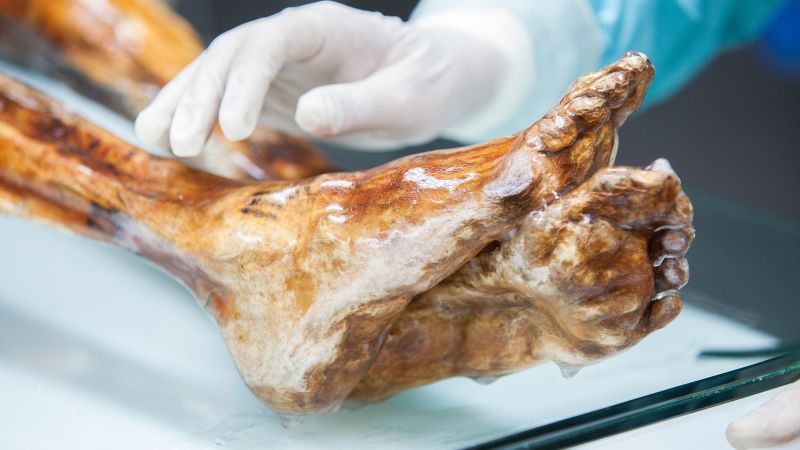
Ötzi the Iceman is long dead – Ötzi the Iceman, the remarkably preserved mummy of a man who lived over 5,300 years ago, has revealed a surprising secret: some of the microbes that once inhabited his body are still thriving today. New research, published recently in the journal *Microbiome*, has transformed our understanding of ancient remains, showing that they are not just static relics but dynamic ecosystems where microbial life persists against all odds.
Microbial Resilience in Cold Environments
Scientists analyzed the microbial communities both inside and on the surface of Ötzi’s mummified remains, uncovering fungi species that had survived the freezing conditions of the mountain glacier. These microbes, researchers suggest, likely attached themselves to the corpse after his death and remained dormant due to the extreme cold. Their ability to withstand millennia of freezing has now been confirmed, with some still capable of reviving and multiplying, even at a slow pace, in the limited moisture pockets within his body.
“In many DNA studies of ancient human remains, the microbial DNA is often overlooked, and it’s unclear whether the microbes identified are as old as the body itself or recent contaminants,” said Anders Bergström, an evolutionary genomics researcher at the University of East Anglia in the UK. “This study of Ötzi offers a groundbreaking perspective on the origins and persistence of microbial life in prehistoric settings.”
The research team employed a multifaceted approach, examining water trapped in Ötzi’s tissues, swabbing the exterior of his mummified body, and collecting samples from the soil surrounding him during his 1991 discovery. They also referenced earlier genetic data from his gut and compared it with airborne microbes present in the storage chamber and handling room of the South Tyrol Museum of Archaeology. This comprehensive analysis allowed them to differentiate between microbes that originated with Ötzi and those introduced later through environmental exposure or human contact.
Reviving the Ancient Microbiome
One of the study’s key revelations is that Ötzi’s microbial inhabitants are more than just preserved traces—they are active participants in a hidden biological process. By culturing some of the microbes and sequencing DNA from both viable and nonviable specimens, researchers determined that certain species, such as fungi, had not only survived but retained their biological functions. This finding challenges previous assumptions that ancient microbial communities are inert, suggesting instead that they may remain metabolically active under specific conditions.
“These microbes give us a unique and precious snapshot of what the human gut looked like in the Copper Age, before industrialization reshaped our microbiome,” explained Frank Maixner, the lead researcher at Eurac Research’s Institute for Mummy Studies in Bolzano, Italy. “We identified ancient gut bacteria that are now extremely rare in modern populations, though they still exist in traditional communities.”
The discovery has significant implications for how we study and preserve ancient remains. For decades, Ötzi’s body has been stored in a climate-controlled environment at approximately 21 degrees Fahrenheit (minus 6 degrees Celsius) with 99% humidity, conditions that mimic the glacier where he was found. Yet scientists now question whether these measures fully safeguarded his microbial inhabitants, as some microbes are known to adapt and flourish in cold climates. The study highlights the need for reevaluating storage protocols to account for microbial activity rather than treating it as a passive component of the mummy’s preservation.
Challenges in Preserving Microbial Integrity
While Ötzi’s microbes provide invaluable insights into prehistoric life, they also pose challenges for accurate analysis. The cold environment of the glacier initially slowed microbial decay, but the ongoing exposure to modern conditions—such as handling by researchers and the presence of air-borne contaminants—could introduce uncertainties. For instance, the study found that some microbes likely colonized his body post-mortem, complicating interpretations of his original microbiome.
This issue underscores the complexity of studying ancient remains. Even though Ötzi’s body was frozen for thousands of years, the delicate balance of preservation has been disrupted by human interaction. Researchers now emphasize the importance of controlled environments and advanced techniques to distinguish between ancient and modern microbial influences, ensuring that findings reflect the true biological history of the mummy.
Ötzi’s Tattoos and Microbial Clues
Interestingly, the study also shed light on a long-standing mystery: the purpose of Ötzi’s 61 tattoos. Initially believed to be decorative or symbolic, these markings may have had a functional role. The research team discovered that some of the microbes found on his body could have contributed to the preservation of these tattoos, offering new clues about their creation and significance. This connection between microbial activity and physical artifacts adds another layer to the mummy’s story, demonstrating how microorganisms can influence the legacy of ancient humans in unexpected ways.
Ötzi’s case is not unique, but it exemplifies the broader potential of microbial analysis in archaeology. The mummy’s survival in a glacial tomb has allowed scientists to explore how microbes interact with organic matter over time, revealing mechanisms of preservation and decay. These insights could help refine the study of other ancient remains, from Egyptian mummies to Siberian permafrost specimens, by providing a more nuanced understanding of microbial contributions to their longevity.
The Future of Microbial Archaeology
As technology advances, the study of ancient microbes is becoming increasingly precise. By isolating and sequencing DNA from both viable and nonviable specimens, researchers can now trace microbial origins with greater accuracy. This method has proven particularly valuable for Ötzi, whose microbial communities offer a window into the health and diet of Copper Age populations. For example, the presence of certain bacteria may indicate a diet rich in specific foods or a lifestyle influenced by environmental factors.
The findings also raise questions about the impact of modern environments on ancient DNA. While Ötzi’s microbes have survived, other studies suggest that microbes in modern settings might have altered the genetic material of mummies over time. This highlights the importance of careful handling and specialized storage to minimize contamination and preserve the integrity of microbial records.
Ötzi the Iceman, long considered a symbol of prehistoric human life, now stands as a testament to the resilience of microbial ecosystems. His story underscores the fact that even after thousands of years, the microscopic inhabitants of ancient bodies can continue to reveal secrets about the past. As scientists continue to unravel these mysteries, the mummy’s legacy extends beyond his physical remains, into the invisible world of microbes that have outlived him by millennia.
