Trump’s sanctions, inflation and a collapsing economy leaves Iran’s sick exposed

Daftar Isi
Medicine Shortages Deepen Iran’s Health Crisis as Prices Surge
Earthguardiansonline.com – For many people in Iran living with serious illness, finding medicine has become an exhausting and increasingly unaffordable daily struggle. Sanctions pressure, soaring inflation, delayed insurance payments and limited access to foreign currency have strained a system that once allowed patients to obtain essential drugs with far less uncertainty.
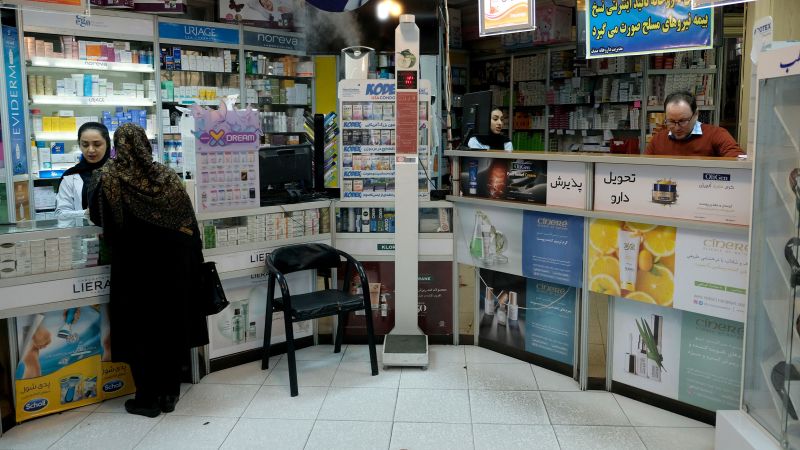
Sima, 35, spent hours visiting pharmacies in Tehran in search of medication needed to protect her kidneys. She located it only at the seventh pharmacy, in an affluent part of the capital. But the relief did not last: the price had risen again, leaving her unable to afford the prescribed amount and forcing her to take less than she needs.
“They’ve stopped using cancer medication for people who they say are terminal or far along. They only use it for those who are in the very early stages.”
Sima asked not to be identified by her real name because she feared consequences for speaking openly. Her experience reflects a wider dilemma for patients with chronic diseases: medication may be unavailable, replaced with another version, or priced beyond reach.
Patients face difficult choices
The pressure is especially severe for people who need specialized treatment. A 55-year-old cancer patient in Tehran said that she has begun asking visitors arriving from overseas to bring medicines that cannot be found locally. She described trying to manage her illness while also living with anxiety about the conflict and an uncertain future.
“Between the illness and uncertainty of the war I have a hard time knowing what to do.”
Some cancer patients have sold household possessions, including televisions and refrigerators, to pay for medicines offered at vastly inflated prices. A Tehran mother who lost her only daughter has switched from her usual antidepressant to a locally made alternative that she finds less effective. Seasonal flu vaccinations were canceled this year after the government was unable to secure supplies from Europe.
For patients, a medicine shortage is not merely an inconvenience. Cutting a dose, delaying an appointment, changing treatments without adequate medical supervision or relying on self-medication can all create additional health risks. Those decisions are often driven by cost and availability rather than by what a doctor originally prescribed.
“Everyone says we’re brave,” the cancer patient said. “But I don’t know if being brave means anything when you’re dying.”
Shortfalls stretch across common and specialized drugs
Pharmacies contacted in Iran described shortages and rising prices affecting several kinds of medicine. Heart treatments are increasingly supplied as local generics instead of the brand originally prescribed. Cholesterol drugs remain available in some cases, but at much higher prices. Migraine medicines have disappeared from pharmacy shelves.
The problem appears to reach further than those categories, affecting medicines for depression, insulin and pregnancy-related care. Some treatments cannot be obtained at all. Patients then face the prospect of paying extraordinary sums through informal channels or accepting a generic substitute that may not work as well for them.
Shahram Kalantari, head of the Iranian Pharmacists Association, said last month that shortages had affected almost 800 medicines. Rising costs have also made it difficult for pharmacies to acquire replacement stock.
Domestic production does not eliminate reliance on imports
Iran manufactures more than 97% of its medicines by volume, Mehdi Pirsalehi, who heads the country’s Food and Drug Organization, said in February. That figure, however, does not mean the country can independently produce every drug or every component required to make it.
Imported specialty medicines are among the most vulnerable supplies because they must be bought with foreign currency. Domestic manufacturers can also depend on imported raw materials, machinery and technology. Peivand Bastani, a senior lecturer at Flinders University and co-author of research on sanctions and pharmaceutical procurement in Iran, emphasized that local production does not necessarily amount to full self-sufficiency.
“Local manufacturing can still depend on imported materials, equipment and technology, while some specialized and high-cost medicines must be imported.”
US President Donald Trump’s maximum-pressure campaign has intensified scrutiny of Iranian banks and complicated oil exports, a principal source of foreign currency for the Islamic Republic. When access to that currency narrows, the impact extends beyond imported finished medicines to the wider supply chain that supports local pharmaceutical production.
Insurance arrears add another burden
Insurance coverage is meant to reduce the cost of prescribed medicines for millions of Iranians. Yet pharmacies have struggled because insurers have stopped making payments, Iranian officials have said. Patients presenting insured prescriptions may leave without the medicine they need, or must pay the entire amount themselves.
More than 18,000 private pharmacies are awaiting payments from insurance companies, officials from the Iranian Pharmacists Association said last month. Insurance debts owed to pharmacies had climbed to almost 800 trillion rials, or about $300 million.
These unpaid bills weaken pharmacies’ ability to restock. Inflation raises prices, limited foreign currency restricts purchasing power, and delayed insurance reimbursement leaves retailers unable to cover their own costs. The result is a fractured chain that reaches directly into the lives of patients.
For someone like Sima, the consequences are measured not in economic statistics but in a search across pharmacy counters, a price that changes without warning, and a decision to take less medicine than her condition requires.
Related Reading
Frequently Asked Questions
What is Trump s sanctions inflation and a collapsing?
Trump s sanctions inflation and a collapsing is the main topic of this guide. The article explains the context, practical details, and next steps readers should understand.
Why does Trump s sanctions inflation and a collapsing matter?
Trump s sanctions inflation and a collapsing matters because readers are looking for a useful answer, not just a short summary. Good content should match search intent and help them decide what to do next.