Eat the ‘dodgy sandwich,’ says chef David Chang

Daftar Isi
David Chang Wants Travelers to Stop Chasing the “Best” Meal
Earthguardiansonline.com – Chef David Chang believes one of the most rewarding meals on a trip may be the one that never appeared on a ranking, map, or social-media post. His advice is simple: put the phone away, loosen the itinerary and be willing to try the sandwich that looks a little questionable.
“Throw away your phone. I mean, really what’s the worst thing that’s gonna happen? You’re gonna go hungry? No, you’re gonna eat something.”
The meal may not be extraordinary every time, Chang acknowledges. But the point is to let curiosity lead rather than outsourcing every decision to online lists. He argues that travelers learn more when they rely on their own instincts — “trust your own gut, literally” — instead of pursuing a supposedly definitive version of a local dish.
Chang, the chef, restaurateur and author who launched Momofuku in 2004 with a noodle bar in New York’s East Village, says the constant pursuit of top-rated experiences can make travel less memorable. Momofuku now has restaurants in Los Angeles, New York and Las Vegas, yet Chang still sees value in stepping away from familiar recommendations.
“Eating the best of the best of the best may not actually make the best experience.”
A road-trip case for detours
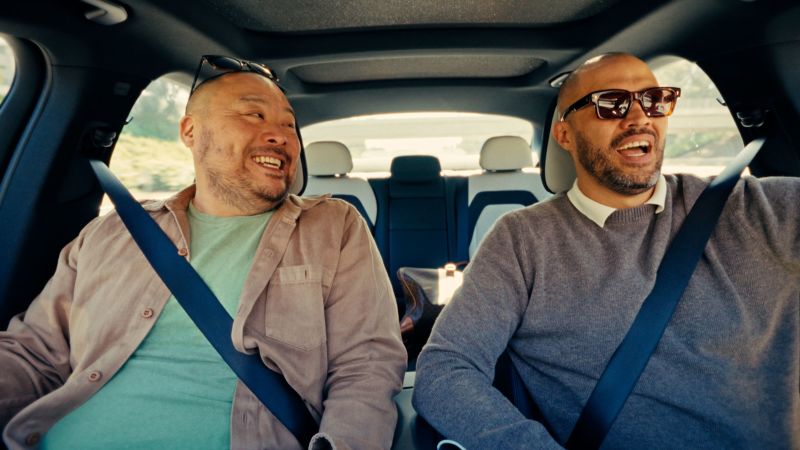
That idea is central to “The Detour with David Chang,” a CNN Original Series that premieres Sunday. The program follows Chang across six US road trips, with stops including Las Vegas, Nashville and Pittsburgh. Two episodes air on Sundays at 9 p.m. and 10 p.m. ET/PT, with streaming available the following day.
Chang travels with guests whose preferences can disrupt even a carefully arranged route. The unpredictable nature of those trips is not treated as a problem; it is often what produces the most interesting food discoveries.
Las Vegas offered one example. Chang already knows the city through Momofuku and Bāng Bar at the Cosmopolitan, but his journey there with Oscar-winning filmmaker Cord Jefferson led him beyond the Strip. Together they explored Hawaiian, Ethiopian and Filipino flavors, an experience Chang said challenged his assumptions about a place he thought he knew well.
“It was a good reminder that I don’t know anything.”
For Chang, that admission is valuable far beyond restaurants. Modern travelers have access to an overwhelming amount of information, but plentiful recommendations do not necessarily equal deeper understanding. A person can read dozens of guides and still miss what makes a neighborhood, community or dining room distinctive.
“It’s OK if we don’t know. We just need to be more honest about saying we don’t know something.”
Preparation matters, but rigidity does not
Chang sees two common travel mistakes: arriving with too little thought, or planning so intensely that spontaneous choices become impossible. Over-preparation often means treating popular posts and lists as universal truth. He encourages people to consider who is making a recommendation and whether that person’s tastes actually resemble their own.
“Just question the source.”
He is not suggesting that popular opinions are automatically wrong. Instead, he questions why travelers so readily assume another person’s likes and dislikes will translate to their own experience. When everyone follows the same recommendations, Chang says, people can end up eating the same things while overlooking the places that might speak more directly to them.
At the same time, he does not romanticize total improvisation. Going somewhere with no plan and expecting every opportunity to appear at exactly the right moment can be equally frustrating. The useful middle ground is to prepare enough to make a trip workable, while leaving room to change course.
A South Florida trip demonstrated that balance. Chang and the show’s production team had established hotel arrangements and logistics, but comedian Eric André pushed for Miami, a city that was not part of the original route.
“Eric André was like, ‘What do you mean we’re not going to Miami? We’re going to Miami’ … That was a surprise, for sure. Like we had no plan, at all, to be in that city. And it was a lot of fun. I’m glad that we did.”
The detour became part of the value of the experience. It also illustrates why a travel schedule should be treated as a guide rather than an unbreakable contract. A free afternoon, an unexpected invitation or a strong opinion from a companion can sometimes lead to the meal people remember most.
Food is tied to time, place and mood
Chang’s view of restaurants reaches beyond a scorecard of dishes. He sees them as community and cultural banks: places that preserve particular tastes, memories and identities. A restaurant does not need to satisfy every possible customer to matter.
“I look at restaurants more as like community or cultural banks, right? And there’s a little bit for everybody, but when a restaurant has to be everything to everyone, that’s not necessarily going to work.”
He compares specialized restaurants to niche albums or films. Their appeal may be specific rather than universal, but that focus can be exactly what makes them worthwhile. Travelers who seek only broad consensus may miss places with a clearer point of view.
Chang also stresses that a meal’s value depends on circumstances. Distance, hunger, timing and personal mood all shape whether food feels right in the moment. A restaurant that is perfect for one visitor may not be the best choice for someone else on a different day.
“It’s about time and place.”
Rather than treating a handful of famous destinations as the only acceptable options, Chang encourages diners to ask a more personal question: what feels good to them? That approach does not reject research or expert knowledge. It simply leaves room for a traveler’s own judgment, appetite and sense of discovery.
Chang says he has recognized his own tendency to become “calcified” in his preferences, especially in music. Listening more openly has renewed his sense of curiosity, and he sees a similar lesson in food. The unfamiliar restaurant, unplanned turn or imperfect-looking sandwich may not become a favorite. But it can make the journey more alive.
Related Reading
Frequently Asked Questions
What is Eat the dodgy sandwich says chef?
Eat the dodgy sandwich says chef is the main topic of this guide. The article explains the context, practical details, and next steps readers should understand.
Why does Eat the dodgy sandwich says chef matter?
Eat the dodgy sandwich says chef matters because readers are looking for a useful answer, not just a short summary. Good content should match search intent and help them decide what to do next.