Trump’s UN ambassador defends press ban as news outlets prepare legal challenges

Daftar Isi
Press Ban Draws First Amendment Scrutiny as Legal Fight Looms
Earthguardiansonline.com – A White House decision to bar CNN, MS NOW and Politico has prompted a growing dispute over presidential power, press access and the constitutional limits on excluding journalists because of their coverage. The three organizations are preparing legal action, while press-freedom advocates expect the policy to face a rapid court challenge.
The conflict centers on President Donald Trump’s stated dissatisfaction with coverage he considers negative. Legal specialists have focused on whether the policy amounts to viewpoint discrimination: the government allowing press access generally while denying it to particular outlets because officials dislike their editorial work.
That distinction matters because White House facilities have long accommodated a broad range of reporters. Courts have repeatedly treated access rules differently when they are applied evenly than when they appear designed to punish a news organization for its perspective.
Waltz Cites Supreme Court Case
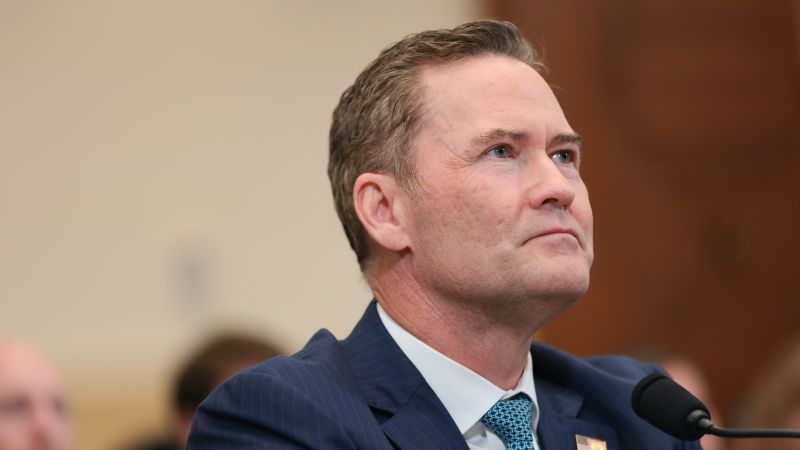
Mike Waltz, Trump’s ambassador to the United Nations, defended the restriction during an appearance on “State of the Union.” His interview had been scheduled before the ban took effect.
The president is absolutely within his rights to limit journalists to government facilities, particularly when, in his opinion, they’re not behaving as good-faith journalists. And that’s just not his opinion. That’s the Supreme Court’s opinion.
Waltz referred to the Supreme Court’s 1965 decision in Zemel v. Rusk. In that case, Chief Justice Earl Warren wrote:
The right to speak and publish does not carry with it the unrestrained right to gather information.
However, opponents of the ban argue that the broader legal issue is not whether reporters possess unlimited access to every government space. Instead, they contend that once the White House opens facilities to the press, it cannot selectively exclude outlets based on their viewpoints.
Trump’s Comments May Become Central Evidence
Trump’s own explanation for the decision is likely to receive close attention in any lawsuit. Speaking in the Oval Office on Friday, he criticized what he described as deliberately negative reporting.
Something is wrong with a country that can allow people to write purposely negative stories.
He also said:
Now, if they want to write them, that’s fine. But I don’t have to let them into my — into the people’s house.
Those statements could be cited by the affected organizations as evidence that the exclusions were based on the content and viewpoint of coverage rather than on neutral access rules or security concerns.
Mark Schoeff Jr., president of the National Press Club, said the Constitution does not allow the government to decide which journalists may carry out their work based on favored or disfavored coverage.
The First Amendment does not permit the government to pick and choose which journalists are allowed to do their jobs.
Recent Court Ruling Offers a Guide
A ruling from last year may shape the coming legal battle. After Trump temporarily excluded The Associated Press from certain events, a Trump-appointed judge in Washington concluded that a White House press area generally open to journalists could not be used to shut out reporters because of viewpoint.
When the White House opens its facilities to the press generally, as it does in the Brady Briefing Room, it cannot exclude journalists based on viewpoint.
The current dispute is broader because it involves three outlets and an announced ban on their access. Press advocates say a court could be asked for an injunction or temporary restraining order designed to restore the usual press-pool arrangements while the underlying constitutional questions are litigated.
Adam Rose, deputy director of advocacy at the Freedom of the Press Foundation, said legal filings could arrive quickly and seek immediate relief.
There’s going to be, in the next few days and probably by first thing Monday morning, filings by these outlets and their legal representation to demand an injunction from a court or hopefully even a temporary restraining order, which would move even faster, insisting that the pool move forward as it normally does.
Political Responses Diverge
Republican officials addressing the issue on Sunday largely emphasized Trump’s willingness to take questions from reporters rather than the legal argument over access. On ABC’s “This Week,” Sen. Steve Scalise pointed to the president’s often extended exchanges with journalists.
I’ve never seen him turn a question down from anybody.
Critics note that the practical consequence of the ban is that CNN, MS NOW and Politico reporters cannot ask those questions from the White House. Democratic officials have described the decision as a direct constitutional concern. Maryland Gov. Wes Moore offered a blunt assessment during “State of the Union.”
The president seems to have a real problem with the Constitution.
The dispute also has implications beyond the organizations currently affected. Conor Fitzpatrick, chief supervising attorney at the Foundation for Individual Rights and Expression, warned that allowing an administration to exclude news outlets over unfavorable coverage could create a precedent available to future presidents.
Once you open the Pandora’s box of censorship, you can never close it again.
Competitors Show Unusual Unity
Newsrooms that normally compete intensely with the barred outlets have voiced concern that the policy could expand to other organizations. The Washington Post called the ban an effort to intimidate coverage, arguing that it deprives the public of information and places democratic institutions at risk.
Fox News also devoted time to the matter on “Fox News Sunday.” Jacqui Heinrich, filling in as anchor and serving as this year’s president of the White House Correspondents’ Association, addressed the subject as the press corps considers the wider consequences of restricted access.
At stake is more than the ability of three outlets to attend White House events. The expected court challenge will test whether a president may use access to public-facing government spaces as leverage against critical reporting—or whether the First Amendment requires equal treatment once those spaces are opened to the press.
Related Reading
Frequently Asked Questions
What is Trump s UN ambassador defends press?
Trump s UN ambassador defends press is the main topic of this guide. The article explains the context, practical details, and next steps readers should understand.
Why does Trump s UN ambassador defends press matter?
Trump s UN ambassador defends press matters because readers are looking for a useful answer, not just a short summary. Good content should match search intent and help them decide what to do next.