Inside Trump’s mad dash to sign an agreement with Iran

Trump’s Urgent Move to Finalize Iran Accord
Inside Trump s mad dash to sign – President Donald Trump’s decision to sign a landmark agreement with Iran came unexpectedly during a diplomatic dinner in Versailles, France, on Wednesday. As the evening unfolded, he surprised both his French host, Emmanuel Macron, and some of his own advisors by demanding the accord be finalized immediately. The lead American negotiator, Vice President JD Vance, had received confirmation that the document was ready just as he arrived at the palace. However, a separate signing ceremony had been scheduled for two days later at a luxury retreat near Lake Lucerne. Despite this, Trump insisted on sealing the deal that night, overriding plans to delay the formalities. Macron, according to officials, quickly accommodated the request, suggesting the presidents could proceed with the ink. A flurry of activity followed, as the text was printed in the Hall of Mirrors, where the two leaders strolled while discussing the historical weight of the location.
The Rush to Finalize a Fragile Accord
The Iran agreement, finalized in mere hours, marked the culmination of a chaotic diplomatic process. Trump’s team had spent weeks oscillating between signals of impending compromise and threats of renewed conflict, keeping Iran on edge. Even after the text was agreed upon, its details remained concealed for days, a tactic attributed to Pakistani intermediaries who advised American officials that Tehran sought internal time to align its positions. When the document finally emerged, it was read aloud by a senior US official, sparking immediate debate among aides. The agreement, described as a 14-point memorandum of understanding, aimed to secure Iran’s commitments to nuclear restrictions but left room for interpretation, as the text avoided explicit terms on concessions.
Trump’s insistence on an immediate signature reflected his frustration with the prolonged negotiations. While the original plan called for a formal signing in Switzerland, the president’s impatience prompted a last-minute shift. This decision came amid rising tensions between Israel and Hezbollah in Lebanon, which had threatened to derail the accord. Iran’s sudden withdrawal from the Lucerne event underscored the precarious nature of the deal. Yet, the leaders still managed to agree to a renewed ceasefire by Friday morning, a breakthrough that eased concerns over regional instability.
A President’s Dilemma: Criticism and Economic Pressures
Despite the swift action, the agreement drew sharp scrutiny from both allies and adversaries. Trump’s top diplomat, Secretary of State Marco Rubio, faced criticism for including a $300 billion reconstruction fund in the accord. This provision, according to some, made the Obama-era deal appear “like a pittance,” as Senate Armed Services Chairman Roger Wicker remarked. The funds were intended to support Iran’s infrastructure, but critics argued they represented an overreach, offering significant economic aid without clear returns from Tehran.
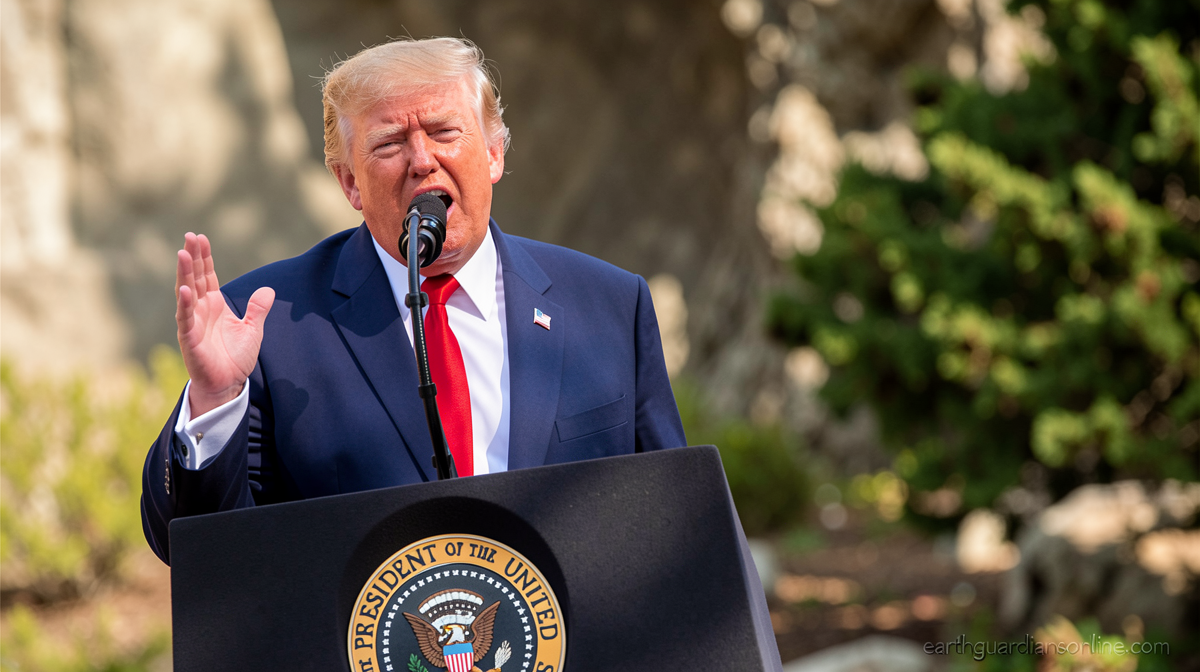
Trump himself grew defensive, framing the agreement as a necessary victory rather than a concession. In a social media post, he declared,
“We didn’t meet out of desperation, Iran did. They are FINISHED!”
This rhetoric echoed his broader narrative that US military strength had compelled Iran to the negotiating table. Yet, the same president who boasted of dominance also acknowledged the agreement’s economic rationale. During a Group of 7 summit in Évian-les-Bains, he told reporters,
“I didn’t want to see economic catastrophe. I feared being compared to Herbert Hoover, the president who presided over the market crash that began the Great Depression.”
This admission hinted at the broader pressures driving his decision, including the shrinking global oil reserves and Republican anxieties about the upcoming midterms.
Behind the Scenes: The Speed and Spontaneity
The Versailles signing was a spectacle of spontaneity, with Trump using a Sharpie to ink the document at a banquet table. Plates and glassware clinked in the background as he demonstrated his signature to dinner guests, including Wall Street figures and the head of France’s largest luxury conglomerate. Macron, ever the diplomat, praised the move with a simple “Bravo,” while a photo of the signed memo was promptly sent to Iran as a symbolic gesture. The scene contrasted sharply with the earlier uncertainty surrounding the deal’s fate, as the president’s impulsive actions had nearly caused a collapse just days prior.
Months of war had left the international community eager for a resolution, and the 14-point agreement offered a glimmer of hope. However, its success depended on Iran’s willingness to comply, a factor that remained unpredictable. Trump’s team, including Vance, had to balance the urgency of the moment with the need to ensure the deal’s terms aligned with their strategic goals. The rushed process raised questions about the document’s clarity and enforceability, with some officials describing it as a series of “gentleman’s agreements” rather than legally binding commitments.
Legacy of a Last-Minute Decision
While the Versailles signing brought immediate relief to a president weary of the war’s toll, it also exposed the vulnerabilities of the administration’s approach. The agreement’s survival hinged on the fragile ceasefire and the ability to maintain diplomatic momentum. For Trump, the move was a calculated effort to restore stability and position himself as a peacemaker, even as his critics labeled the deal a surrender. The urgency of the moment, however, left little room for deliberation, and the final document reflected the compromises made in the heat of the moment.
As the ink dried on the Versailles paper, the implications of the agreement began to take shape. The $300 billion fund, once criticized as excessive, now stood as a testament to the economic stakes involved. Meanwhile, the impending 60-day period for implementation raised the question of how effectively the accord could be enforced. For Iran, the deal offered breathing room to consolidate its nuclear program, while for the US, it provided a chance to redirect attention from the ongoing conflict. The signing, though symbolic, underscored the high-stakes nature of Trump’s foreign policy and the ever-present tension between diplomacy and unilateral action.
In the weeks leading to the event, Trump’s team had grappled with internal disagreements and external pressures. The decision to finalize the agreement at Versailles was not just a tactical move but a reflection of the president’s impatience and desire to leave a mark on history. As the memo was reviewed by his aides, the immediate aftermath revealed both the relief and the uncertainty that accompanied such a rapid conclusion. The document’s survival hinged on the willingness of both parties to uphold their promises, a test that would determine its long-term success in a world still reeling from months of conflict.