
Clive Davis, monumental music producer and record industry titan, has died
Clive Davis, Music Industry Legend, Passes Away at 94
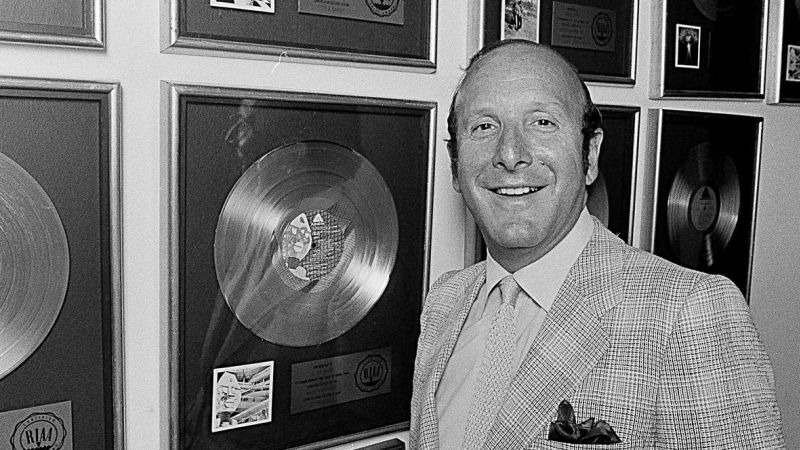
Clive Davis monumental music producer and record – Clive Davis, a revered figure in the music world known for shaping the careers of icons such as Janis Joplin, Whitney Houston, Billy Joel, and Carlos Santana, has died at the age of 94. His family shared the news of his passing in a social media post, while his publicist confirmed the details to CNN. Davis, often called “the man with the golden ears,” left an indelible mark on the industry, blending business acumen with an artistic eye that propelled countless artists to fame.
From Law to Legendary Status
Born in Brooklyn, Davis initially pursued a legal career, earning his degree from Harvard Law School before entering the world of music. At 19, he became a lawyer, but his path shifted dramatically after his parents passed away. By 1960, he had joined Columbia Records, where he quickly rose to prominence as the label’s top legal representative. Just five years later, Davis was appointed president of Columbia, a role he embraced with a mix of surprise and determination.
“I was thrust into it,” Davis told CNN in 2013. “Never knowing I had a natural ear and gift for music that,” he said, “would become the passion of my life.”
His transition from law to music was not just a career change but a transformation that would redefine the industry. Davis’s early work with Columbia Records laid the foundation for a legacy that would span decades, as he honed his ability to identify and nurture talent.
Discovering Icons: A Legacy of Talent
One of Davis’s earliest breakthroughs came in 1967 when he discovered Janis Joplin during her performance at the Monterey Pop Festival. His memoir, “The Soundtrack of My Life,” described her stage presence as unconventional but powerful: “Her body seemed to vibrate with the modulations of her voice, which struck with equal impact whether she was wailing at the top of her lungs or delivering an intimate whisper.”
Davis’s roster of artists expanded rapidly, including Bruce Springsteen, Carlos Santana, Chicago, and Earth, Wind & Fire. His discerning eye for potential earned him a reputation as a visionary, and he became a pivotal force in the evolution of pop and rock music. Among his most iconic signings was Whitney Houston, a 19-year-old pop sensation in the 1980s. Their collaboration led to seven consecutive No. 1 singles, including “Saving All My Love for You” and “I Wanna Dance with Somebody (Who Loves Me).”
“When they all hit, one after another and I was there, making that judgment… it obviously gave me confidence to keep going,” Davis reflected in a 2013 interview. The success of Houston’s career was a testament to Davis’s ability to launch and sustain stars. Yet, even at his peak, he faced personal tragedies, such as the drug-related death of Houston in 2012. Davis recalled the moment she passed: “She was vital, optimistic, looking forward to the future,” he said in 2024. “We had planned to explore new music.”
Controversy and Resilience
Despite his success, Davis’s career was not without challenges. In 1973, he was ousted from Columbia Records amid accusations of misusing company funds for personal purposes. Though he later clarified that the expenses were always intended to be reimbursed, the scandal coincided with a federal investigation into alleged “payola” practices at the label. Davis was cleared of the main charges but faced tax evasion allegations.
“This virtually complete exoneration received nothing like the coverage of all the baseless charges, rumors, and guilt-by-association whispers that I had lived with since leaving Columbia,” he wrote in 2013. The setback prompted him to establish Arista Records, where he continued his success with artists like Alan Jackson and Brooks & Dunn. His resilience in the face of adversity solidified his status as a master of the industry.
A Lasting Influence on Music and Culture
Throughout his career, Davis’s influence extended beyond the studio. He mentored and revitalized artists such as Aretha Franklin, whose career had slowed in the late 1970s. By collaborating on the 1987 duet “I Knew You Were Waiting (For Me)” with George Michael, Davis helped Franklin reclaim her place in the charts, marking her first No. 1 hit since 1967’s “Respect.”
His ability to adapt and innovate was evident in his work with diverse genres, from rock to R&B to country. Davis also played a key role in the careers of Simon & Garfunkel, The Grateful Dead, Dionne Warwick, and Luther Vandross, ensuring their music reached new audiences. His philosophy of survival in show business resonated with his approach: “You’ve got to be a survivor,” he once said. “You’ve got to rise above cold periods, you’ve got to come back stronger.”
As the music world mourns his passing, Davis’s contributions remain a cornerstone of modern pop culture. His influence is felt in every chart-topping album and every artist who credits him as a guiding force. From the early days of Columbia Records to the rise of Arista, his career was a masterclass in perseverance and passion. His family’s tribute, which described him as “a towering figure whose influence changed music forever,” captures the essence of his impact.
Reflections on a Remarkable Career
Even in his later years, Davis’s legacy continued to inspire. Bruce Springsteen, one of his protégés, honored him as a “close friend” who transformed his life with a single decision: signing him to Columbia Records in his early 20s. “He treated me with the same respect and kindness as a 22-year-old nobody as he did after all my success,” Springsteen wrote in a social media tribute. “A great man.”
Davis’s story is one of reinvention and relentless drive. His journey from a law student to a titan of the music industry underscores his ability to evolve while staying true to his vision. As the industry honors his achievements, the golden ears that once discovered Janis Joplin and Whitney Houston will be remembered as a symbol of artistic and commercial brilliance. Davis’s death marks the end of an era, but his influence will continue to echo in the world of music for generations to come.
