
Alito’s testy reaction to Sotomayor underscores tensions at Supreme Court
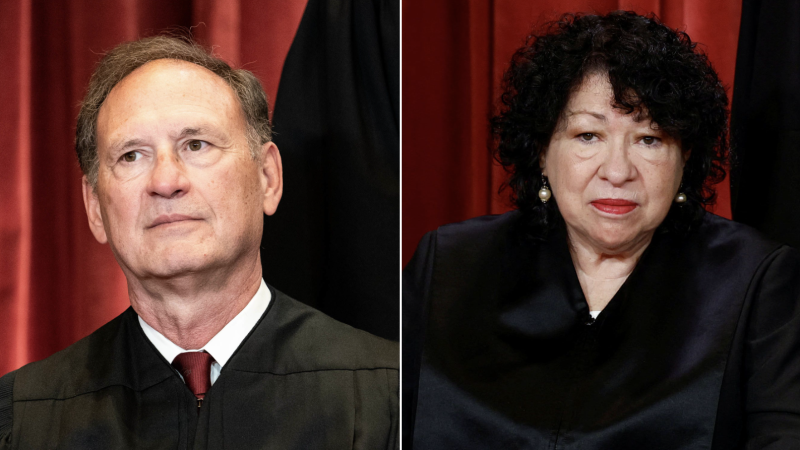
Alito’s Testy Reaction to Sotomayor Highlights Growing Tensions at Supreme Court
Alito s testy reaction to Sotomayor – Thursday’s session at the Supreme Court revealed a rare moment of public emotion, as Justice Samuel Alito displayed visible frustration toward Justice Sonia Sotomayor during her oral dissent. While most justices on the bench traditionally maintain a composed appearance, even when opposing a colleague’s decision, Alito’s response broke the usual stoicism. This outburst, which followed Sotomayor’s lengthy critique of his ruling on refugee policy at the southern border, underscored the increasing ideological divides within the court. The incident, though brief, had the potential to disrupt the institution’s carefully maintained image of impartiality.
A History of Unconventional Reactions
Alito’s temper has long been a topic of discussion among legal observers. His habit of expressing visible annoyance, such as the infamous eye-rolling episode during Justice Ruth Bader Ginsburg’s 2013 opinion reading, has made him a standout figure in the courtroom. This latest display of irritation—addressed to spectators rather than fellow justices—came as Sotomayor delivered a dissent that challenged his interpretation of immigration law. Alito’s remark, “There’s much that I would have added to my bench statement had I known there would be a dissent read,” was a clear indication of his frustration. The Supreme Court later clarified that the dissent was not a surprise, attributing the misunderstanding to an oversight in communication.
“There’s much that I would have added to my bench statement had I known there would be a dissent read,” Alito said, barely holding back his ire, after Sotomayor had finished her lengthy statement.
Although the court’s official statement softened the narrative, the incident captured the intensity of the current climate. With the nation’s highest court preparing to conclude its annual term, the dynamics among justices have become more pronounced. Alito’s 20th year on the bench has seen him play a pivotal role in shaping conservative rulings, yet his demeanor has often hinted at underlying dissatisfaction. For much of this term, some analysts speculated that his frequent outbursts might signal a desire to step down, but recent developments suggest he remains committed to his position.
A Ruling That Shifted Asylum Eligibility
The dispute at the center of Alito’s dissent revolved around the definition of “arriving in the United States” under immigration law. In a 6-3 decision, the court ruled that asylum seekers must physically enter the country before initiating the process. This interpretation overturned lower court rulings that allowed individuals near the border to begin their asylum claims. Alito’s opinion, which received support from all Republican-appointed conservative justices, emphasized the importance of a clear legal threshold. The ruling has significant implications for how asylum applications are processed, particularly in light of ongoing debates over border policies.
Sotomayor’s dissent, however, painted a different picture. She argued that the decision overlooked the human toll of restrictive policies, drawing a powerful historical parallel. “The M.S. St. Louis carried 900 Jews fleeing Nazi Germany and the Holocaust,” she recounted, highlighting the plight of those denied refuge in 1939. The ship had been turned away by the United States, Cuba, and Canada before returning to Europe, where many of its passengers perished. Sotomayor used this example to underscore the moral urgency of allowing asylum seekers to begin their cases before crossing the border. Her words, delivered with conviction, resonated deeply with those in the audience.
“The M.S. St. Louis carried 900 Jews fleeing Nazi Germany and the Holocaust,” Sotomayor said, recounting the ship’s rejection by the United States, Cuba, and Canada. “After returning to Europe, many of the Jewish refugees became trapped under German control, and more than 250 of them were killed in the Holocaust.”
Thursday’s proceedings, which began shortly after 10 a.m. ET, saw the justices tackle a series of cases. Justice Brett Kavanaugh’s opinion on Monsanto Company’s case was the first, asserting that federal law preempted state-level lawsuits over cancer warnings linked to Roundup herbicide. This decision, part of a broader trend favoring corporate interests, aligned with Alito’s conservative leanings. Later, Alito presented the court’s opinions on three additional cases, including the one that reshaped asylum eligibility. The swift pace of the session—three opinions delivered in about nine minutes—was interrupted by Sotomayor’s dissent, which extended the discussion and added a layer of emotional intensity.
Alito’s Role in Shaping Conservative Jurisprudence
Throughout the term, Alito has been a consistent force in advancing conservative legal principles. His recent ruling on refugee policy exemplifies this trend, with the court’s 6-3 majority reinforcing a strict interpretation of asylum eligibility. The decision was not without controversy, as it reversed lower court rulings that had expanded access for those in the process of arriving at the border. Alito’s argument—that individuals must physically enter the country to qualify for asylum—has drawn criticism from liberal justices, who see it as a barrier to protection for vulnerable populations.
Sotomayor’s dissent, which highlighted the historical parallels between the M.S. St. Louis and modern-day refugee crises, was a pointed critique of the ruling. She emphasized the importance of timing in asylum decisions, arguing that the current policy might prevent refugees from seeking safety before they are fully within the U.S. border. The dissent also pointed to the broader implications of the court’s decision, suggesting it could impact the lives of thousands of asylum seekers. Her remarks, though brief, carried the weight of a powerful narrative that resonated with both legal professionals and the public.
Despite the heated exchange, the incident reflected a broader pattern of ideological clashes within the court. Alito’s frustration with Sotomayor’s dissent was not isolated; it echoed his tendency to challenge the dissenting views of his colleagues. Yet, the court’s subsequent clarification—that Sotomayor had informed Alito of her intention to read the dissent—demonstrated a level of transparency that may have softened the perception of the moment. The episode, while brief, served as a reminder of the high-stakes environment in which the justices operate.
Context and Implications
The Supreme Court’s decision on refugee policy comes at a critical juncture in its annual term. With the final days of the session approaching, the ruling marks a significant milestone in the court’s handling of immigration issues. Alito’s opinion, which aligned with the majority of Republican-appointed justices, reinforces the administration’s stance on border security. However, the dissent from Sotomayor and her liberal colleagues highlights the ongoing debate over how to balance national security with humanitarian considerations.
As the term winds down, the court’s dynamics will continue to shape its legacy. Alito’s testy reaction, while brief, underscores the personal and professional tensions that have emerged in recent years. His 20th year on the bench has been defined by a combination of principled rulings and moments of visible frustration. Whether these outbursts are a sign of growing impatience or a reflection of his deep conviction, they add a human element to the often-staid proceedings of the nation’s highest court. The episode with Sotomayor, in particular, has sparked discussions about the role of emotion in judicial decisions and the potential for such moments to influence public perception of the court’s work.
