‘Loneliness influencers’ have no friends, but they say they’re happy. What they can teach us

Daftar Isi
A New Genre of Solitude: The Creators Making Being Alone Go Viral
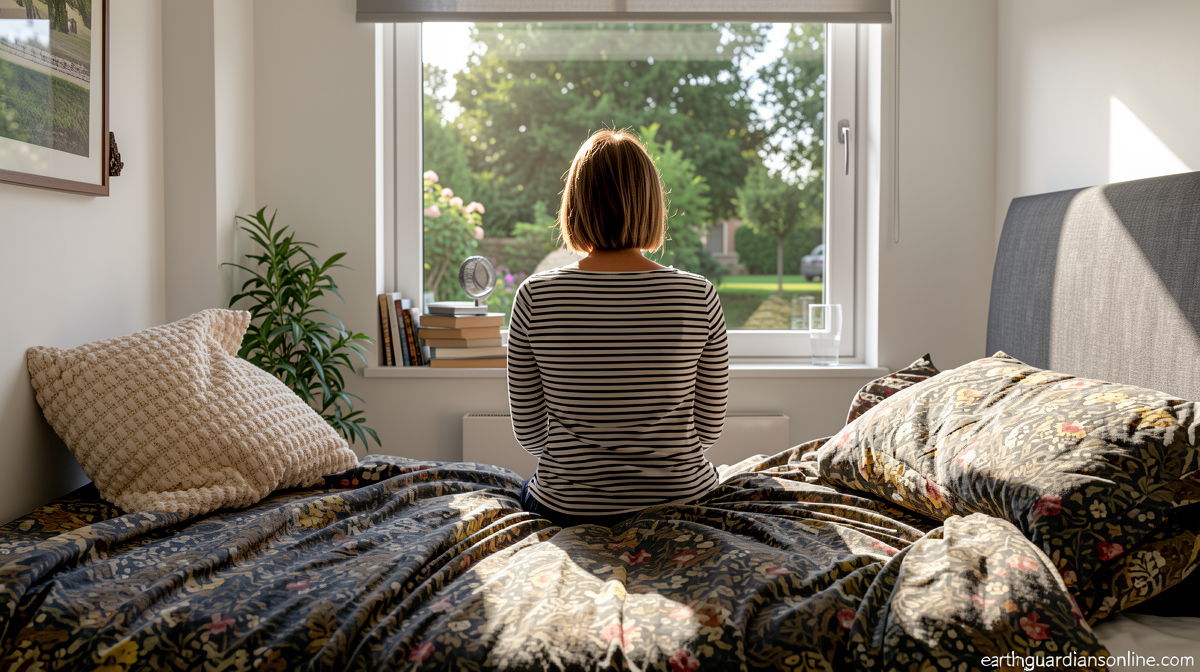
Earthguardiansonline.com – A woman in her forties, working as a professional cleaner in Windsor, England, films herself each evening returning to a cramped studio flat, brewing instant coffee, and curling up beside her cat. There are no group chats, no weekend plans, no phone ringing after Friday. She posts these quiet, uneventful scenes online, and the videos have accumulated 100 million views and roughly 500,000 followers across TikTok and Instagram since her first upload in January. Her handle is @dramafreediaries, and she has become one of the most visible faces of a rapidly growing content category that critics call “loneliness influencer” content.
The label itself is contested. Sarah-Jane Hoadley, the woman behind the account, insists her videos are not meant to sell a lifestyle of withdrawal. She describes her solitude as simply the texture of her days — biking between clients’ homes, watching television, feeling content in small domestic rituals. Yet the framing has ignited a debate among psychologists, therapists, and social-media commentators about whether normalizing extended isolation helps or harms viewers, particularly younger audiences already grappling with epidemic-level loneliness.
Who These Creators Are and Why They Resonate
The archetype sketched by most observers is a woman in her thirties or forties who documents a life without close friendships or romantic partnership, presenting solitude as intentional and even restorative. Men, of course, experience loneliness too, but Dr. Lauren Cook, a clinical psychologist based in San Marino, California, and founder of Heartship Psychological Services, observes that women appear more willing to share such content publicly, partly because the stigma attached to discussing mental-health struggles has historically been lighter for them.
The wave did not begin with Hoadley. Lana Isa, another social-media creator, launched a “solo vlog” series last summer, filming her Friday and Saturday nights spent alone in her apartment. That series catalyzed a flood of similar accounts on both TikTok and Instagram, turning what had been a niche documentation of daily routine into a mainstream online phenomenon and reigniting conversations about mental health, autonomy, and the boundaries of acceptable social connection.
The Criticism: Romanticizing Isolation
Not everyone is charmed by the trend. Phil Lane, a psychotherapist practicing in Pennington, New Jersey, argues that the content paints an overly romanticized picture of what it actually feels like to be chronically alone.
“These so-called loneliness influencers give a very romantic image of what it’s like to be alone.”
Detractors worry that digital natives — particularly members of Generation Z, frequently dubbed the “loneliest generation” — may absorb the aesthetic of hyper-independence and treat prolonged isolation as aspirational rather than situational. The concern is sharpened by the fact that the World Health Organization has elevated loneliness to a global health priority, signaling that the condition is not a minor inconvenience but a measurable risk factor for morbidity and mortality.
The Nuance: Alignment, Not Prescription
Other specialists urge more careful reading. Cook emphasizes that the effect of the content depends entirely on the viewer’s internal state when they encounter it.
“If it’s coming from a place of seeking peace and solace and restoration, that can be a great thing. But if it’s coming from a place of avoidance or not wanting to be vulnerable, putting ourselves out there with dating or new relationships … then that’s something I think where we have to get curious about if anxiety is maybe dictating the narrative at that point.”
In other words, a person who genuinely values solitude and finds restoration in quiet evenings is living in alignment with their own values, and no outside observer should be tasked with declaring that choice wrong. What Cook flags as problematic is not the solitude itself but the avoidance of vulnerability that sometimes masquerades as self-sufficiency.
Dr. Julianne Holt-Lunstad, a professor of psychology and neuroscience at Brigham Young University in Provo, Utah, adds another layer: creators who adopt the “loneliness influencer” label may be doing so strategically, to defuse the shame and stigma attached to being alone.
“This may be a way to reduce the stigma and shame around their experience, and to help normalize that.”
What the Health Data Actually Shows
The stakes are not purely philosophical. Research published in 2023 found that adults reporting social isolation were 32 percent more likely to die prematurely than those with more active social lives. Those reporting subjective loneliness carried a 14 percent higher early-mortality risk. Loneliness, in other words, is not merely an emotional discomfort; it operates on the body with a magnitude comparable to other well-known risk factors.
Understanding the distinction matters. Social isolation describes an objective condition — limited contact, time spent alone. Loneliness describes the subjective gap between the connections a person wants and the ones they actually have. A woman who genuinely prefers her cat and her television to a crowded dinner party is not lonely in the clinical sense, even if her calendar looks empty to an outside observer. The viral content, at its best, may simply be making visible a preference that was always there but rarely spoken aloud.
What Viewers Can Take From the Debate
The phenomenon invites a practical question rather than a moral verdict: Are you watching these videos because solitude restores you, or because you are using the aesthetic of independence to avoid the discomfort of reaching out? Neither answer is shameful, but the distinction shapes whether the content functions as gentle permission to rest or as a quiet permission to withdraw. For a generation already navigating fragmented social landscapes, that distinction may be the most useful takeaway the genre offers.
Related Reading
Frequently Asked Questions
What is Loneliness influencers have no friends but they?
Loneliness influencers have no friends but they is the main topic of this guide. The article explains the context, practical details, and next steps readers should understand.
Why does Loneliness influencers have no friends but they matter?
Loneliness influencers have no friends but they matters because readers are looking for a useful answer, not just a short summary. Good content should match search intent and help them decide what to do next.