
Mamdani defends criticism of AIPAC after being accused of antisemitism
Mamdani Defends Criticism of AIPAC After Accusations of Antisemitism
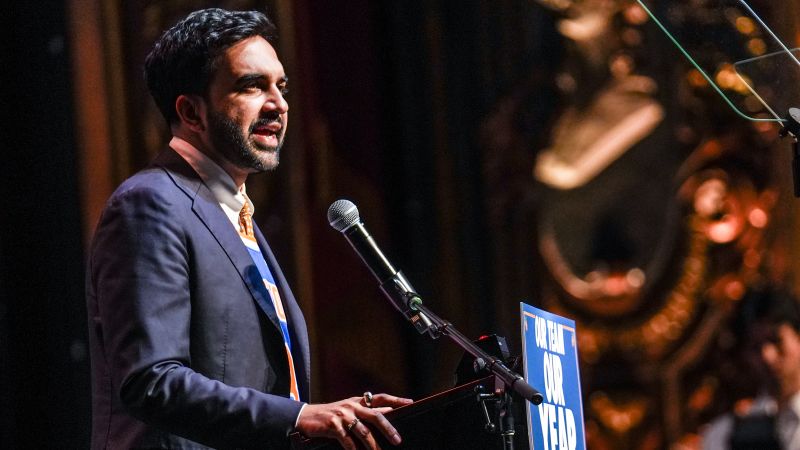
Mamdani defends criticism of AIPAC after – On Monday, New York City Mayor Zohran Mamdani faced renewed scrutiny over his recent comments criticizing the American Israel Public Affairs Committee (AIPAC), following accusations that his remarks bordered on antisemitism. The mayor, a vocal opponent of Israel’s policies, defended his statements during a press conference held at City Hall, where he emphasized the organization’s role in perpetuating regional instability and undermining moral progress. His speech came amid growing concerns from Jewish leaders who claimed his language was inflammatory and reflective of long-standing antisemitic narratives.
AIPAC’s Role in Political Spending
Mamdani’s critique centered on AIPAC’s influence in New York’s political landscape, particularly its financial support for pro-Israel candidates in congressional primaries. He highlighted how the organization uses its resources to amplify misleading messages, often diverting attention from foreign policy issues to domestic ones. “They move millions in dark money to accomplish a single goal: preserving their power,” he said, arguing that such tactics fuel division rather than drive necessary change.
“When I speak about AIPAC, I’m addressing an entity that has long defended the status quo, obstructing efforts to deliver safety to people—not just in Palestine, but across the region. It’s a system of immorality that has left thousands suffering,” Mamdani stated, citing Israeli military operations in Gaza.
The mayor’s remarks drew immediate backlash from Jewish community leaders, who accused him of equating the entire Jewish population with the actions of AIPAC. Ted Deutch, CEO of the Anti-Defamation League (ADL), criticized Mamdani’s use of the term “monsters” to describe those funding misleading advertisements against his endorsed candidates. “This language is not just criticism—it’s a dangerous weapon,” Deutch argued in a post on X, emphasizing the potential consequences of associating the Jewish community with such negative imagery.
Political Context and Super PAC Contributions
AIPAC’s influence in New York’s primaries has been a point of contention for Mamdani, who has supported progressive candidates challenging established figures. The mayor pointed to recent contributions by AIPAC’s super PAC, the United Democracy Project, which allocated over $600,000 to BOLD America, a group financing ads for Rep. Adriano Espaillat. This comes as Mamdani-backed candidate Darializa Avila Chevalier competes in the 13th Congressional District, where AIPAC’s spending is seen as a strategic move to maintain political control.
“Swap ‘AIPAC’ for ‘Jews’ and you’re left with the oldest antisemitic conspiracy theory,” said Democratic Rep. Josh Gottheimer, a Jewish New Yorker, in a social media post. “This isn’t just criticism—it’s laundering antisemitism from the mayor’s podium.”
Gottheimer’s criticism echoed concerns from other Jewish Democrats, who warned that Mamdani’s rhetoric could deepen tensions between the city’s largest Jewish population and progressive activists. The debate has intensified as the New York primaries approach, with AIPAC’s spending seen as a key factor in shaping electoral outcomes. Critics argue that the organization’s influence in media and campaign financing has skewed public perception, while Mamdani insists it’s a deliberate strategy to stoke conflict.
Rebuttal and Contextualization
Mamdani clarified his use of the term “monsters” during Monday’s press conference, attributing it to the Italian Communist theorist Antonio Gramsci. “I used the word to describe those who prevent the emergence of a new world, not just AIPAC, but super PACs in general,” he explained. The mayor cited examples of deceptive advertising by various groups, including efforts to undermine his endorsed candidates and others like Brad Lander and Claire Valdez. “This is a politics that has kept working people from raising their expectations,” he added, framing his critique as a call for systemic reform.
Despite the backlash, Mamdani maintained his stance, linking AIPAC’s actions to the ongoing crisis in Gaza. According to the Palestinian Ministry of Health, Israeli strikes since the US-brokered ceasefire in mid-October have claimed over 1,000 lives. “When we ask why death and destruction continue overseas, we must name those who enable it,” the mayor said, emphasizing that AIPAC’s financial support sustains the status quo in both foreign policy and domestic politics.
Impact of the Controversy
The controversy has sparked a broader discussion about the intersection of politics and identity. Jewish leaders, including those from the American Jewish Committee (AJC), have accused Mamdani of using antisemitic tropes to discredit AIPAC’s role in advocating for Israel. “The mayor’s words extend far beyond politics—they threaten the trust between communities,” Deutch noted, calling for a more nuanced approach to critiquing the pro-Israel lobby.
Meanwhile, Mamdani’s allies have defended his position, arguing that his criticism is a necessary challenge to a system that prioritizes corporate interests over public welfare. The mayor’s speeches in support of progressive candidates have underscored his commitment to addressing both local and global issues, from economic inequality to the humanitarian crisis in Palestine. “Our leaders must turn toward moral change, not perpetuate cycles of violence,” he asserted, reinforcing his argument that AIPAC’s actions are part of a larger pattern of inaction.
Public Reaction and Broader Implications
The debate over Mamdani’s remarks has highlighted the growing polarization in New York’s political arena. Progressive activists see AIPAC as a major obstacle to social justice, while Jewish community representatives worry about the potential for their group to be unfairly targeted. “This isn’t just about one organization—it’s about how we define collective responsibility,” said one anonymous source, reflecting the complexity of the issue.
As the primaries near, the situation remains volatile. AIPAC’s strategic use of campaign funds has become a focal point for both supporters and critics, with Mamdani’s defense drawing attention to the broader implications of political spending. His comments also raise questions about the balance between ideological critique and the risk of marginalizing Jewish voices in the city’s political discourse. “We must be clear about our goals,” Mamdani urged, “but we must also be honest about the methods used to achieve them.”
The ongoing dialogue between the mayor and Jewish leaders underscores the challenges of navigating a politically charged environment. While Mamdani’s focus on Gaza’s suffering and the organization’s role in sustaining conflict has galvanized his base, it has also sparked fears of antisemitism within the Jewish community. As the New York primaries approach, the controversy is likely to shape not only the election but also the future of political discourse in the city.
CNN has sought comment from AIPAC, aiming to clarify its stance on Mamdani’s allegations. In the meantime, the debate continues, with both sides highlighting their perspectives on the role of lobbying in shaping public opinion and policy. The mayor’s defense of his critique, combined with the Jewish leaders’ warnings, has set the stage for a heated discussion that could influence the outcome of the upcoming races.
