Supreme Court rejects Trump’s plan to limit mail-in voting in midterms

Daftar Isi
Supreme Court Blocks Mail-Ballot Rule Ahead of 2026 Midterms
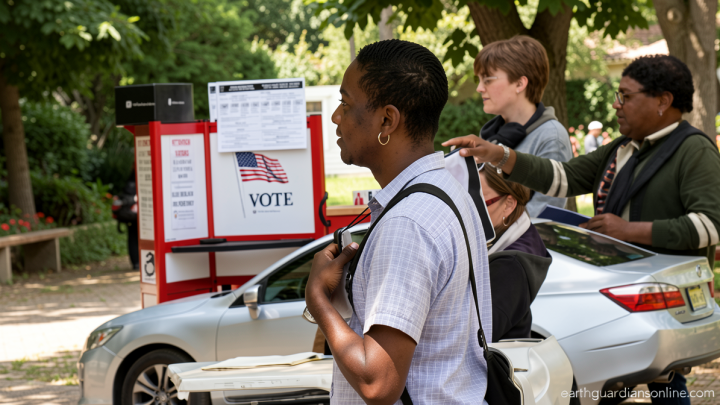
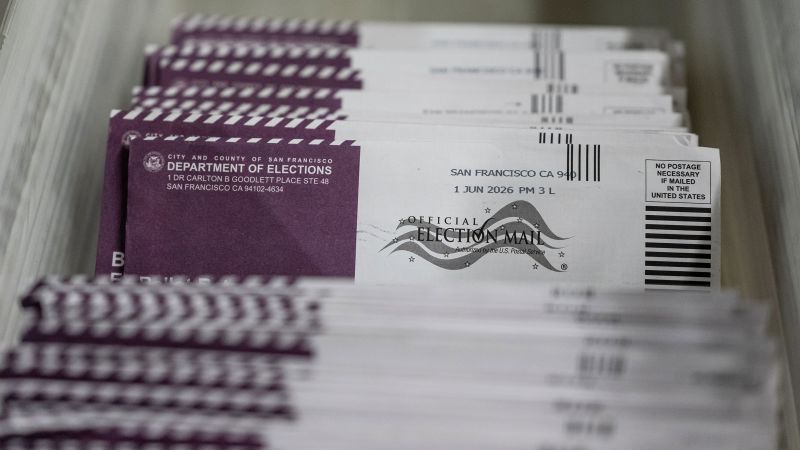
Earthguardiansonline.com – The Supreme Court has halted a Trump administration effort that would have altered the way mail ballots are sent to voters nationwide, preventing the change from taking effect ahead of this year’s midterm elections.
In an unsigned, three-sentence order released Monday, the court concluded that the administration was unlikely to prevail in its legal challenge. The ruling denies the federal government the ability to move forward, for now, with a proposal that would have given the US Postal Service a new and far-reaching role in deciding whether potentially millions of mail ballots could be withheld.
Election administrators from both parties had warned that introducing the requirements so close to an election could disrupt established voting systems, confuse voters and create a serious risk that eligible people would not receive their ballots on time.
A High-Stakes Election Dispute
The case was among the most consequential matters to reach the court through its rapid emergency process in recent years. Democratic-led states and voting-rights organizations challenged the plan, while a bipartisan group of election officials, former governors and administrators also urged the justices to stop it.
The administration characterized the proposal as a limited adjustment to postal regulations, arguing that it was designed to improve ballot security and make sure mail ballots reached only eligible voters. President Donald Trump has repeatedly made unfounded claims about widespread fraud involving mail voting, even though he has continued to vote by mail himself.
Opponents argued that the measure went well beyond an ordinary administrative adjustment. They described it as an unconstitutional attempt to shift election authority toward the Postal Service at a critical point in the election calendar. State and local officials said their systems were not prepared for the operational changes the rule demanded.
Among the concerns was a requirement for states to submit large amounts of voter information through an online portal that was not yet available. The rule also called for modifications to ballot envelopes, even though many states had already purchased the envelopes and some had begun mailing ballots to voters.
For election offices, those details were not minor technical issues. Mail voting depends on coordinated deadlines involving voter registration records, ballot printing, envelope design, postal handling and return procedures. A late change in any part of that process can create problems that are difficult to correct before Election Day.
Divided Court, but a Clear Result for 2026
Justices Samuel Alito and Clarence Thomas dissented from the decision. Justice Brett Kavanaugh, part of the court’s conservative bloc, agreed that the rule should not be imposed before the midterms, although his separate opinion left open the possibility that he could view the Postal Service as having authority to pursue similar changes in a future election cycle.
Kavanaugh wrote that state and local officials lacked enough time to put the rule into effect reasonably before the elections. His position reflected the central practical argument raised by election officials: whatever the legal merits of the proposal, the calendar made immediate implementation unworkable.
“State and local election officials do not have sufficient time to reasonably implement the rule before the elections.”
Alito took a different view. In his dissent, he said the government had a substantial interest in enforcing the regulation and argued that the measure could improve the identification of federal ballot mail as part of efforts to detect fraud. He acknowledged the serious concerns about a last-minute rollout, but said they did not justify denying the administration’s request.
“The government has a strong interest in enforcing the rule, and implementing it will also ‘enhance the visibility of Federal Ballot Mail’ in order to better detect election fraud.”
Alito also stressed his view that the Postal Service has broad regulatory authority over the mail.
“That Hail Mary pass is unlikely to be successfully completed here.”
What the Decision Means for Voters and States
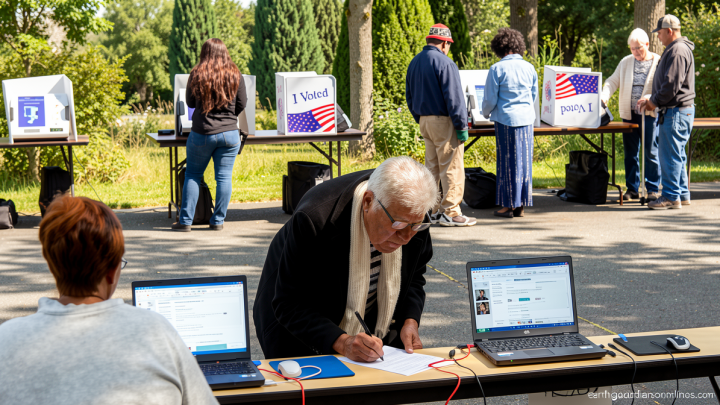
The immediate effect is that states can continue using their existing mail-ballot procedures for the 2026 midterms, rather than attempting to redesign systems already in motion. The decision avoids a nationwide scramble over voter-data uploads, ballot-envelope changes and the timing of mailings.
It is also a significant setback for Trump, whose criticism of mail voting has been a consistent feature of his political rhetoric. The administration had sought to portray the proposed rule as a safeguard, but election officials from within the Republican Party as well as Democratic officials cautioned that it could instead produce disorder and disenfranchisement.
Colorado Secretary of State Jena Griswold, a Democrat, welcomed the outcome in strong terms.
“Trump’s attempt to sabotage the 2026 elections has failed.”
California Attorney General Rob Bonta, also a Democrat, called the ruling a victory for democratic institutions and the legal system.
“Victory for our democracy and a powerful affirmation of the rule of law.”
The decision does not necessarily end the broader legal fight over federal authority and mail-ballot procedures. Kavanaugh’s concurrence, along with the dissents from Alito and Thomas, indicates that some justices may be open to reconsidering similar questions when an election is not imminent and states have more time to adapt.
For the present midterm cycle, however, the court’s action preserves the rules election offices have been planning around. The ruling underscores a basic reality of election administration: changes to voting procedures may have broad legal and political consequences, but their practical impact is often determined by deadlines, preparation and the ability of voters and local officials to understand the rules in time.
Related Reading
Frequently Asked Questions
What is Supreme Court rejects Trump s plan?
Supreme Court rejects Trump s plan is the main topic of this guide. The article explains the context, practical details, and next steps readers should understand.
Why does Supreme Court rejects Trump s plan matter?
Supreme Court rejects Trump s plan matters because readers are looking for a useful answer, not just a short summary. Good content should match search intent and help them decide what to do next.