The Fed meeting is a pivotal moment for the bond market

Daftar Isi
Bond Investors Look to the Fed for a Clear Signal on Inflation
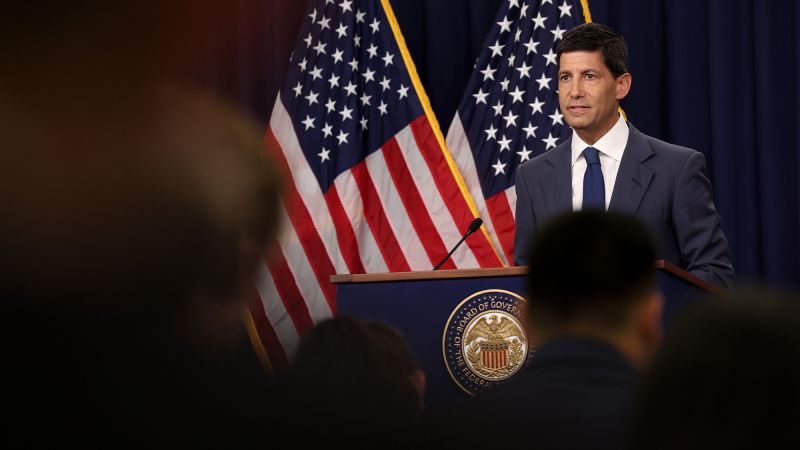
Earthguardiansonline.com – A Federal Reserve decision expected Wednesday has become a major test for the bond market, where a recent wave of selling has driven Treasury yields sharply higher and intensified concerns about inflation. Investors are focused not only on whether policymakers raise rates, but also on whether Chairman Kevin Warsh can persuade markets that the central bank remains committed to containing price pressures.
Trading has increasingly pointed toward the Fed lifting its benchmark rate for the first time since 2023. CME FedWatch showed markets assigning a 93% probability to a quarter-point increase. The shift followed August inflation data released Friday that indicated consumer prices remained stubbornly elevated.
That expectation matters because bond markets have already absorbed considerable strain. The benchmark 10-year Treasury yield rose Tuesday and briefly reached its highest point since 2007. It has moved above 5%, a level watched closely because Treasury yields influence borrowing costs throughout the economy.
Why Treasury Yields Matter Beyond Wall Street
Yields and bond prices move in opposite directions. When investors sell bonds, their prices decline and the return offered to new buyers rises. Higher Treasury yields can feed into more expensive mortgages, auto loans, business borrowing and federal financing costs, while also affecting how investors value stocks and other riskier assets.
The rise in longer-term Treasury yields has been driven by several overlapping forces. Investors are weighing persistent inflation worries, increased corporate borrowing, growing government debt, potential central-bank tightening and broader uncertainty tied to the conflict in the Middle East. Inflation has worsened since the beginning of the war with Iran, adding to pressure on policymakers to demonstrate resolve.
For much of the past several weeks, markets were divided on the September outcome, with the chances of a hike and a pause often hovering near even. Friday’s inflation report changed that calculation. A decision to leave rates unchanged now could prompt investors to question whether the Fed is moving forcefully enough to restrain inflation.
“At this stage, it would be very difficult for the Fed to leave rates unchanged this week without eroding its inflation-fighting credibility,” Vail Hartman, US rates strategist at BMO Capital Markets, said in a note.
Hartman also emphasized that the Fed has rarely departed from a policy move that markets had anticipated with such strong confidence.
“Historically, the Fed has seldom deviated from rate decisions that markets have priced with such high conviction,” Hartman said.
In his view, an unexpected pause could produce sharply different reactions across markets: shorter-dated bonds could rally, while longer-term Treasuries, the US dollar and risk assets could face renewed selling pressure.
Warsh’s Challenge After Months of Rising Yields
Even a rate increase that matches expectations may not settle investors. Market participants will closely parse Warsh’s remarks for clues about the Fed’s outlook on inflation, future rate decisions and the continued rise in Treasury yields.
At the Fed’s July meeting, Warsh said he wanted markets to respond to incoming economic conditions rather than attempting to predict the central bank’s next move. He described the increase in Treasury yields at the time as a response to underlying data and economic developments.
“Market participants are learning to play the ball, not the referee — and market prices will continue to respond in the direction and magnitude they see fit,” Warsh said on July 29. “This is, in my view, a change for the better — and we’re just getting started.”
Since then, the message from the bond market has become more pronounced. The 10-year Treasury yield finished July 29 at 4.6% and has since risen above 5%, reaching territory not seen in almost two decades. Meanwhile, the two-year Treasury yield, which is particularly sensitive to expectations for Fed policy, has climbed to its highest level in more than two years. It stands roughly 100 basis points, or one percentage point, above the Fed’s benchmark rate.
That gap has increased pressure on the central bank to respond. In July, Warsh said he wanted an “unfiltered message from markets.” Investors are now signaling that they expect a rate increase.
“[Warsh] has been talking hawkishly since June. Now, he has to deliver a rate hike,” Ed Yardeni, president of Yardeni Research, said in a note.
“After all, he promised to follow the financial markets’ lead. The 2-year and 10-year yields are clearly calling for a rate hike,” Yardeni said. “If they keep rising after Warsh’s presser on Wednesday, then he will still have a credibility problem.”
A Decision With Broader Economic Consequences
The Fed’s policy decision arrives as markets assess whether high yields reflect confidence in economic resilience, concern about inflation, or unease over the volume of debt that governments and companies need to finance. In practice, those forces can coexist, making it harder for policymakers to identify a single cause or offer a simple solution.
For households, the practical effect of rising yields may be felt gradually through higher financing costs. For businesses, increased borrowing expenses can affect investment decisions and balance-sheet planning. For the federal government, higher yields raise the cost of servicing debt as securities mature and are refinanced.
George Goncalves, MUFG’s head of global rates strategy, had initially expected the Fed to keep rates unchanged in September. The evolving inflation and market backdrop led him to revise that view toward a hike.
Wednesday’s decision may therefore be less important for its immediate quarter-point change than for the confidence it either builds or weakens. A hike could satisfy the market’s near-term expectation, but it will not automatically halt the climb in long-term yields. Investors will be looking for evidence that the Fed understands the inflation risk, is prepared to respond to further data and can maintain credibility as borrowing costs rise across the economy.
Related Reading
Frequently Asked Questions
What is The Fed meeting is a pivotal?
The Fed meeting is a pivotal is the main topic of this guide. The article explains the context, practical details, and next steps readers should understand.
Why does The Fed meeting is a pivotal matter?
The Fed meeting is a pivotal matters because readers are looking for a useful answer, not just a short summary. Good content should match search intent and help them decide what to do next.