
The future of oil prices may depend on China
The future of oil prices may depend on China
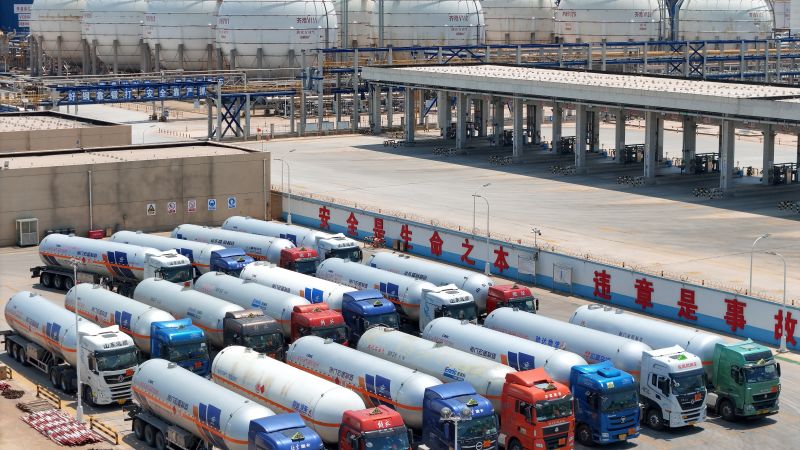
The future of oil prices may depend – As the United States and Iran finalize plans to restore normal operations at the Strait of Hormuz and revive Middle Eastern oil exports, the global market’s trajectory may hinge on a nation not directly involved in the talks: China. The world’s second-largest oil consumer has implemented aggressive measures to stabilize its supply chain as the conflict in Iran disrupted over 11 million barrels of daily oil flow. By curtailing imports, tapping into massive stockpiles, and accelerating the adoption of renewable energy, China has managed to reduce the strain on its domestic market, even if not entirely eliminating the impact of higher prices.
China’s Strategic Energy Reserves
Analysts note that China’s efforts have had a ripple effect on global oil markets. Despite the ongoing war cutting off more than a billion barrels of supply, crude prices have not surged as dramatically as expected. Some experts attribute this stability to China’s proactive management of its energy reserves. “China has played a critical role here to buffer this for the rest of Asia… thereby buffering the global economy,” said Daan Walter, a principal at Ember, an energy think tank.
Before the conflict, China was building up its crude oil inventories, supported by inexpensive supplies from sanctioned Russian and Iranian oil. Analysts revealed that the country now holds over 1 billion barrels in commercial and strategic reserves, which it began drawing down in May. Janiv Shah, vice president of oil markets at Rystad Energy, emphasized that this strategy has acted as a stabilizer: “China has been putting a floor under prices.” However, this pattern may shift if prices fall, as the government could resume stockpiling to secure future supply.
The Invisible Hand of Market Rebalancing
China’s actions have also influenced the global supply chain through its domestic policies. By limiting exports of refined products like diesel and gasoline, the government has discouraged refiners from buying crude oil overseas, where margins have been squeezed. This has created a domino effect, reducing demand and helping to temper price increases.
Meanwhile, the rapid growth of China’s electric vehicle sector has further offset the need for traditional fossil fuels. Over half of all new passenger cars sold in the country are now powered by renewable energy sources, according to recent data. The International Energy Agency estimates that China’s EV fleet alone cut oil consumption by approximately 1 million barrels per day last year. “It has been a wonderful release valve for the global crude market,” said David Fishman, a principal at the Lantau Group specializing in China’s energy and power sector.
A Market Shift in the Wake of Supply Disruptions
Even as the Strait of Hormuz remains a focal point for restoring oil flow, the market’s reaction has been shaped by China’s consumption trends. On Monday, Brent crude, the global benchmark, dipped below $78 a barrel, signaling optimism that the region’s oil trade could normalize. However, prices had previously reached a four-year high of $114 a barrel in early May, following weeks of reduced supply due to the conflict. Analysts suggest that China’s ability to adjust its demand has been a key factor in preventing a sharper price spike.
Societe Generale’s research note earlier this month highlighted how China’s role has differed from past crises. During the 1973 Arab oil embargo, a 7% drop in global supply led to a 134% surge in prices. In contrast, the current situation, which has impacted 14% of the world’s oil supply, has seen only a modest price increase. This discrepancy is largely credited to China’s role as “the invisible hand that is rebalancing the market,” as one analyst described. The country’s capacity to absorb supply shocks through strategic imports and domestic conservation has been pivotal in maintaining price stability.
Global Implications and Future Outlook
While the reopening of the Strait of Hormuz could alleviate immediate supply concerns, the International Energy Agency (IEA) warns that the long-term outlook may be more complex. In its latest monthly report, the IEA forecast that global oil production will exceed demand by 4.7 million barrels per day next year as Middle Eastern output returns to normal. This anticipated surplus could provide relief to markets, allowing countries to rebuild depleted inventories or expand strategic reserves in response to the crisis.
Yet, the IEA’s warning underscores the delicate balance China must maintain. The government’s ability to sustain its current consumption adjustments depends on how effectively it can preserve its fuel reserves. If prices weaken, there is a risk that China will begin accumulating oil again, which could influence global markets once more. “The thing that can’t be sustained forever is the stockpiles of crude,” Fishman noted. “If prices weakened, you’d expect the first thing they do is start to stockpile again.”
China’s Dual Role in the Energy Transition
China’s response to the oil crisis highlights its growing influence in shaping global energy dynamics. The nation’s dual strategy of reducing fossil fuel dependence while maintaining a buffer against price volatility has positioned it as a key player in the transition to cleaner energy. This approach not only supports domestic stability but also provides a counterbalance to the broader global supply chain.
As the world grapples with the consequences of the Iran war and its impact on oil flow, China’s actions have become a focal point for market analysts. The country’s ability to manage demand through both conservation and technological innovation—such as the electric vehicle boom—demonstrates its adaptability. However, this strategy is not without limits. Analysts suggest that China’s capacity to maintain its current level of resilience will depend on its access to alternative energy sources and the ability to replenish reserves as needed.
The upcoming months will be crucial in determining whether China’s role as a stabilizer continues or shifts. With the potential for a new supply glut, the nation’s policies could dictate whether the global market experiences further fluctuations or finds a new equilibrium. As the IEA noted, the reopening of the Strait of Hormuz might be a turning point, but the long-term stability of oil prices will likely remain tied to how China navigates its evolving energy landscape.
China’s strategic adjustments have not only cushioned its own economy but also influenced global markets in ways that are both measurable and significant. From its stockpiles to its electric vehicle initiatives, the country’s multifaceted approach has provided a counterweight to the disruptions caused by the Iran conflict. Yet, as the market adapts and supply returns to normal, the question remains: can China’s policies continue to shield the global economy from volatility, or will they face new challenges as the energy transition progresses?
