
Why JD Vance is downplaying Richard Nixon’s corruption
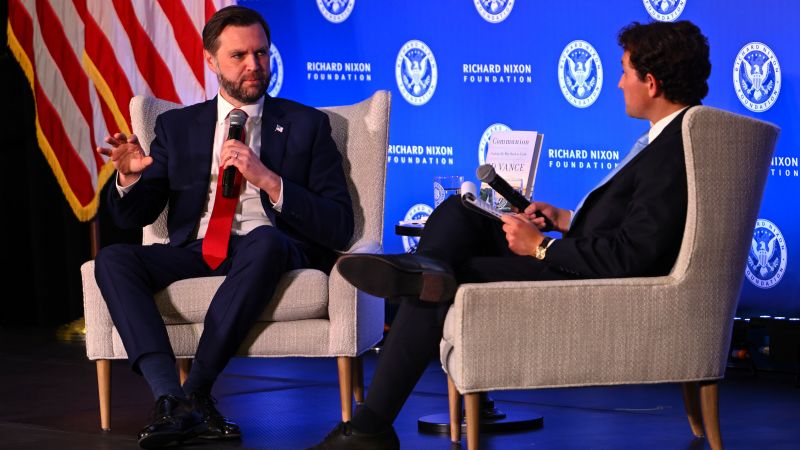
JD Vance’s Remarks on Nixon’s Legacy Spark Debate Over Corruption Perceptions
A Strategic Move in the Context of Trump’s Political Future
Why JD Vance is downplaying Richard – JD Vance, the vice president and a rising political figure, recently took a surprising stance during his visit to the Nixon Presidential Library and Museum in California. The event, which drew attention for its focus on Nixon’s historical impact, saw Vance make bold comparisons between the 37th president’s downfall and the challenges faced by Donald Trump during his first term in office. This moment has ignited discussions about the broader implications of how corruption narratives are framed in contemporary politics.
“I think that his historical legacy is enjoying a bit of a renaissance — but I think deservedly so,” Vance stated. “As I joked … backstage, if Watergate happened tomorrow, it would be like a 12-hour news story. Like, the idea that it would have taken down a presidency is crazy.”
Vance’s comments suggest a deliberate effort to reshape the public’s view of Nixon’s tenure. By likening Nixon’s ouster to the efforts to hold Trump accountable, he appears to be emphasizing the role of institutional forces, such as the “deep state,” in political scandals. This framing positions Nixon as a victim of bureaucratic overreach, potentially drawing parallels to Trump’s own controversies. Yet, the argument hinges on a specific interpretation of history, one that may not align with widespread public opinion.
While Vance’s claims have some validity, they also carry strategic weight. The vice president’s remarks reflect a broader trend among certain conservative figures to rehabilitate Nixon’s image, framing him as a misunderstood leader rather than a corrupt one. This rebranding effort, which has gained traction in recent years, is part of a larger narrative aimed at distancing the current administration from historical scandals. For instance, Vivek Ramaswamy, a former GOP presidential candidate, visited the Nixon Library in August 2023 and called the former president “the most underappreciated of modern history.”
However, the general public’s perception of Nixon remains largely negative. According to a Gallup poll from December 2024, 54% of Americans rated Nixon as “below average” or “poor,” compared to just 12% who saw him as “above average” or “outstanding.” These figures place Nixon among the least favored presidents in recent memory, with even Republicans split on his legacy. Only 19% of GOP voters viewed him positively, while 39% gave him a negative rating. Despite these numbers, Vance’s speech at the Nixon Library hints at a shift in narrative, one that could influence future political discourse.
Vance’s comparison of Trump’s situation to Nixon’s is not without merit. Both leaders faced allegations of misconduct, and the mechanisms used to investigate them — such as congressional inquiries and media scrutiny — have similarities. Yet, the tone of his remarks implies a broader strategy. By celebrating Nixon’s resilience against political attacks, Vance may be subtly suggesting that Trump’s challenges are similarly surmountable. This approach could serve to bolster his own credibility as a candidate for the 2028 presidential election, where corruption accusations might become pivotal.
Watergate as a Symbol of Political Scandal
Watergate, which remains the archetype of modern political scandals, is central to the debate over corruption. Vance’s assertion that it wouldn’t be a major story today underscores a concern that the public’s appetite for scandal has diminished. If Watergate is seen as a routine occurrence, then the allegations against Trump might follow a similar trajectory. This could be a calculated move to weaken the perceived significance of corruption claims, especially in the context of a potential rematch against Biden or other Democratic candidates.
“And by the way, if you look at the story of how the deep state took down Richard Nixon, it’s not all that different from what the same groups of people — the same institutions — tried to do to Donald Trump in the first Trump administration,” Vance remarked.
Vance’s alignment with Nixon’s narrative is further complicated by his personal rapport with the former president. In a lighthearted tone, he admitted, “I’ve always liked Richard Nixon.” This sentiment, while seemingly personal, may also signal a deeper ideological connection. Vance’s criticism of the media, which he has long expressed, aligns with Nixon’s own battles against press criticism. By invoking Nixon’s legacy, he may be reinforcing a narrative that positions himself as a leader who thrives under scrutiny rather than succumbing to it.
Yet, the risk of this strategy is significant. If the public still views Nixon as a flawed leader, then Vance’s attempt to elevate his reputation could backfire. The term “renaissance” implies a revival of Nixon’s image, but without substantial evidence of changing public sentiment, the comparison feels precarious. The 2024 Gallup poll suggests that Nixon’s reputation has not yet rebounded, leaving his legacy in question. This could create a dilemma for Vance: is he genuinely trying to reshape history, or is he leveraging it to serve a political agenda?
The Road Ahead for Trump and Vance
The timing of Vance’s remarks is noteworthy. With the 2028 election looming, the political landscape is shifting, and corruption will likely play a key role in shaping voter perceptions. Trump’s continued dominance of the Republican Party and his control over the Justice Department have allowed him to deflect accountability, but this may change after the November midterms. If Democrats regain control of Congress, they could wield subpoena power and launch investigations into Trump’s conduct, potentially uncovering new evidence of misconduct.
Vance’s comments also highlight a strategic advantage for the Trump administration. By downplaying Watergate’s relevance, they may be trying to reduce the impact of current corruption allegations. This could be especially important as Trump’s legal team works to position him as a victim of political overreach rather than a perpetrator. However, the effectiveness of this strategy depends on whether the public accepts the idea that Watergate was a fluke rather than a defining moment in American politics.
Ultimately, Vance’s speech at the Nixon Library serves as a microcosm of the broader debate over corruption in politics. While he acknowledges Nixon’s historical significance, his emphasis on the “deep state” and the brevity of modern scandals suggests a desire to normalize political challenges. This could pave the way for a reevaluation of Trump’s actions, but it also risks alienating voters who view Nixon as a symbol of corruption rather than resilience. As the 2028 race heats up, the way leaders frame their history will be critical in shaping the future of American politics.
