
Look of the week: Saint Laurent’s see-through shoes reveal fashion’s growing foot fetish
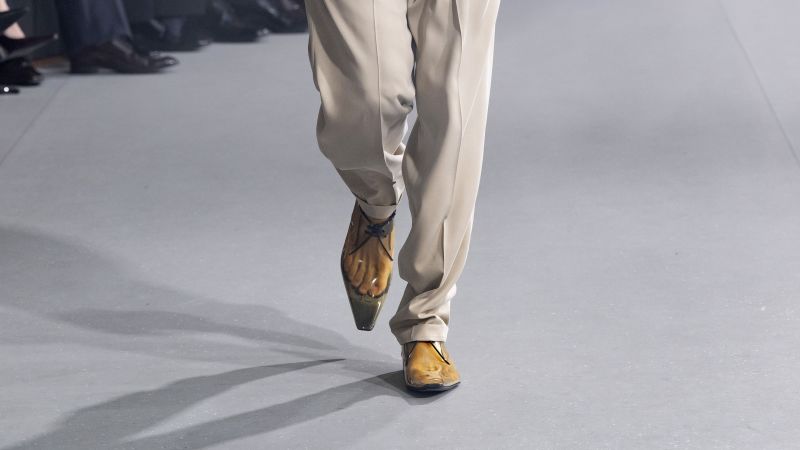
Look of the Week: Saint Laurent’s See-Through Shoes Spark a Bold Fashion Statement
Look of the week – Paris has long been a hub for avant-garde style, but this week, the city’s fashion scene took an unexpected turn. At Saint Laurent’s men’s Summer 2027 runway show, creative director Anthony Vaccarello unveiled a collection that defied convention, blending elegance with a cheeky twist. The standout piece? A pair of transparent vinyl oxfords that left audiences questioning whether the designer was playing with tradition or embracing a new era of audacity. The show, held under sweltering heat — Paris’s hottest June day until Wednesday shattered the record — became a stage for a sartorial rebellion that blurred the lines between sophistication and subversion.
Following the sleek slate-blue suit, with its fluid trousers and a boxy, 80s-inspired jacket that echoed the aesthetic of Bret Easton Ellis’s literary antiheroes, the collection took an abrupt detour. The final look featured clear footwear that exposed the model’s toes, creating a visual punch that lingered long after the finale. The heatwave amplified the effect, as the models’ feet seemed to steam from the inside of the unyielding, rectangular shoes. The juxtaposition of corporate-inspired neutrals — such as accordion-folder brown and taupe — with the stark transparency of the oxfords added to the tension, evoking a mood that felt both restrained and provocative.
Footwear has become the new frontier in fashion, with designers increasingly daring to challenge norms. This season, the trend seems to revolve around the feet, as seen in Saint Laurent’s transparent oxfords and the recent viral sandal designs from Chanel. Earlier this year, Matthieu Blazy’s resort collection in Biarritz sparked conversations about whether it was a playful nod to whimsy or a calculated move to redefine luxury. The sandals, which laced around the heel and left toes bare, captured the imagination of critics and consumers alike, raising questions about the evolving role of footwear in style.
Anthony Vaccarello’s collection wasn’t the only one to push boundaries. The Row, known for its minimalist ethos, has quietly built a reputation for eccentric shoes. From simple mesh flats to jelly-like designs, the brand’s footwear often sells out despite the high price tags of its tailored pieces. This suggests a growing appetite for novelty, even among those who typically favor understated aesthetics. Meanwhile, Tory Burch has maintained a steady presence in the shoe world, offering collections that balance casual flair with a touch of glamour. Her latest offering, a high-vamp pump adorned with shimmering details, has been likened to a classic Park Avenue hostess look, albeit with a vibrant splash of neon orange to catch attention.
Historically, shoes have always held a special place in fashion. The Margiela Tabi boot, for instance, reimagined a Japanese split-toe design into a subversive, paint-streaked masterpiece that predated the social media era. Its impact was felt decades ago, yet its influence remains relevant today. Saint Laurent’s transparent oxfords, however, feel like a modern update, capitalizing on the current fascination with exposure and the idea of fashion as a form of self-expression. As Amy Odell, a fashion and culture journalist, noted this month, handbags have begun to lose their luster, and even the ultra-exclusive Birkin is seen as too common. In contrast, the Saint Laurent shoe offers a fresh angle, combining allure with a touch of the bizarre.
“The foot fetish is no longer a hidden secret; it’s on display for all to see,” remarked Odell, highlighting how the industry has shifted from hiding sensuality to showcasing it openly. “Shoes are the perfect medium — they’re intimate yet accessible, a canvas for both rebellion and refinement.”
Yet the trend isn’t limited to Saint Laurent. Jonathan Anderson, who once helmed Loewe and now leads Dior, has long been a proponent of unconventional footwear. His designs, such as balloon-pump shoes and soap-shaped heels, have become internet sensations, proving that eccentricity can be both elegant and provocative. This approach reflects a broader industry trend: fashion is no longer just about clothes but about the entire experience, including the feet that wear them. The notion of a “foot fetish” has evolved from a mere preference to a deliberate design strategy, with brands using transparency and bold shapes to draw attention to the lower half of the body.
The trend has also been fueled by the rise of social media, where visual impact often outweighs narrative depth. A clear shoe or a barefoot look can capture a thousand likes in seconds, making it a safer bet for brands aiming to generate buzz. In this context, the Saint Laurent oxfords serve as a microcosm of the industry’s current priorities. While traditional garments like tailored suits remain staples, the focus on footwear has taken center stage, with designers using it as a tool to provoke thought and spark conversation. This is especially evident in the way the shoes are presented: not as an afterthought, but as the defining feature of a collection.
Moreover, the collaboration between fashion and celebrity culture has amplified the trend. In recent years, runway shows have relied heavily on star-studded front rows to maintain their allure. But as figures like Hailey Bieber and Kim Kardashian become ubiquitous on the catwalk, the emphasis has shifted from the celebrity to the design itself. This was evident at Saint Laurent’s show, where the focus on the oxfords overshadowed even the presence of notable attendees. Charli XCX, for example, lit Madonna’s cigarette before the show began, a moment that generated headlines, yet it was the transparent shoes that truly captured the zeitgeist.
Some argue that the foot fetish movement is a reaction to the increasingly rigid standards of fashion. With the rise of fast fashion and the erosion of high-end exclusivity, brands are seeking ways to differentiate themselves. Transparency in footwear, whether through materials or design, offers a fresh approach that feels both daring and democratic. After all, few people are embarrassed by their shoe size, making it an accessible area for experimentation. This is why the Saint Laurent oxfords, despite their impracticality, have resonated with audiences — they embody the spirit of a season that is as much about shock value as it is about style.
As the fashion world continues to evolve, the spotlight on feet is likely to persist. The Summer 2027 collections have already set the tone for a season that values audacity over tradition. Whether it’s the see-through shoes, the neon-pumped designs, or the playful sandals, the industry is embracing a new kind of boldness. For now, the conversations around these pieces are just beginning, and the impact of this shift will be felt for months to come. After all, the next Spring 2027 season is still a year away, and the foot fetish is only just getting started.
Why Feet Are Becoming the New Fashion Frontier
The fascination with feet in fashion is more than a passing phase; it’s a reflection of changing consumer values. In an age where social media reigns supreme, the body’s smallest details are no longer overlooked. A pair of transparent shoes or a set of bare feet can generate more engagement than an entire ensemble, making footwear a powerful storytelling tool. Designers are tapping into this dynamic, using the feet as a canvas to explore themes of intimacy, identity, and rebellion.
For example, the Margiela Tabi boot, introduced in the 1990s, was revolutionary for its split-toe design and unconventional materials. Today, Saint Laurent’s oxfords echo this spirit, albeit with a more modern twist. The transparent vinyl not only highlights the feet but also challenges the idea of what footwear can be. Similarly, the Chanel sandals from earlier this year, with their laced heels and exposed toes, sparked debates about whether they were a nod to minimalism or a bold statement of luxury. These designs suggest that the feet are no longer just a part of the body — they are a symbol of the designer’s vision.
The trend also aligns with the broader shift in fashion towards transparency and accessibility. While high-end garments remain expensive, shoes offer a more approachable entry point for consumers. This is particularly true in a market where the demand for exclusivity is waning. The Row’s jelly shoes, for instance, have sold out repeatedly, proving that even high-priced labels can thrive by embracing the whimsical. This duality — between the avant-garde and the practical — is what makes the foot fetish movement so compelling. It’s a space where designers can experiment without sacrificing the essence of luxury.
As the industry moves forward, the role of footwear in shaping trends will only grow. The transparent oxfords at Saint Laurent’s show are not just a stylistic choice; they represent a larger cultural shift. In an era where the lines between fashion and function are blurring, the feet have become a focal point. They are a reminder that even the most subtle elements can carry the weight of a statement. With this in mind, the foot fetish is not just about showing skin — it’s about redefining the very idea of style itself.
