
US strikes Iranian targets in response to attack on cargo ship
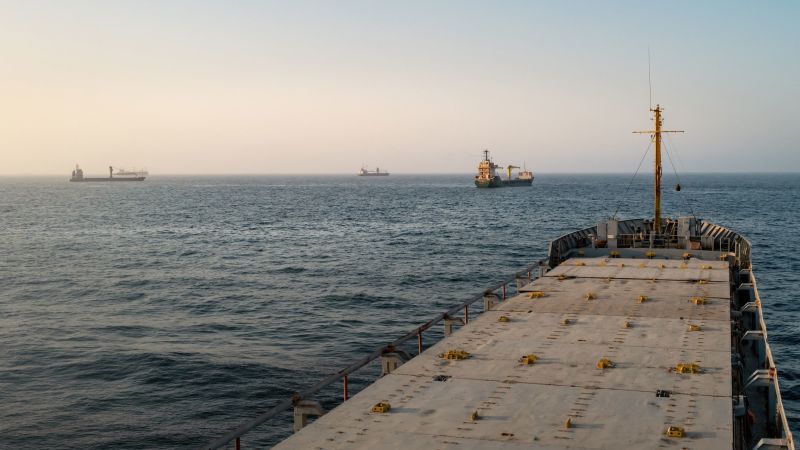
US Strikes Iranian Targets in Response to Attack on Cargo Ship
US strikes Iranian targets in response – On Friday, the U.S. military launched strikes targeting Iranian military installations near the Strait of Hormuz, retaliating for Tehran’s attack on a commercial ship the previous day, as reported by U.S. Central Command. The operation, carried out in response to the Iranian assault, focused on missile depots, drone storage facilities, and coastal radar systems, according to CENTCOM. The strikes were aimed at demonstrating U.S. resolve while maintaining the ceasefire agreement with Iran, which was announced earlier in the week.
Political Reactions to the Military Response
Vice President JD Vance, who played a pivotal role in finalizing the recent Iran agreement, emphasized that the Iranian assault breached the ceasefire. In a post on X, he stated, “Violence will be met with violence,” while acknowledging the U.S. had upheld the terms of the agreement. Vance’s comments came alongside CENTCOM’s announcement, reinforcing the administration’s dual message of compliance and preparedness for escalation.
“Iran signed a ceasefire agreement. We have honored it. If they have disagreements about how the MOU is being applied, they can pick up the phone,” he posted on X along with CENTCOM’s announcement. “But violence will be met with violence.”
The U.S. action followed a series of statements from President Donald Trump, who described the Iranian attack as a “foolish violation” of the peace deal. During a press briefing in the Oval Office, Trump reiterated his stance, noting that the incident challenged the ceasefire’s effectiveness. Despite his criticism, he offered no clear indication that the U.S. would return to full-scale combat operations, at least for now.
Trump’s Public Remarks on the Incident
Trump first addressed the Iranian strike hours after it occurred, posting on Truth Social to detail the event. “The Islamic Republic of Iran launched at least four One Way Attack Drones at Ships transversing the Strait of Hormuz. One of the Drones solidly hit the upper deck of a large and very expensive Cargo Carrying Ship,” he wrote. “Damage was done, but the Ship was able to proceed on its way,” he added, framing the attack as a minor setback.
“We knocked down three other Drones. Obviously, this is a foolish violation of our Ceasefire Agreement,” he continued, expressing frustration over Iran’s actions.
Later that day, Trump told a gathering of conservative Christians in Washington, DC, that the incident revealed Iran’s lingering military capabilities. “We still have a fight. They have some capability, not much. They’re not winning or anything, but they have some capability; they can still shoot,” he explained. The president also highlighted the unexpected nature of the strike, stating, “Nobody saw it coming,” and insisted that such attacks should not be allowed.
Context of the Ceasefire and Strategic Disputes
The attack occurred just hours after Iran’s Revolutionary Guard Corps warned that safe passage through the strait would be restricted to vessels using routes approved by Tehran. This declaration directly contradicted the Trump administration’s claim that the waterway had been reopened for unrestricted traffic. The U.S.-Iran agreement, which included the memorandum of understanding (MOU) to restore prewar shipping levels, had left some provisions ambiguous, particularly regarding whether Iran could impose tolls on passing ships.
While the MOU aimed to normalize shipping through the strait, it did not resolve the dispute over fees. Trump had insisted the waterway would remain toll-free, but Iran maintained its right to charge vessels. This disagreement, combined with the recent attack, has raised concerns about the agreement’s practical implementation. The incident also underscored the difficulty in fully restoring traffic to prewar levels, a key objective of the ceasefire.
“I don’t like the fact that they took a shot yesterday,” Trump said when asked whether the ceasefire still held. “Not an allied ship, but a ship. A very expensive ship and it was fine, but it took a little beating. They shouldn’t be doing that.”
Trump’s response to the attack was marked by his characteristic vagueness. When pressed on whether the U.S. would take further action, he told reporters, “You’re going to find out.” This cryptic remark, delivered in the Oval Office, left observers uncertain about the administration’s next steps. Trump abruptly dismissed the media after his comments, signaling his reluctance to engage in extended discussions about the incident.
The Broader Implications of the Strike
The U.S. military strikes and Trump’s public statements reflect a delicate balance between enforcing the ceasefire and preparing for potential escalation. The attack on the cargo ship, which occurred near the Strait of Hormuz—a vital artery for global oil trade—has reignited tensions over Iran’s control of the region. Analysts note that the strait’s strategic importance makes it a focal point for both sides in negotiations, with Iran viewing it as a key leverage point.
Despite Trump’s insistence that the incident was a “foolish violation,” the administration has not yet outlined specific consequences for Iran. The MOU, signed in June, was intended to stabilize the region and foster dialogue on Iran’s nuclear program. However, the recent strike has exposed lingering disagreements about the agreement’s terms. While the U.S. pledged to maintain the ceasefire, it remains unclear whether Iran’s actions will force a return to conflict.
Trump, who has shown little eagerness to resume the war, acknowledged last week that prolonged hostilities could lead to “economic catastrophe.” The current strikes, however, have reignited debates about the viability of the ceasefire. With Iran’s Revolutionary Guard asserting control over shipping routes, the U.S. faces the challenge of ensuring the agreement’s terms are adhered to without provoking further aggression.
Regional Tensions and the Path Forward
The attack and subsequent strikes highlight the fragility of the ceasefire. While the U.S. has honored its commitments, the Iranian response has tested the agreement’s resilience. The Department of Defense’s X account later shared three American flag emojis over a screenshot of Trump’s Truth Social post, a symbolic gesture underscoring the administration’s determination.
As the situation unfolds, the focus remains on the Strait of Hormuz and its role in global energy security. The attack on the commercial vessel and the U.S. retaliation have raised questions about the effectiveness of diplomatic efforts and the readiness of both sides to uphold their agreements. With the ceasefire under strain, the world watches closely to see whether the U.S. and Iran can navigate these challenges without sliding back into open conflict.
Ultimately, the incident serves as a reminder of the complexities involved in maintaining peace after months of war. While the MOU aims to reduce hostilities, the actions of Iran’s military forces continue to challenge its implementation. The U.S. response, though measured, signals a willingness to act decisively if the ceasefire is perceived as being undermined. As negotiations progress, the outcome of this confrontation may shape the future of the U.S.-Iran relationship and the stability of the region.
