
Ukraine launches largest attack on Moscow since start of full-scale war
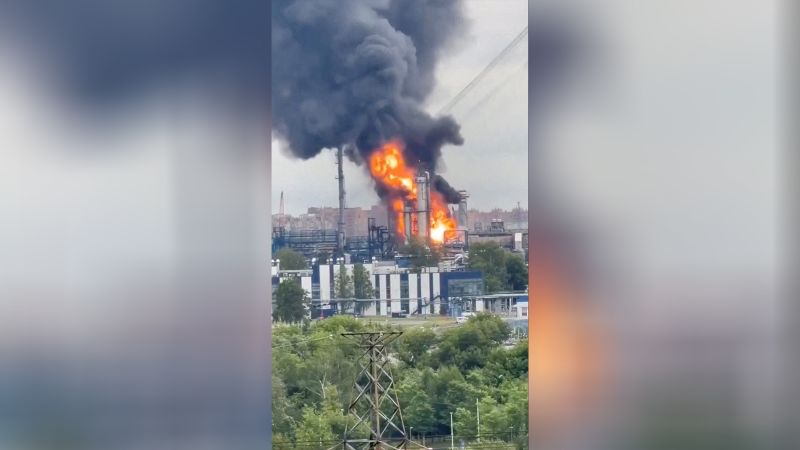
Ukraine’s Largest Attack on Moscow Since Full-Scale War Begins
Ukraine launches largest attack on Moscow – On the night of June 18, Ukraine executed its most significant aerial assault on Moscow since the full-scale war began over four years ago. The operation targeted the city’s key oil refinery, causing widespread damage, igniting fires, and sending debris cascading through the surrounding area. Moscow Mayor Sergei Sobyanin confirmed that air defenses intercepted at least 194 drones bound for the capital overnight, marking a sharp escalation in Kyiv’s drone warfare capabilities. This figure far surpasses the double-digit numbers typically recorded during previous large-scale strikes, underscoring a dramatic shift in Ukraine’s ability to strike deep into Russian territory.
Strategic Strikes and Broader Impact
The attack was part of a broader Ukrainian campaign against Russian energy infrastructure, with multiple strikes reported across a wide region. Russian Defense Ministry data revealed that air defenses managed to intercept nearly 1,000 drones in total, including those flying over the Sea of Azov. This surge in drone activity has disrupted operations at major Moscow airports, forcing temporary flight suspensions, as reported by Reuters and the Russian aviation authority. The strikes reflect Ukraine’s evolving strategy to cripple Moscow’s economic and military resources through sustained, long-range attacks.
Ukrainian President Volodymyr Zelensky framed the assault as a direct response to Russia’s targeting of a historic, UNESCO-protected monastery complex in Kyiv earlier this week. “We do not want this war and never have – everyone knows this, and our partners know this,” he told journalists. “But if Ukraine is engulfed in flames, so will your Moscow be. That is why we emphasize once again that it is time to end the aggression; it is time to end this war.”
Residents’ Accounts of the Chaos
In the southeastern district of Maryino, near the Kapotnya oil refinery, residents recounted the night’s chaos. Natalya Klimova, a 25-year-old living with her mother, described waking to explosions, thick smoke, and a pungent smell of burning. “The smell is terrible. We closed the windows, but it’s still hard to breathe inside the apartment,” she said. “It is honestly very frightening.” Klimova reported hearing at least 10 loud explosions and rushing to the bathroom for safety, only to find the building trembling and the mirror shaking from the force.
Another Maryino resident, Maria, a 44-year-old, shared her experience of fleeing to her mother’s countryside residence. “I was sure the plant would burn sooner or later. I packed my things and went to my mom’s dacha,” she said. “And now it’s so close to me, but I seem to be numb to it.” Maria’s words highlight the emotional toll of prolonged conflict, as the once-distant war now feels palpably real to those in Moscow.
Video footage geolocated by CNN captured the attack in action. A ground-launched projectile was seen being fired from a road as drones approached the refinery, sending thick black smoke into the sky. A separate clip showed a massive explosion shaking the complex, tearing the roof off a large fuel tank and sending it soaring into the air. These images provide a vivid account of the scale and intensity of Ukraine’s assault.
Escalating Attacks on Russian Energy Infrastructure
In recent weeks, Ukraine has intensified its focus on Russian energy facilities, targeting refineries, oil depots, and terminals. The Moscow Oil Refinery, located just 15 kilometers from the Kremlin in the Kapotnya district, was struck twice in quick succession – first on Tuesday and again on Thursday. This marks a significant development in Ukraine’s efforts to disrupt Moscow’s access to critical resources. Analysts note that Russia’s state budget relies heavily on oil revenues, with at least one-third of its income derived from the sector. The attack further exacerbates the strain on Moscow’s economic stability, particularly as global oil prices have fluctuated due to geopolitical tensions.
The war has already diminished Russia’s pool of buyers, thanks to stringent sanctions imposed by the European Union and the United States. However, the Iran conflict provided a temporary reprieve, with Moscow benefiting from soaring fuel prices and eased sanctions. This dynamic has created a complex financial landscape for Russia, where the war’s impact on its economy remains a critical factor in the ongoing conflict.
Ukraine’s military has demonstrated a marked improvement in its drone capabilities since the war’s inception. The coordinated strikes on Thursday showcased a level of precision and coordination that was previously uncommon. With the war’s duration extending over four years, Kyiv’s military strategies have evolved to include both conventional and unconventional tactics. The targeting of energy infrastructure, in particular, has become a central pillar of this approach, aiming to pressure Russia’s economy and force a strategic reevaluation.
Russia’s Counterattacks and Escalation
Following the Ukrainian assault, Russia retaliated with seven missiles and 239 drones, according to the Ukrainian Air Force. These counterattacks hit multiple targets in both the Kyiv and Poltava regions, damaging private homes, energy facilities, and oil infrastructure. The scale of the response suggests that Moscow is determined to maintain its offensive momentum, even as its own capital faces strikes from the north.
The recent strikes have drawn attention to the strategic importance of the Moscow Oil Refinery, which supplies a significant portion of the city’s energy needs. Its proximity to the Kremlin amplifies the symbolic impact of the attack, signaling a shift in the war’s geography. As Ukraine continues to refine its tactics, the battle for energy dominance is becoming increasingly central to the conflict’s outcome.
The attacks also reflect a broader pattern of strategic retaliation. By targeting cultural and historical sites in Kyiv, Russia has sought to provoke a proportional response from Ukraine, while the latter’s focus on Moscow’s energy infrastructure aims to weaken the adversary’s war economy. This cycle of strikes underscores the war’s escalating intensity and the growing reliance on unconventional methods to achieve strategic objectives.
With the war entering its fifth year, the balance of power continues to shift. Ukraine’s improved drone capabilities, combined with its determination to strike at Moscow’s vulnerabilities, signal a new phase in the conflict. As residents in Maryino and other areas grapple with the immediate effects of the strikes, the long-term implications for Russia’s economy and global standing remain a focal point for analysts and policymakers alike.
